Essential plumbing tips to prevent costly home disasters
July 12, 2024 | Boone, Boone County, Iowa
This article was created by AI summarizing key points discussed. AI makes mistakes, so for full details and context, please refer to the video of the full meeting. Please report any errors so we can fix them. Report an error »
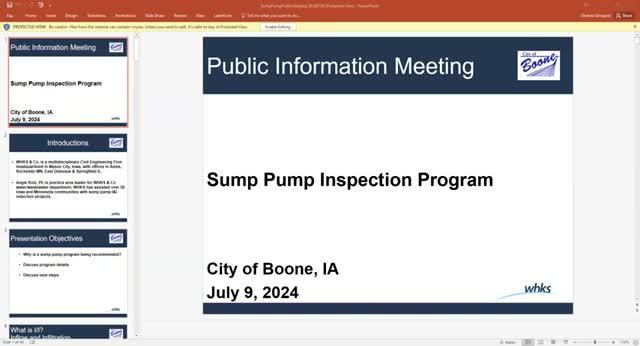
During a recent government meeting, officials discussed critical plumbing practices aimed at preventing improper installations that could lead to environmental and sanitary issues. The session highlighted common plumbing mistakes and provided guidance on proper installations, particularly concerning sump pumps and drainage systems.
One of the primary concerns addressed was the use of flexible hoses in plumbing systems. Officials presented visual examples, noting that flexible hoses discharging directly into floor drains are not compliant with plumbing codes. Instead, they emphasized the importance of using rigid PVC piping to ensure proper drainage and prevent groundwater from entering the sanitary system, which can lead to overloading.
The meeting also covered the installation of beaver drains, particularly in older homes built between the 1950s and 1970s. Participants were informed that while some systems effectively collect seepage and direct it to sump pits, others improperly discharge into sanitary systems. The recommended solution involves relocating these drains to ensure compliance with current plumbing standards.
Backup systems for sump pumps were another focal point, with officials advising homeowners on options to prevent basement flooding during power outages. They encouraged the installation of battery backups or water pressure systems to mitigate risks without creating direct connections to sanitary sewers.
Additionally, the discussion included the importance of proper roof drainage. Officials noted that roof drains should convey rainwater outside rather than into the sanitary system. They provided examples of compliant and non-compliant installations, stressing the need for proper discharge methods to avoid potential flooding and sanitary issues.
The meeting concluded with a call for homeowners to assess their plumbing systems and consider necessary upgrades to ensure compliance with regulations. Officials offered to provide diagrams and further assistance to those interested in making improvements.
One of the primary concerns addressed was the use of flexible hoses in plumbing systems. Officials presented visual examples, noting that flexible hoses discharging directly into floor drains are not compliant with plumbing codes. Instead, they emphasized the importance of using rigid PVC piping to ensure proper drainage and prevent groundwater from entering the sanitary system, which can lead to overloading.
The meeting also covered the installation of beaver drains, particularly in older homes built between the 1950s and 1970s. Participants were informed that while some systems effectively collect seepage and direct it to sump pits, others improperly discharge into sanitary systems. The recommended solution involves relocating these drains to ensure compliance with current plumbing standards.
Backup systems for sump pumps were another focal point, with officials advising homeowners on options to prevent basement flooding during power outages. They encouraged the installation of battery backups or water pressure systems to mitigate risks without creating direct connections to sanitary sewers.
Additionally, the discussion included the importance of proper roof drainage. Officials noted that roof drains should convey rainwater outside rather than into the sanitary system. They provided examples of compliant and non-compliant installations, stressing the need for proper discharge methods to avoid potential flooding and sanitary issues.
The meeting concluded with a call for homeowners to assess their plumbing systems and consider necessary upgrades to ensure compliance with regulations. Officials offered to provide diagrams and further assistance to those interested in making improvements.
Don't Miss a Word: See the Full Meeting!
Go beyond summaries. Unlock every video, transcript, and key insight with a Founder Membership.
✓
Get instant access to full meeting videos
✓
Search and clip any phrase from complete transcripts
✓
Receive AI-powered summaries & custom alerts
✓
Enjoy lifetime, unrestricted access to government data
30-day money-back guarantee
