FMPA faces turmoil as solar project costs soar
September 03, 2024 | Fort Pierce, St. Lucie County, Florida
This article was created by AI summarizing key points discussed. AI makes mistakes, so for full details and context, please refer to the video of the full meeting. Please report any errors so we can fix them. Report an error »
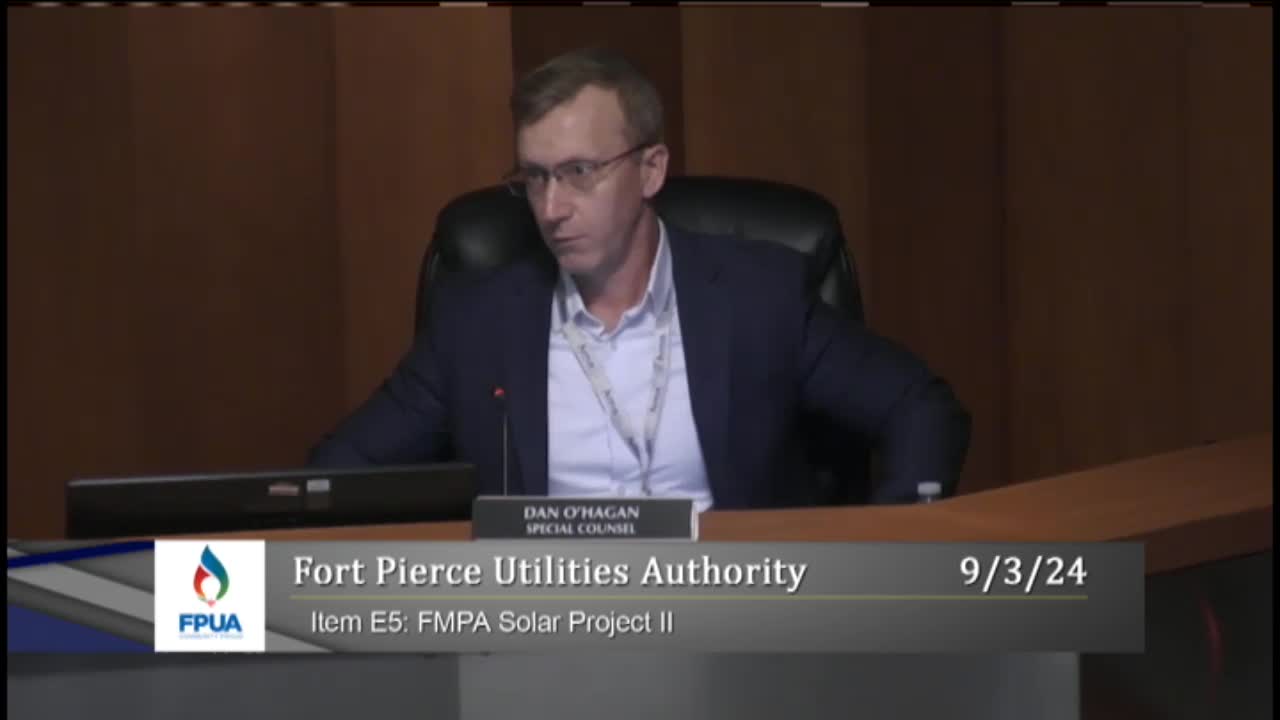
In a recent meeting, the Florida Municipal Power Agency (FMPA) discussed significant developments regarding the Florida Municipal Solar Project, particularly the challenges faced in its second phase involving the Whistling Duck solar site. The project, which aims to provide utility-scale solar energy to participating cities, has encountered a 50% cost increase due to various factors, including inflation and regulatory changes. This has led to eight out of twelve member cities opting to withdraw from the project.
The Whistling Duck site, which was initially expected to contribute to the energy supply, has faced delays and a request for a price increase from the developer, NextEra Energy. As a result, the FMPA is now in the process of reallocating energy entitlements among the remaining members, including Fort Pierce, which will see its share of energy from the project significantly reduced.
The meeting highlighted the complexities of solar energy integration into the existing energy mix, which currently relies heavily on natural gas (approximately 70% of generation) and includes a small percentage from solar (0.8%). The FMPA is working to ensure that members are not burdened with additional transmission costs while navigating these changes.
As the agency prepares for a final decision on the project at its upcoming meeting on September 9, the discussion also touched on the broader implications of solar energy development in Florida. Concerns were raised about land use for solar farms and the reliability of solar energy as a non-dispatchable resource. The FMPA acknowledged the need for ongoing tracking of solar energy production to better inform future decisions and to address member cities' concerns about the viability of solar investments.
Overall, the meeting underscored the challenges and evolving landscape of renewable energy in Florida, as municipalities weigh the benefits of solar energy against rising costs and logistical hurdles.
The Whistling Duck site, which was initially expected to contribute to the energy supply, has faced delays and a request for a price increase from the developer, NextEra Energy. As a result, the FMPA is now in the process of reallocating energy entitlements among the remaining members, including Fort Pierce, which will see its share of energy from the project significantly reduced.
The meeting highlighted the complexities of solar energy integration into the existing energy mix, which currently relies heavily on natural gas (approximately 70% of generation) and includes a small percentage from solar (0.8%). The FMPA is working to ensure that members are not burdened with additional transmission costs while navigating these changes.
As the agency prepares for a final decision on the project at its upcoming meeting on September 9, the discussion also touched on the broader implications of solar energy development in Florida. Concerns were raised about land use for solar farms and the reliability of solar energy as a non-dispatchable resource. The FMPA acknowledged the need for ongoing tracking of solar energy production to better inform future decisions and to address member cities' concerns about the viability of solar investments.
Overall, the meeting underscored the challenges and evolving landscape of renewable energy in Florida, as municipalities weigh the benefits of solar energy against rising costs and logistical hurdles.
Don't Miss a Word: See the Full Meeting!
Go beyond summaries. Unlock every video, transcript, and key insight with a Founder Membership.
✓
Get instant access to full meeting videos
✓
Search and clip any phrase from complete transcripts
✓
Receive AI-powered summaries & custom alerts
✓
Enjoy lifetime, unrestricted access to government data
30-day money-back guarantee
