Google harnesses AI to revolutionize disaster response efforts
August 29, 2024 | Governmental Organization, Standing Committees, California State Senate, Senate, Legislative, California
This article was created by AI summarizing key points discussed. AI makes mistakes, so for full details and context, please refer to the video of the full meeting. Please report any errors so we can fix them. Report an error »
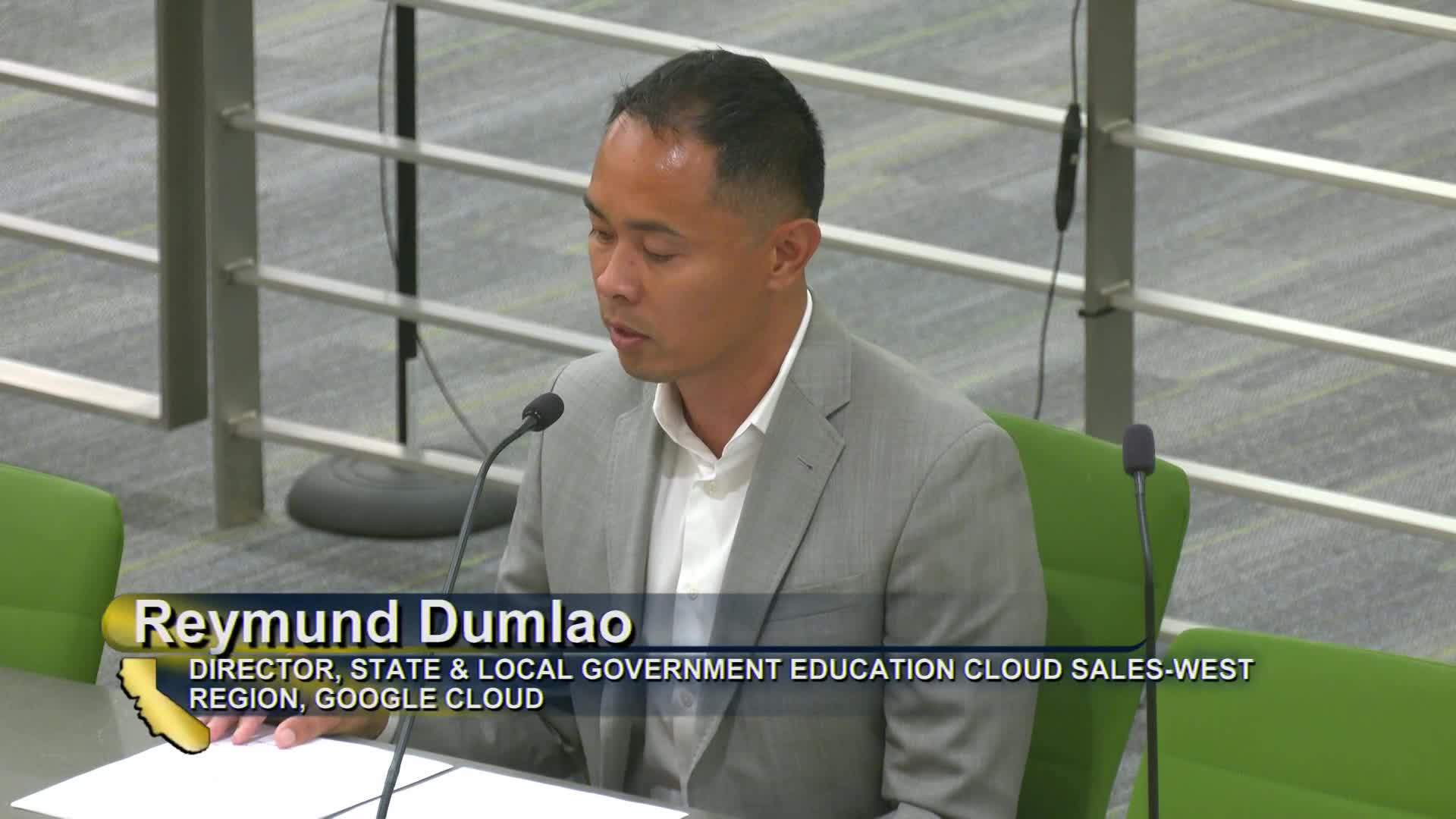
In a recent government meeting, representatives discussed the transformative potential of artificial intelligence (AI) in emergency management and disaster response. Highlighting the importance of responsible and ethical AI deployment, officials emphasized that while AI is not a cure-all, it can significantly enhance efforts to save lives and bolster community resilience.
Google's approach to AI, as outlined in the meeting, is anchored in principles of social benefit, safety, fairness, and accountability. The tech giant has developed a suite of AI-powered tools tailored for emergency management agencies, leveraging advanced machine learning algorithms and extensive computational resources. These tools are designed to analyze data, predict risks, and optimize response strategies.
Key functionalities of these AI tools include early warning systems that utilize real-time data from diverse sources—such as weather sensors and social media—to detect impending disasters. This capability allows emergency managers to issue timely alerts, providing communities with crucial preparation time.
Additionally, the meeting highlighted the role of AI in risk assessment and mitigation. By integrating historical data with predictive modeling, AI can identify high-risk areas for specific disasters, aiding in the development of targeted strategies like infrastructure reinforcement and evacuation planning. For instance, collaboration with the Hawaii Department of Transportation focuses on assessing the impacts of sea level rise on infrastructure.
In the aftermath of disasters, Google's AI tools can rapidly analyze satellite and aerial imagery to evaluate damage, enabling responders to prioritize efforts and allocate resources effectively. The importance of crisis communication was also underscored, with AI chatbots and virtual agents facilitating public inquiries and Google Translate ensuring non-English speakers receive vital information.
Resource allocation optimization through AI algorithms was identified as a critical component in emergency situations, particularly when resources are scarce. The meeting also detailed ongoing research in three key areas: flood forecasting, wildfire tracking, and damage assessment, with a specific focus on the newly expanded flood hub platform. This platform now provides real-time flood forecasts for 80 countries, impacting over 460 million people, and has recently extended its coverage to the U.S. and Canada.
Overall, the discussions underscored a commitment to harnessing AI's capabilities to enhance emergency management, ultimately aiming to save lives and improve community preparedness in the face of natural disasters.
Google's approach to AI, as outlined in the meeting, is anchored in principles of social benefit, safety, fairness, and accountability. The tech giant has developed a suite of AI-powered tools tailored for emergency management agencies, leveraging advanced machine learning algorithms and extensive computational resources. These tools are designed to analyze data, predict risks, and optimize response strategies.
Key functionalities of these AI tools include early warning systems that utilize real-time data from diverse sources—such as weather sensors and social media—to detect impending disasters. This capability allows emergency managers to issue timely alerts, providing communities with crucial preparation time.
Additionally, the meeting highlighted the role of AI in risk assessment and mitigation. By integrating historical data with predictive modeling, AI can identify high-risk areas for specific disasters, aiding in the development of targeted strategies like infrastructure reinforcement and evacuation planning. For instance, collaboration with the Hawaii Department of Transportation focuses on assessing the impacts of sea level rise on infrastructure.
In the aftermath of disasters, Google's AI tools can rapidly analyze satellite and aerial imagery to evaluate damage, enabling responders to prioritize efforts and allocate resources effectively. The importance of crisis communication was also underscored, with AI chatbots and virtual agents facilitating public inquiries and Google Translate ensuring non-English speakers receive vital information.
Resource allocation optimization through AI algorithms was identified as a critical component in emergency situations, particularly when resources are scarce. The meeting also detailed ongoing research in three key areas: flood forecasting, wildfire tracking, and damage assessment, with a specific focus on the newly expanded flood hub platform. This platform now provides real-time flood forecasts for 80 countries, impacting over 460 million people, and has recently extended its coverage to the U.S. and Canada.
Overall, the discussions underscored a commitment to harnessing AI's capabilities to enhance emergency management, ultimately aiming to save lives and improve community preparedness in the face of natural disasters.
Don't Miss a Word: See the Full Meeting!
Go beyond summaries. Unlock every video, transcript, and key insight with a Founder Membership.
✓
Get instant access to full meeting videos
✓
Search and clip any phrase from complete transcripts
✓
Receive AI-powered summaries & custom alerts
✓
Enjoy lifetime, unrestricted access to government data
30-day money-back guarantee
