Kirkland residents rally to protect parks and schools
September 03, 2024 | Kirkland, King County, Washington
This article was created by AI summarizing key points discussed. AI makes mistakes, so for full details and context, please refer to the video of the full meeting. Please report any errors so we can fix them. Report an error »
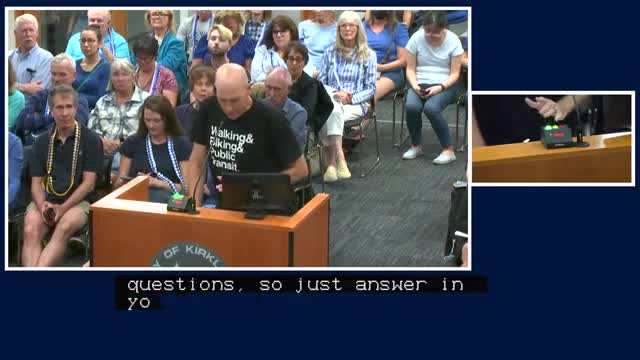
In a recent government meeting, discussions centered around urban planning, transportation, and community growth in Kirkland, Washington. A key focus was the Downs Thompson paradox, which highlights how increasing road capacity does not alleviate traffic congestion but instead encourages more people to drive, ultimately worsening the situation. This paradox suggests that viable alternatives to driving, such as public transport, biking, or walking, are essential for reducing car traffic. The speaker emphasized that improving these alternatives can lead to significant benefits for all residents, particularly those who rely on driving.
The meeting also addressed concerns regarding surplus land in Kirkland, particularly in relation to schools and parks. Community member Katie Malek expressed apprehension about proposals to utilize these spaces for tiny homes and mobile housing, arguing that such actions could undermine the community's essence and the vital role these areas play in fostering connections among residents. She urged the council to prioritize thoughtful growth management that protects the character of Kirkland.
Long-time resident Cathy Jacobs shared her experiences of living in Kirkland and voiced concerns about proposed density increases in areas lacking essential services and transit options. She warned that such developments could lead to a decline in family-oriented housing and school enrollment, urging the council to consider scaling back density plans to areas already equipped for higher density living.
The meeting concluded with a call for a balanced approach to development that considers the diverse needs of the community, ensuring Kirkland remains a livable and cherished place for all its residents.
The meeting also addressed concerns regarding surplus land in Kirkland, particularly in relation to schools and parks. Community member Katie Malek expressed apprehension about proposals to utilize these spaces for tiny homes and mobile housing, arguing that such actions could undermine the community's essence and the vital role these areas play in fostering connections among residents. She urged the council to prioritize thoughtful growth management that protects the character of Kirkland.
Long-time resident Cathy Jacobs shared her experiences of living in Kirkland and voiced concerns about proposed density increases in areas lacking essential services and transit options. She warned that such developments could lead to a decline in family-oriented housing and school enrollment, urging the council to consider scaling back density plans to areas already equipped for higher density living.
The meeting concluded with a call for a balanced approach to development that considers the diverse needs of the community, ensuring Kirkland remains a livable and cherished place for all its residents.
View the Full Meeting & All Its Details
This article offers just a summary. Unlock complete video, transcripts, and insights as a Founder Member.
✓
Watch full, unedited meeting videos
✓
Search every word spoken in unlimited transcripts
✓
AI summaries & real-time alerts (all government levels)
✓
Permanent access to expanding government content
30-day money-back guarantee
