Washington initiative sparks fierce debate over climate policy
September 03, 2024 | Redmond, King County, Washington
This article was created by AI summarizing key points discussed. AI makes mistakes, so for full details and context, please refer to the video of the full meeting. Please report any errors so we can fix them. Report an error »
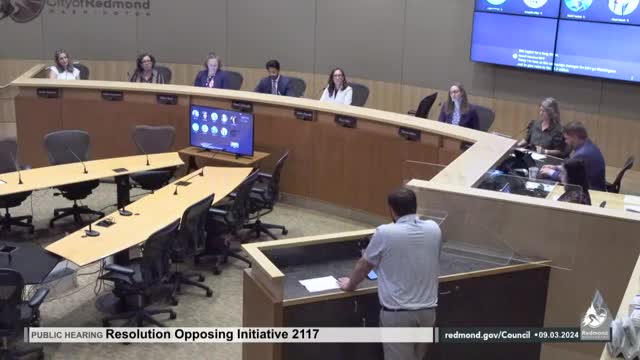
In a recent government meeting, discussions centered around the implications of the Climate Commitment Act (CCA) and the proposed Initiative 2117, which seeks to repeal the CCA. Critics of the CCA, including several residents and local leaders, voiced concerns about its economic impact, particularly on low- and middle-income families. They highlighted that gas prices have risen by approximately 50 cents per gallon since the CCA's implementation, with projections indicating further increases. Additionally, home heating costs have surged by about 40%, exacerbating the financial strain on households.
Opponents of the CCA argue that it has failed to deliver on its promises of reducing carbon emissions, with no data supporting claims of effectiveness since its enactment. They criticized the lack of accountability in how funds are allocated, suggesting that more resources are spent on administrative costs rather than on tangible environmental projects. Many speakers emphasized that the benefits of the CCA, such as subsidies for electric vehicles and renewable energy initiatives, disproportionately favor wealthier individuals, leaving lower-income communities to bear the brunt of rising costs.
Conversely, supporters of the CCA defended its role in funding essential projects aimed at reducing emissions and improving public transportation. They argued that repealing the CCA would undermine critical funding for initiatives that promote cleaner air and safer streets, particularly for vulnerable populations. Advocates pointed to successful programs funded by the CCA, such as free transit for youth and enhanced paratransit services, which have improved accessibility for those unable to drive.
The meeting underscored a deep divide among residents regarding the future of climate policy in Washington. As the council prepares to vote on the resolution opposing Initiative 2117, the outcome will significantly influence the state's approach to climate change and its economic implications for residents.
Opponents of the CCA argue that it has failed to deliver on its promises of reducing carbon emissions, with no data supporting claims of effectiveness since its enactment. They criticized the lack of accountability in how funds are allocated, suggesting that more resources are spent on administrative costs rather than on tangible environmental projects. Many speakers emphasized that the benefits of the CCA, such as subsidies for electric vehicles and renewable energy initiatives, disproportionately favor wealthier individuals, leaving lower-income communities to bear the brunt of rising costs.
Conversely, supporters of the CCA defended its role in funding essential projects aimed at reducing emissions and improving public transportation. They argued that repealing the CCA would undermine critical funding for initiatives that promote cleaner air and safer streets, particularly for vulnerable populations. Advocates pointed to successful programs funded by the CCA, such as free transit for youth and enhanced paratransit services, which have improved accessibility for those unable to drive.
The meeting underscored a deep divide among residents regarding the future of climate policy in Washington. As the council prepares to vote on the resolution opposing Initiative 2117, the outcome will significantly influence the state's approach to climate change and its economic implications for residents.
View the Full Meeting & All Its Details
This article offers just a summary. Unlock complete video, transcripts, and insights as a Founder Member.
✓
Watch full, unedited meeting videos
✓
Search every word spoken in unlimited transcripts
✓
AI summaries & real-time alerts (all government levels)
✓
Permanent access to expanding government content
30-day money-back guarantee
