Denver faces housing crisis as costs soar and supply dwindles
July 08, 2024 | Denver (Consolidated County and City), Colorado
This article was created by AI summarizing key points discussed. AI makes mistakes, so for full details and context, please refer to the video of the full meeting. Please report any errors so we can fix them. Report an error »
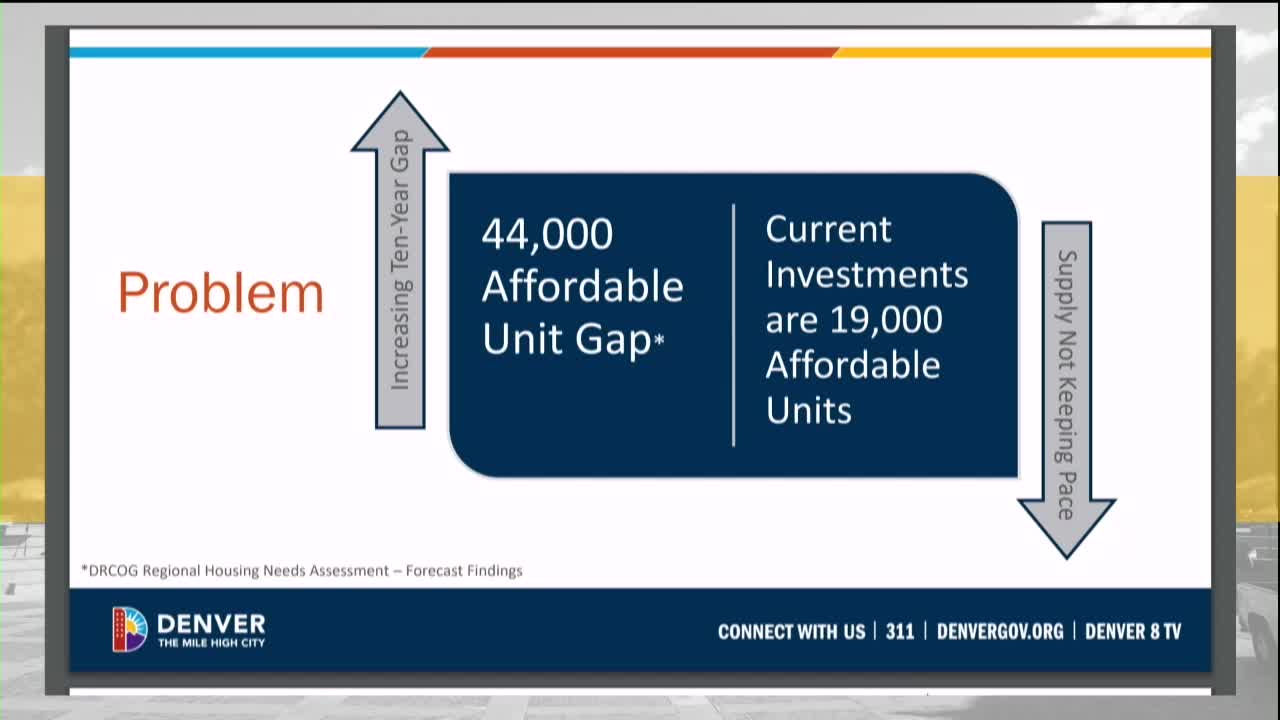
In a recent government meeting, officials addressed the pressing housing crisis in Denver, revealing a significant gap between the demand for affordable housing and the city's current resources. Over the next decade, the city is on track to serve approximately 19,000 households, yet there remains a shortfall of about 25,000 units needed to meet the growing demand.
The discussion highlighted alarming trends in housing affordability. In 2000, the median household income was $40,000, with a median home price of $165,000. Fast forward to 2022, the median household income rose to $84,000, but the median home price skyrocketed to $525,000, resulting in a stark disparity where housing costs have increased over 200% while incomes have only risen by 110%. Currently, nearly 40% of Denver residents are spending more than 30% of their gross income on housing, leading to financial strain and displacement, particularly among aging adults and essential workers like teachers and nurses.
To combat this crisis, city officials proposed the creation of the Affordable Denver Fund, which aims to implement innovative financing tools and expand funding for affordable housing initiatives, including accessory dwelling units (ADUs). A key component of this strategy is the introduction of a dedicated 0.5% sales tax, which would generate additional revenue to support housing efforts without impacting essential goods like groceries and gas.
The fund is designed to assist a range of income levels, from extremely low-income individuals exiting homelessness to middle-income households. Strategies include expanding rental subsidies, gap financing for housing projects, and enhancing down payment assistance programs to facilitate homeownership.
Officials emphasized the need for more resources and streamlined processes to address the housing shortage effectively. Current funding mechanisms, such as the affordable housing fund and the homeless resolution fund, generate approximately $92 million annually, which supports various housing initiatives, including eviction prevention and legal assistance.
As the city grapples with a projected 44,000-unit gap in housing availability, the proposed measures aim to create a more sustainable and inclusive housing landscape for all Denver residents.
The discussion highlighted alarming trends in housing affordability. In 2000, the median household income was $40,000, with a median home price of $165,000. Fast forward to 2022, the median household income rose to $84,000, but the median home price skyrocketed to $525,000, resulting in a stark disparity where housing costs have increased over 200% while incomes have only risen by 110%. Currently, nearly 40% of Denver residents are spending more than 30% of their gross income on housing, leading to financial strain and displacement, particularly among aging adults and essential workers like teachers and nurses.
To combat this crisis, city officials proposed the creation of the Affordable Denver Fund, which aims to implement innovative financing tools and expand funding for affordable housing initiatives, including accessory dwelling units (ADUs). A key component of this strategy is the introduction of a dedicated 0.5% sales tax, which would generate additional revenue to support housing efforts without impacting essential goods like groceries and gas.
The fund is designed to assist a range of income levels, from extremely low-income individuals exiting homelessness to middle-income households. Strategies include expanding rental subsidies, gap financing for housing projects, and enhancing down payment assistance programs to facilitate homeownership.
Officials emphasized the need for more resources and streamlined processes to address the housing shortage effectively. Current funding mechanisms, such as the affordable housing fund and the homeless resolution fund, generate approximately $92 million annually, which supports various housing initiatives, including eviction prevention and legal assistance.
As the city grapples with a projected 44,000-unit gap in housing availability, the proposed measures aim to create a more sustainable and inclusive housing landscape for all Denver residents.
View the Full Meeting & All Its Details
This article offers just a summary. Unlock complete video, transcripts, and insights as a Founder Member.
✓
Watch full, unedited meeting videos
✓
Search every word spoken in unlimited transcripts
✓
AI summaries & real-time alerts (all government levels)
✓
Permanent access to expanding government content
30-day money-back guarantee
