Divisions deepen as faith and politics collide in America
This article was created by AI summarizing key points discussed. AI makes mistakes, so for full details and context, please refer to the video of the full meeting. Please report any errors so we can fix them. Report an error »
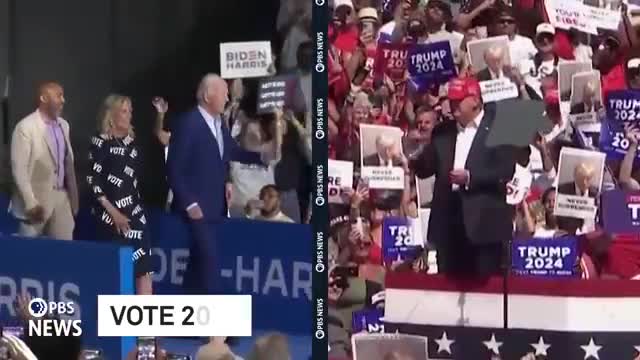
As the United States gears up for the presidential election, a recent PBS News Weekly segment highlighted the deepening divisions within American society, particularly through the lens of religion and its intersection with politics. The discussion, part of Judy Woodruff's ongoing series \"America at a Crossroads,\" revealed significant trends in religious affiliation and attendance, underscoring a shift in the American spiritual landscape.
According to the Pew Research Center, over a quarter of Americans now identify as having no religious affiliation, surpassing any single religious group. This trend reflects a broader decline in church attendance, particularly among white Christians, whose numbers have dwindled significantly since the 1970s. For instance, weekly attendance among Catholics has plummeted from 50% in 1972 to just 20% today. The decline is starkly illustrated by the fate of many congregations, such as the First Baptist Church in Mount Vernon, Illinois, which is set to close after struggling to maintain its membership.
Ryan Burge, a pastor and political scientist, noted that the proportion of Americans identifying as Christians has dropped from 90% in 1972 to around 65% today, with the \"nones\"—those identifying as atheists, agnostics, or having no particular faith—growing from 5% to nearly 30%. This shift is particularly pronounced among younger generations, where over 40% report no religious affiliation.
The segment also explored how political polarization is manifesting within religious communities. Many congregations are grappling with internal divisions over issues such as LGBTQ rights and immigration, leading some individuals to seek out more inclusive spaces. For example, the First United Methodist Church in Mount Vernon has become a refuge for those feeling alienated by more conservative congregations. Its pastor, Victor Long, emphasized the importance of unity within diversity, stating that the church welcomes individuals across the political spectrum.
As political rhetoric intensifies, particularly regarding immigration, the Latino community's role in moderating these divides was also discussed. Unlike other demographics, Latino voters exhibit less affective polarization, suggesting a potential pathway for bridging gaps within the broader political landscape.
The discussions at this meeting reflect a critical moment in American society, where the intersection of faith and politics is increasingly relevant. As religious institutions face declining attendance and growing polarization, the challenge remains for communities to foster inclusivity and dialogue amidst a backdrop of division.
According to the Pew Research Center, over a quarter of Americans now identify as having no religious affiliation, surpassing any single religious group. This trend reflects a broader decline in church attendance, particularly among white Christians, whose numbers have dwindled significantly since the 1970s. For instance, weekly attendance among Catholics has plummeted from 50% in 1972 to just 20% today. The decline is starkly illustrated by the fate of many congregations, such as the First Baptist Church in Mount Vernon, Illinois, which is set to close after struggling to maintain its membership.
Ryan Burge, a pastor and political scientist, noted that the proportion of Americans identifying as Christians has dropped from 90% in 1972 to around 65% today, with the \"nones\"—those identifying as atheists, agnostics, or having no particular faith—growing from 5% to nearly 30%. This shift is particularly pronounced among younger generations, where over 40% report no religious affiliation.
The segment also explored how political polarization is manifesting within religious communities. Many congregations are grappling with internal divisions over issues such as LGBTQ rights and immigration, leading some individuals to seek out more inclusive spaces. For example, the First United Methodist Church in Mount Vernon has become a refuge for those feeling alienated by more conservative congregations. Its pastor, Victor Long, emphasized the importance of unity within diversity, stating that the church welcomes individuals across the political spectrum.
As political rhetoric intensifies, particularly regarding immigration, the Latino community's role in moderating these divides was also discussed. Unlike other demographics, Latino voters exhibit less affective polarization, suggesting a potential pathway for bridging gaps within the broader political landscape.
The discussions at this meeting reflect a critical moment in American society, where the intersection of faith and politics is increasingly relevant. As religious institutions face declining attendance and growing polarization, the challenge remains for communities to foster inclusivity and dialogue amidst a backdrop of division.
Don't Miss a Word: See the Full Meeting!
Go beyond summaries. Unlock every video, transcript, and key insight with a Founder Membership.
✓
Get instant access to full meeting videos
✓
Search and clip any phrase from complete transcripts
✓
Receive AI-powered summaries & custom alerts
✓
Enjoy lifetime, unrestricted access to government data
30-day money-back guarantee
