Evangelical churches thrive as politics reshape faith landscape
This article was created by AI summarizing key points discussed. AI makes mistakes, so for full details and context, please refer to the video of the full meeting. Please report any errors so we can fix them. Report an error »
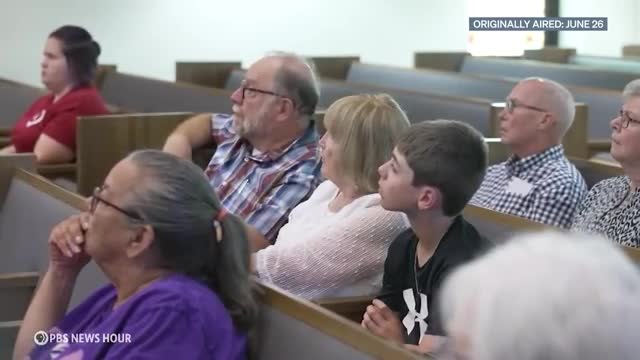
In a recent government meeting, discussions highlighted the evolving relationship between religion and politics in the United States, particularly among evangelical communities. Historically, many Americans viewed religion as the primary influence on their political choices. However, recent data suggests a significant shift: individuals are increasingly selecting their religious affiliations based on their political beliefs.
This trend is particularly pronounced among liberals, with 50% identifying as non-religious, compared to only 12% of conservatives. The meeting underscored how some evangelical churches, particularly those aligning with right-wing politics, are experiencing growth despite a general decline in church attendance across the country. For instance, Global Vision Bible Church in Mount Juliet, Tennessee, has attracted a dedicated following by embracing conservative political stances and rejecting mainstream COVID-19 guidelines.
Pastor Greg Locke, a prominent figure in this movement, has gained notoriety for his outspoken views, including claims that Democrats cannot be Christians and his participation in the January 6 Capitol events. Locke's church has become a hub for those seeking a community that aligns closely with their political and religious beliefs, often characterized by a rejection of liberal ideologies.
The meeting also touched on the historical context of this political-religious alignment, tracing it back to the late 1970s with the rise of the Moral Majority and figures like Jerry Falwell. Today, approximately 80% of white evangelicals identify as Republicans, creating a homogeneous environment in many congregations where dissenting political views are rarely heard.
Participants in the meeting expressed concern over the increasing politicization of faith, particularly during the COVID-19 pandemic, which forced many religious leaders to take clear stances on contentious issues. This polarization has led to a more defined separation between congregations based on political beliefs, with many churchgoers feeling compelled to choose sides.
As the 2024 presidential election approaches, the intersection of faith and politics remains a critical topic, with many church members indicating that their political choices are heavily influenced by their religious convictions, particularly on issues like abortion and support for Israel. The discussions from the meeting reflect a broader cultural shift that continues to shape the landscape of American religion and politics.
This trend is particularly pronounced among liberals, with 50% identifying as non-religious, compared to only 12% of conservatives. The meeting underscored how some evangelical churches, particularly those aligning with right-wing politics, are experiencing growth despite a general decline in church attendance across the country. For instance, Global Vision Bible Church in Mount Juliet, Tennessee, has attracted a dedicated following by embracing conservative political stances and rejecting mainstream COVID-19 guidelines.
Pastor Greg Locke, a prominent figure in this movement, has gained notoriety for his outspoken views, including claims that Democrats cannot be Christians and his participation in the January 6 Capitol events. Locke's church has become a hub for those seeking a community that aligns closely with their political and religious beliefs, often characterized by a rejection of liberal ideologies.
The meeting also touched on the historical context of this political-religious alignment, tracing it back to the late 1970s with the rise of the Moral Majority and figures like Jerry Falwell. Today, approximately 80% of white evangelicals identify as Republicans, creating a homogeneous environment in many congregations where dissenting political views are rarely heard.
Participants in the meeting expressed concern over the increasing politicization of faith, particularly during the COVID-19 pandemic, which forced many religious leaders to take clear stances on contentious issues. This polarization has led to a more defined separation between congregations based on political beliefs, with many churchgoers feeling compelled to choose sides.
As the 2024 presidential election approaches, the intersection of faith and politics remains a critical topic, with many church members indicating that their political choices are heavily influenced by their religious convictions, particularly on issues like abortion and support for Israel. The discussions from the meeting reflect a broader cultural shift that continues to shape the landscape of American religion and politics.
View the Full Meeting & All Its Details
This article offers just a summary. Unlock complete video, transcripts, and insights as a Founder Member.
✓
Watch full, unedited meeting videos
✓
Search every word spoken in unlimited transcripts
✓
AI summaries & real-time alerts (all government levels)
✓
Permanent access to expanding government content
30-day money-back guarantee
