Chancellor Scholz addresses global crises and far-right rise
This article was created by AI summarizing key points discussed. AI makes mistakes, so for full details and context, please refer to the video of the full meeting. Please report any errors so we can fix them. Report an error »
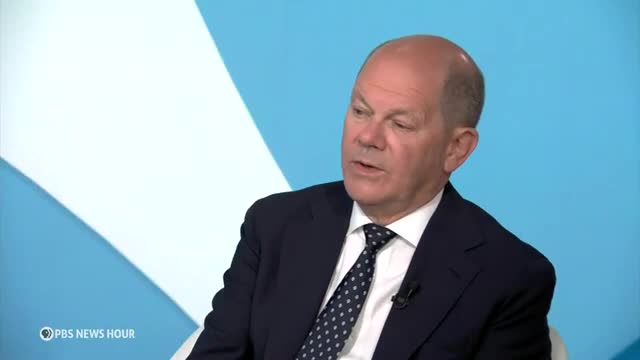
In a recent government meeting, key discussions centered around the ongoing conflict between Israel and Hamas, the situation in the West Bank, and the rise of far-right political movements in Europe, particularly in Germany.
Chancellor Olaf Scholz reaffirmed Israel's right to defend itself following the brutal attacks by Hamas, emphasizing the need to minimize civilian casualties during military operations. He highlighted the importance of humanitarian aid and reiterated the necessity for a two-state solution that would allow both Israel and a future Palestinian state to coexist peacefully.
The Chancellor also addressed the contentious issue of settlement expansions in the West Bank, calling for a halt to such activities and urging for the protection of Palestinian civilians. He acknowledged the significant loss of life in the region and stressed the need for clear communication and action from allies of Israel.
On a different note, the meeting touched upon the plight of Western journalists imprisoned in Russia, specifically Evan Gershkovitch. Scholz was questioned about potential prisoner exchanges involving a convicted Russian assassin, but he remained non-committal, stating that discussions of such nature are complex and should not be speculated upon.
The conversation then shifted to the political landscape in Germany and Europe, where Scholz expressed concern over the rise of far-right parties. He noted that this trend reflects a broader global issue, driven by public disillusionment with mainstream politics. The Chancellor emphasized the need for a strategic response to rebuild trust in political institutions and foster a more optimistic outlook for the future, which he believes is essential for social cohesion.
Scholz concluded the meeting by acknowledging the challenges ahead but remained hopeful about the potential for positive change in both domestic and international contexts.
Chancellor Olaf Scholz reaffirmed Israel's right to defend itself following the brutal attacks by Hamas, emphasizing the need to minimize civilian casualties during military operations. He highlighted the importance of humanitarian aid and reiterated the necessity for a two-state solution that would allow both Israel and a future Palestinian state to coexist peacefully.
The Chancellor also addressed the contentious issue of settlement expansions in the West Bank, calling for a halt to such activities and urging for the protection of Palestinian civilians. He acknowledged the significant loss of life in the region and stressed the need for clear communication and action from allies of Israel.
On a different note, the meeting touched upon the plight of Western journalists imprisoned in Russia, specifically Evan Gershkovitch. Scholz was questioned about potential prisoner exchanges involving a convicted Russian assassin, but he remained non-committal, stating that discussions of such nature are complex and should not be speculated upon.
The conversation then shifted to the political landscape in Germany and Europe, where Scholz expressed concern over the rise of far-right parties. He noted that this trend reflects a broader global issue, driven by public disillusionment with mainstream politics. The Chancellor emphasized the need for a strategic response to rebuild trust in political institutions and foster a more optimistic outlook for the future, which he believes is essential for social cohesion.
Scholz concluded the meeting by acknowledging the challenges ahead but remained hopeful about the potential for positive change in both domestic and international contexts.
View the Full Meeting & All Its Details
This article offers just a summary. Unlock complete video, transcripts, and insights as a Founder Member.
✓
Watch full, unedited meeting videos
✓
Search every word spoken in unlimited transcripts
✓
AI summaries & real-time alerts (all government levels)
✓
Permanent access to expanding government content
30-day money-back guarantee
