Debate ignites over school vouchers and religious education
This article was created by AI summarizing key points discussed. AI makes mistakes, so for full details and context, please refer to the video of the full meeting. Please report any errors so we can fix them. Report an error »
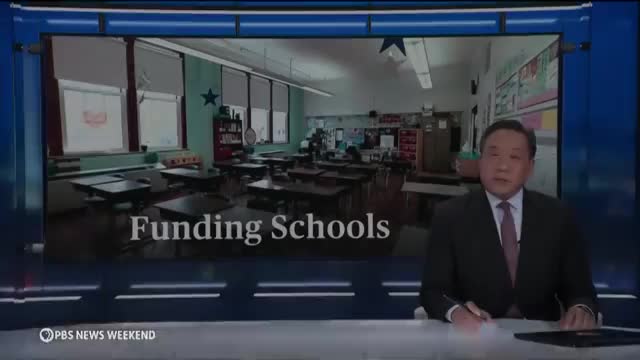
The ongoing debate over the role of religion in publicly funded education has intensified in Oklahoma, where the state school superintendent has mandated that public schools teach the Bible and the Ten Commandments. This development comes on the heels of a state supreme court ruling that blocked the establishment of what would have been the nation's first religious charter school. While the court has been increasingly open to the flow of public funds into religious education, a significant portion of school voucher money is already directed toward religious institutions, according to a Washington Post analysis.
The discussion surrounding school vouchers has drawn contrasting perspectives from advocates and critics. Robert Enloe, president of the nonprofit school voucher advocacy group ED Choice, argues that school choice empowers families to select educational options that best suit their needs. He cites examples from states like Indiana and Florida, where a diverse array of private schools, including those catering to special needs and LGBTQ students, have emerged under voucher programs. Enloe contends that these programs reflect a growing acceptance of pluralism in education, allowing parents to make choices rather than schools.
Conversely, Richard Katzke, director of Duke University's Appellate Litigation Clinic and former vice president of Americans United for Separation of Church and State, raises concerns about the implications of public funds supporting private religious schools. He argues that such institutions often have the discretion to exclude students based on various criteria, including disabilities and religious beliefs, which undermines the principle of equitable access to education. Katzke also points out that despite the legal backing for school choice, public sentiment has historically leaned against voucher programs, as evidenced by numerous failed ballot initiatives.
The debate touches on broader constitutional issues, particularly regarding the First Amendment's establishment clause. While the Supreme Court has ruled that voucher programs can be constitutional if they provide genuine choices for families, Katzke warns that this premise may not hold true in communities lacking diverse educational options. He emphasizes that the push for vouchers is often driven by wealthy interests rather than grassroots public demand, raising questions about the future of public education and its funding.
As the conversation continues, the implications of these policies on educational equity and the separation of church and state remain at the forefront of public discourse in Oklahoma and beyond.
The discussion surrounding school vouchers has drawn contrasting perspectives from advocates and critics. Robert Enloe, president of the nonprofit school voucher advocacy group ED Choice, argues that school choice empowers families to select educational options that best suit their needs. He cites examples from states like Indiana and Florida, where a diverse array of private schools, including those catering to special needs and LGBTQ students, have emerged under voucher programs. Enloe contends that these programs reflect a growing acceptance of pluralism in education, allowing parents to make choices rather than schools.
Conversely, Richard Katzke, director of Duke University's Appellate Litigation Clinic and former vice president of Americans United for Separation of Church and State, raises concerns about the implications of public funds supporting private religious schools. He argues that such institutions often have the discretion to exclude students based on various criteria, including disabilities and religious beliefs, which undermines the principle of equitable access to education. Katzke also points out that despite the legal backing for school choice, public sentiment has historically leaned against voucher programs, as evidenced by numerous failed ballot initiatives.
The debate touches on broader constitutional issues, particularly regarding the First Amendment's establishment clause. While the Supreme Court has ruled that voucher programs can be constitutional if they provide genuine choices for families, Katzke warns that this premise may not hold true in communities lacking diverse educational options. He emphasizes that the push for vouchers is often driven by wealthy interests rather than grassroots public demand, raising questions about the future of public education and its funding.
As the conversation continues, the implications of these policies on educational equity and the separation of church and state remain at the forefront of public discourse in Oklahoma and beyond.
Don't Miss a Word: See the Full Meeting!
Go beyond summaries. Unlock every video, transcript, and key insight with a Founder Membership.
✓
Get instant access to full meeting videos
✓
Search and clip any phrase from complete transcripts
✓
Receive AI-powered summaries & custom alerts
✓
Enjoy lifetime, unrestricted access to government data
30-day money-back guarantee
