Oklahoma leaders clash over controversial mental health consent decree
August 29, 2024 | Governor's Office, Executive, Oklahoma
This article was created by AI summarizing key points discussed. AI makes mistakes, so for full details and context, please refer to the video of the full meeting. Please report any errors so we can fix them. Report an error »
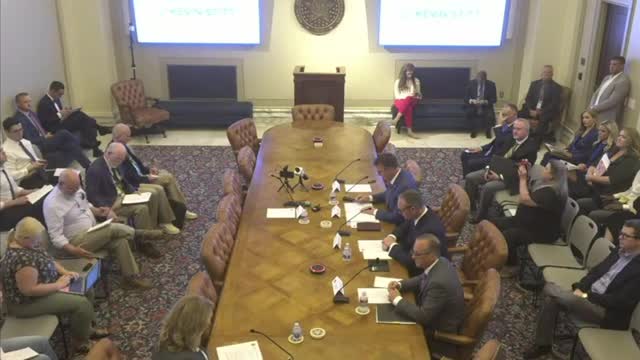
In a recent government meeting, Oklahoma Governor J. Kevin Stitt convened the Board to discuss a proposed consent decree related to the Briggs versus Friesen case, which has significant implications for mental health services in the state. The meeting was prompted by a request from the Attorney General and plaintiff's counsel for a federal judge to sign the decree, which aims to address mental health care within the justice system.
Governor Stitt emphasized the importance of ensuring that any agreement reached is beneficial for all Oklahomans, stating, \"We can and we must care for those in our justice system who are struggling with mental health conditions and also protect Oklahoma taxpayers.\" He noted that the meeting served as a necessary venue for discussion, as the Board is required to comply with the Open Meetings Act.
Commissioner of Mental Health Ali Friesen was invited to provide insights into the consent decree and its implications. Friesen expressed strong reservations about the current draft of the decree, stating that he had communicated his disapproval multiple times to the Attorney General, including through emails and phone calls. He highlighted two non-negotiable concerns that he felt had not been adequately addressed, emphasizing his commitment to advocating for effective mental health care.
Friesen, who identifies as a clinician first, articulated his dedication to transforming the mental health system in Oklahoma, asserting that agreeing to the decree as it stands would conflict with his ethical and legal responsibilities. He underscored the need for a system that genuinely serves those in need, rather than compromising on essential care standards.
The meeting concluded with a commitment to further discussions, as the Board seeks to navigate the complexities of the consent decree while prioritizing the welfare of Oklahoma's mental health services and the individuals they serve.
Governor Stitt emphasized the importance of ensuring that any agreement reached is beneficial for all Oklahomans, stating, \"We can and we must care for those in our justice system who are struggling with mental health conditions and also protect Oklahoma taxpayers.\" He noted that the meeting served as a necessary venue for discussion, as the Board is required to comply with the Open Meetings Act.
Commissioner of Mental Health Ali Friesen was invited to provide insights into the consent decree and its implications. Friesen expressed strong reservations about the current draft of the decree, stating that he had communicated his disapproval multiple times to the Attorney General, including through emails and phone calls. He highlighted two non-negotiable concerns that he felt had not been adequately addressed, emphasizing his commitment to advocating for effective mental health care.
Friesen, who identifies as a clinician first, articulated his dedication to transforming the mental health system in Oklahoma, asserting that agreeing to the decree as it stands would conflict with his ethical and legal responsibilities. He underscored the need for a system that genuinely serves those in need, rather than compromising on essential care standards.
The meeting concluded with a commitment to further discussions, as the Board seeks to navigate the complexities of the consent decree while prioritizing the welfare of Oklahoma's mental health services and the individuals they serve.
Don't Miss a Word: See the Full Meeting!
Go beyond summaries. Unlock every video, transcript, and key insight with a Founder Membership.
✓
Get instant access to full meeting videos
✓
Search and clip any phrase from complete transcripts
✓
Receive AI-powered summaries & custom alerts
✓
Enjoy lifetime, unrestricted access to government data
30-day money-back guarantee
