New regulations set to transform renewable energy projects
August 15, 2024 | Stevens County, Minnesota
This article was created by AI summarizing key points discussed. AI makes mistakes, so for full details and context, please refer to the video of the full meeting. Please report any errors so we can fix them. Report an error »
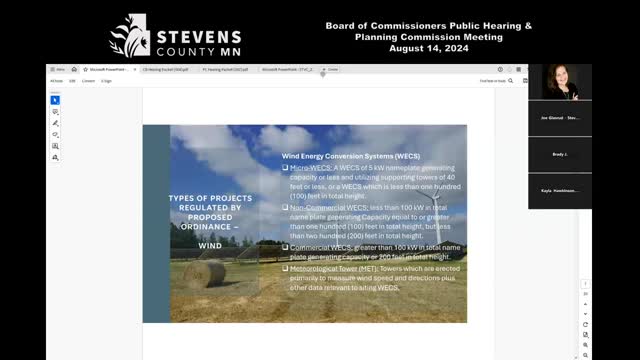
In a recent government meeting, officials discussed new regulations concerning renewable energy projects, specifically focusing on wind and solar energy systems, as well as energy storage solutions. The proposed ordinance aims to streamline the permitting process and establish clear guidelines for the installation and operation of these systems.
The ordinance categorizes energy projects into four main types: meteorological towers, wind energy conversion systems (WEX), solar energy systems, and energy storage systems. Meteorological towers will be used to assess wind speeds and determine optimal locations for wind turbines. Wind energy projects are divided into micro, non-commercial, and commercial categories, with specific regulations for each, including setback requirements from property lines and dwellings to protect neighboring properties' wind rights.
Solar energy systems are similarly categorized, with provisions for small residential installations and larger solar farms. The ordinance outlines application requirements that vary based on the scale of the project, ensuring that larger commercial projects meet more stringent criteria.
Energy storage systems, often involving battery farms, will require interim use permits regardless of their location. The regulations address potential noise and fire hazards associated with these systems and mandate that operators submit decommissioning plans, including financial security measures to ensure proper site restoration after the project's lifespan.
Setback requirements for both wind and solar projects are designed to mitigate impacts on surrounding properties and infrastructure. For instance, wind towers must maintain a distance of three to five rotor diameters from property lines, depending on wind direction, while solar installations have less stringent setback requirements.
The meeting highlighted the importance of community engagement and education for local emergency responders to ensure preparedness for any incidents related to renewable energy projects. Overall, the proposed ordinance reflects a commitment to promoting renewable energy while balancing community interests and environmental considerations.
The ordinance categorizes energy projects into four main types: meteorological towers, wind energy conversion systems (WEX), solar energy systems, and energy storage systems. Meteorological towers will be used to assess wind speeds and determine optimal locations for wind turbines. Wind energy projects are divided into micro, non-commercial, and commercial categories, with specific regulations for each, including setback requirements from property lines and dwellings to protect neighboring properties' wind rights.
Solar energy systems are similarly categorized, with provisions for small residential installations and larger solar farms. The ordinance outlines application requirements that vary based on the scale of the project, ensuring that larger commercial projects meet more stringent criteria.
Energy storage systems, often involving battery farms, will require interim use permits regardless of their location. The regulations address potential noise and fire hazards associated with these systems and mandate that operators submit decommissioning plans, including financial security measures to ensure proper site restoration after the project's lifespan.
Setback requirements for both wind and solar projects are designed to mitigate impacts on surrounding properties and infrastructure. For instance, wind towers must maintain a distance of three to five rotor diameters from property lines, depending on wind direction, while solar installations have less stringent setback requirements.
The meeting highlighted the importance of community engagement and education for local emergency responders to ensure preparedness for any incidents related to renewable energy projects. Overall, the proposed ordinance reflects a commitment to promoting renewable energy while balancing community interests and environmental considerations.
Don't Miss a Word: See the Full Meeting!
Go beyond summaries. Unlock every video, transcript, and key insight with a Founder Membership.
✓
Get instant access to full meeting videos
✓
Search and clip any phrase from complete transcripts
✓
Receive AI-powered summaries & custom alerts
✓
Enjoy lifetime, unrestricted access to government data
30-day money-back guarantee
