Michigan moves to reform social work licensing amid crisis
June 13, 2024 | Behavioral Health, Health Policy, House of Representative, Committees , Legislative, Michigan
This article was created by AI summarizing key points discussed. AI makes mistakes, so for full details and context, please refer to the video of the full meeting. Please report any errors so we can fix them. Report an error »
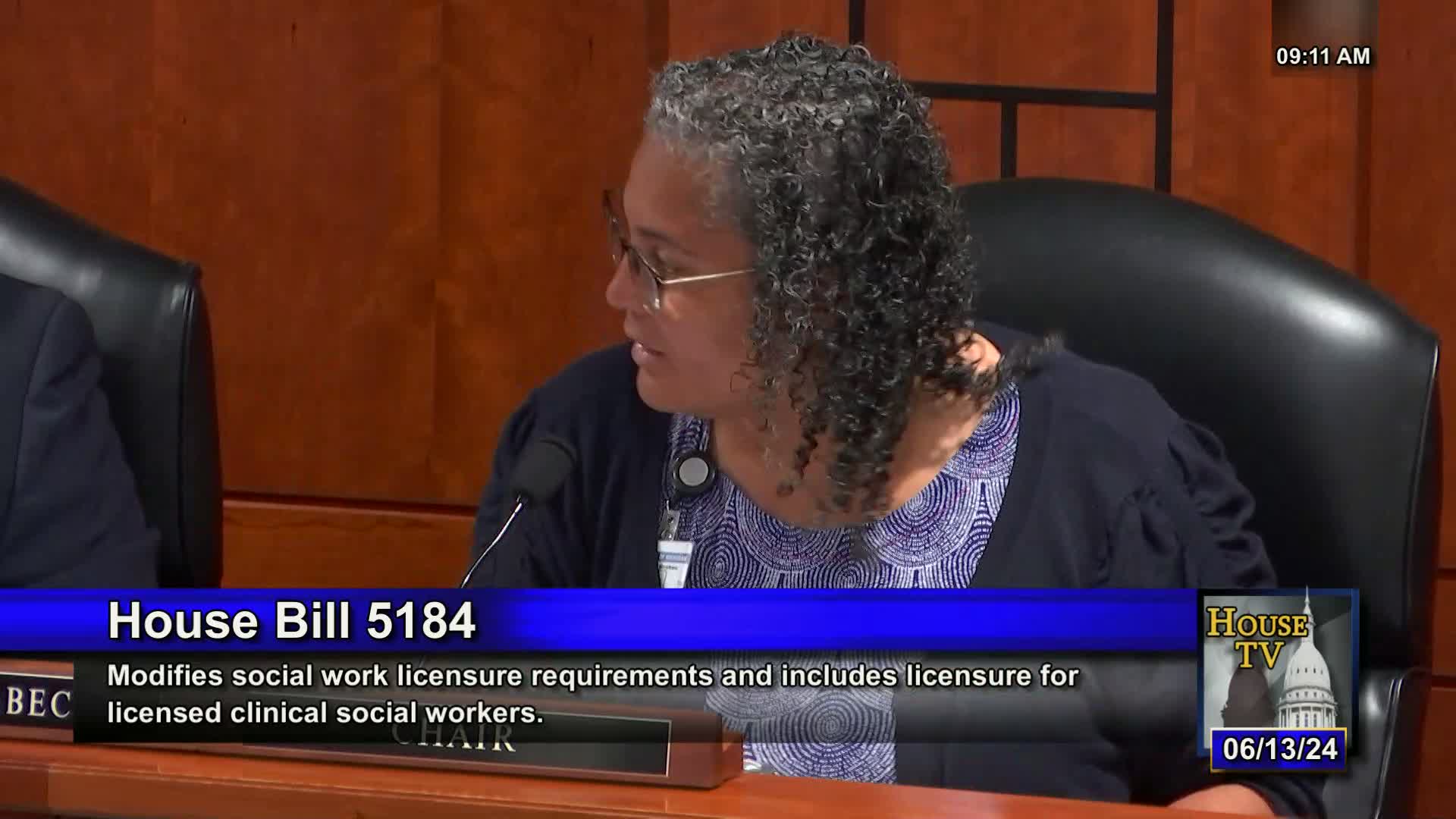
In a recent government meeting, significant discussions centered around proposed changes to social work licensing requirements in Michigan, aimed at addressing the state's critical workforce shortage in the field. House Bills 5184 and 5185, introduced by Representatives Brabec and Edwards, seek to implement a jurisprudence exam for social workers and extend the licensing window for those who have previously missed the opportunity to take the exam.
The proposed legislation aims to create a more equitable pathway for social workers, particularly those who have faced barriers in the current licensing process. The changes include reducing the required hours of clinical supervision from 4,000 to 3,000, aligning Michigan's requirements with those of other states. This move is expected to facilitate the return of many qualified individuals to the profession, particularly those who have been unable to pass the existing licensing examination.
Dwayne Bray Jack, executive director of the National Association of Social Workers, Michigan Chapter, emphasized the urgency of these reforms, citing a national workforce shortage and a mental health crisis exacerbated by the COVID-19 pandemic. He noted that many social workers have been forced to leave the profession due to the stringent licensing requirements, which he described as biased and outdated.
The proposed changes are seen as a vital step in retaining current social workers and attracting new professionals to the field. Bray Jack highlighted that Michigan is currently the only state using a limited license process, which has led to complications in billing and reciprocity with other states. He pointed out that recent legislative changes in neighboring states have resulted in an influx of social workers, and similar outcomes are anticipated in Michigan if the bills are passed.
The meeting concluded with a call for support from committee members, as the proposed legislation is expected to significantly impact the social work landscape in Michigan, ultimately improving access to mental health services for residents. The committee will continue discussions and is expected to vote on the bills in the coming weeks.
The proposed legislation aims to create a more equitable pathway for social workers, particularly those who have faced barriers in the current licensing process. The changes include reducing the required hours of clinical supervision from 4,000 to 3,000, aligning Michigan's requirements with those of other states. This move is expected to facilitate the return of many qualified individuals to the profession, particularly those who have been unable to pass the existing licensing examination.
Dwayne Bray Jack, executive director of the National Association of Social Workers, Michigan Chapter, emphasized the urgency of these reforms, citing a national workforce shortage and a mental health crisis exacerbated by the COVID-19 pandemic. He noted that many social workers have been forced to leave the profession due to the stringent licensing requirements, which he described as biased and outdated.
The proposed changes are seen as a vital step in retaining current social workers and attracting new professionals to the field. Bray Jack highlighted that Michigan is currently the only state using a limited license process, which has led to complications in billing and reciprocity with other states. He pointed out that recent legislative changes in neighboring states have resulted in an influx of social workers, and similar outcomes are anticipated in Michigan if the bills are passed.
The meeting concluded with a call for support from committee members, as the proposed legislation is expected to significantly impact the social work landscape in Michigan, ultimately improving access to mental health services for residents. The committee will continue discussions and is expected to vote on the bills in the coming weeks.
Don't Miss a Word: See the Full Meeting!
Go beyond summaries. Unlock every video, transcript, and key insight with a Founder Membership.
✓
Get instant access to full meeting videos
✓
Search and clip any phrase from complete transcripts
✓
Receive AI-powered summaries & custom alerts
✓
Enjoy lifetime, unrestricted access to government data
30-day money-back guarantee
