Mapping Prejudice reveals deep roots of racial inequality
June 18, 2024 | Ramsey County, Minnesota
This article was created by AI summarizing key points discussed. AI makes mistakes, so for full details and context, please refer to the video of the full meeting. Please report any errors so we can fix them. Report an error »
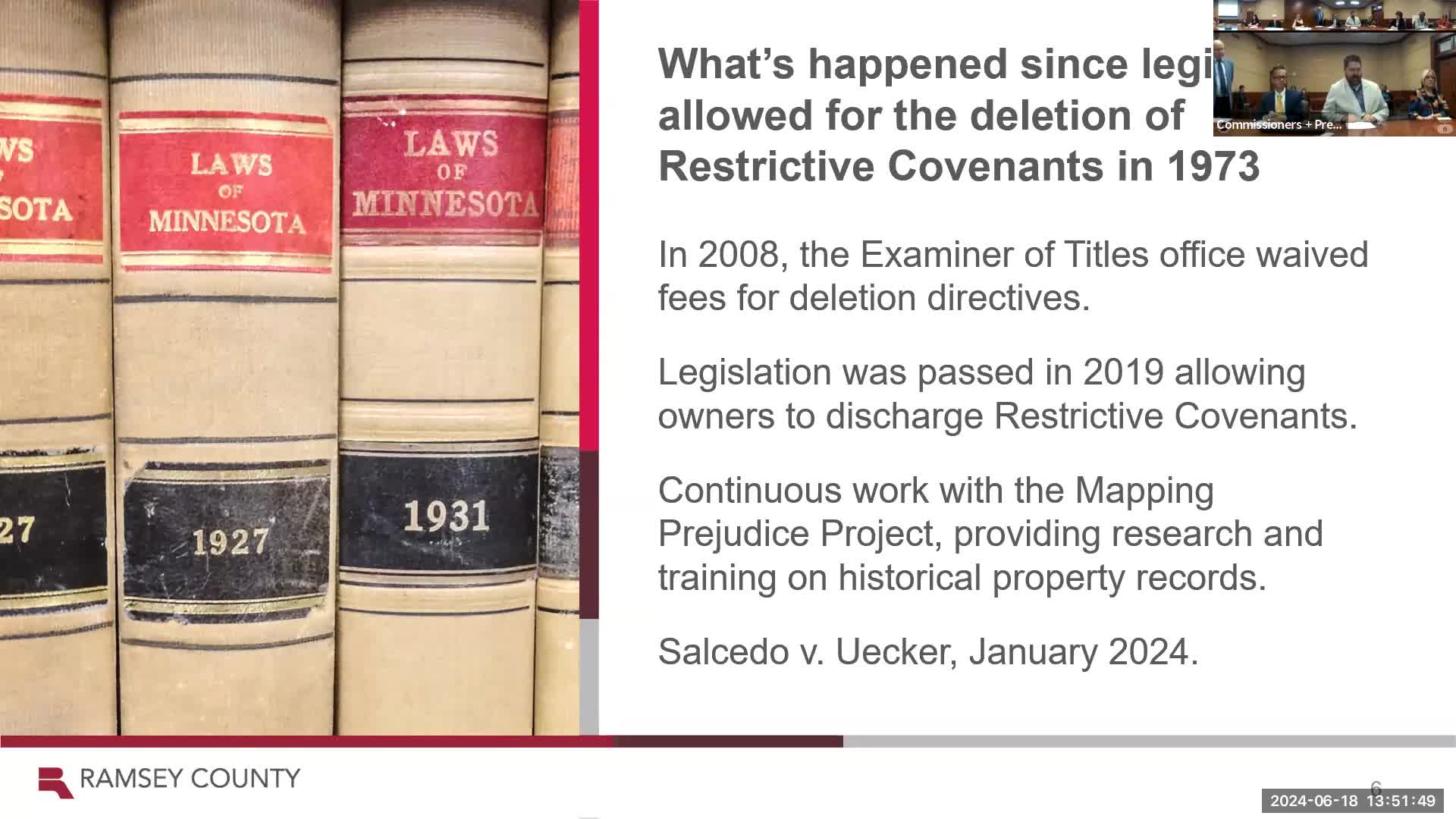
In a recent government meeting, officials highlighted the enduring impact of racial covenants on homeownership disparities in the Twin Cities, which currently has the highest gap between white and Black homeownership in the United States. The discussion centered on the historical context of these covenants, which have contributed to ongoing economic inequalities, as properties with such restrictions continue to appreciate in value, benefiting current owners and their heirs.
The meeting featured insights from the Mapping Prejudice project, which has successfully mapped over 32,000 racial covenants in Minnesota. This initiative began in Ramsey County and has expanded to include agreements with six of the seven metro area counties, with ongoing mapping efforts in Anoka and Washington counties, as well as Milwaukee County. The project aims to create a comprehensive metro map that illustrates the legacy of these discriminatory practices.
Officials also noted that while racial covenants are a significant factor in segregation and wealth hoarding, they are not the sole contributors. Many neighborhoods, even those without covenants, have histories of violence and systemic barriers that hinder equitable access to housing and loans.
Additionally, the meeting touched on Minnesota's proactive stance in adopting discharge laws related to these covenants, with Ramsey County recognized for its leadership in this area. The discussions included considerations for legislative language regarding the removal or discharge of covenants, reflecting a broader commitment to addressing historical injustices and promoting equitable housing policies.
The meeting underscored the importance of continued collaboration among local governments and organizations to combat the legacies of segregation and to foster a more inclusive housing landscape.
The meeting featured insights from the Mapping Prejudice project, which has successfully mapped over 32,000 racial covenants in Minnesota. This initiative began in Ramsey County and has expanded to include agreements with six of the seven metro area counties, with ongoing mapping efforts in Anoka and Washington counties, as well as Milwaukee County. The project aims to create a comprehensive metro map that illustrates the legacy of these discriminatory practices.
Officials also noted that while racial covenants are a significant factor in segregation and wealth hoarding, they are not the sole contributors. Many neighborhoods, even those without covenants, have histories of violence and systemic barriers that hinder equitable access to housing and loans.
Additionally, the meeting touched on Minnesota's proactive stance in adopting discharge laws related to these covenants, with Ramsey County recognized for its leadership in this area. The discussions included considerations for legislative language regarding the removal or discharge of covenants, reflecting a broader commitment to addressing historical injustices and promoting equitable housing policies.
The meeting underscored the importance of continued collaboration among local governments and organizations to combat the legacies of segregation and to foster a more inclusive housing landscape.
Don't Miss a Word: See the Full Meeting!
Go beyond summaries. Unlock every video, transcript, and key insight with a Founder Membership.
✓
Get instant access to full meeting videos
✓
Search and clip any phrase from complete transcripts
✓
Receive AI-powered summaries & custom alerts
✓
Enjoy lifetime, unrestricted access to government data
30-day money-back guarantee
