Intergenerational equity crisis threatens state retirement systems
July 08, 2024 | Retirement Study Council , Joint, Committees, Legislative, Ohio
This article was created by AI summarizing key points discussed. AI makes mistakes, so for full details and context, please refer to the video of the full meeting. Please report any errors so we can fix them. Report an error »
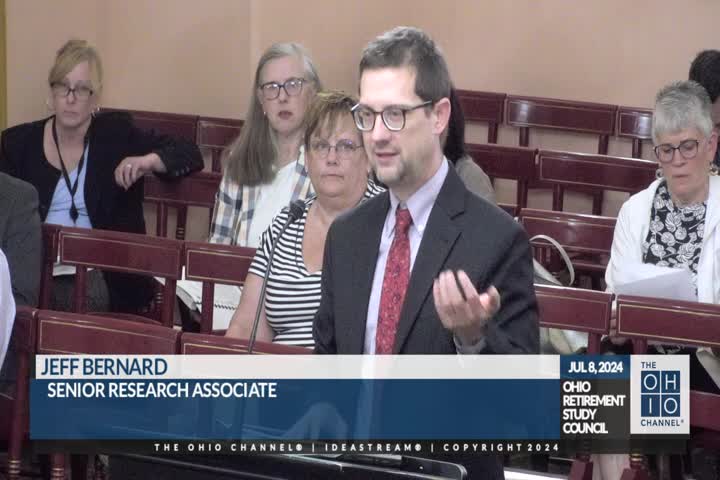
In a recent government meeting, discussions centered on the critical issue of intergenerational equity within state retirement systems, particularly focusing on the South Dakota Retirement System (SDRS) and the State Teachers Retirement System (STRS). The meeting highlighted the ongoing challenges faced by these systems, emphasizing the need for a balanced approach to pension financing that does not unfairly burden future generations.
The concept of intergenerational equity was framed as a foundational principle governing pension systems, which asserts that each generation should finance its own benefits through contributions from employees, employers, and taxpayers. This principle aims to prevent the shifting of financial burdens onto future generations, ensuring that no group pays more or less than necessary for their own benefits.
A significant concern raised during the meeting was the disparity in funding between current active employees and retirees. It was noted that the current generation of STRS retirees did not adequately fund their benefits, resulting in active employees and taxpayers shouldering the financial responsibility. The meeting underscored that while there is no blame assigned to previous generations, the reality remains that the current workforce is contributing a substantial portion of their salaries—approximately 28%—to cover both current benefits and existing debt.
The discussion also touched on the financial implications of providing retirement benefits, with STRS reportedly paying out $7.2 billion to retirees in 2021, while only receiving about $3.1 billion in contributions. This imbalance necessitates significant investment strategies to ensure long-term sustainability of the retirement system.
The meeting concluded with a call for a reevaluation of funding strategies to align with the principles of intergenerational equity, ensuring that future generations are not left to bear the financial burdens created by their predecessors. The emphasis on a balanced approach to pension financing reflects a growing recognition of the need for sustainable solutions in state retirement systems.
The concept of intergenerational equity was framed as a foundational principle governing pension systems, which asserts that each generation should finance its own benefits through contributions from employees, employers, and taxpayers. This principle aims to prevent the shifting of financial burdens onto future generations, ensuring that no group pays more or less than necessary for their own benefits.
A significant concern raised during the meeting was the disparity in funding between current active employees and retirees. It was noted that the current generation of STRS retirees did not adequately fund their benefits, resulting in active employees and taxpayers shouldering the financial responsibility. The meeting underscored that while there is no blame assigned to previous generations, the reality remains that the current workforce is contributing a substantial portion of their salaries—approximately 28%—to cover both current benefits and existing debt.
The discussion also touched on the financial implications of providing retirement benefits, with STRS reportedly paying out $7.2 billion to retirees in 2021, while only receiving about $3.1 billion in contributions. This imbalance necessitates significant investment strategies to ensure long-term sustainability of the retirement system.
The meeting concluded with a call for a reevaluation of funding strategies to align with the principles of intergenerational equity, ensuring that future generations are not left to bear the financial burdens created by their predecessors. The emphasis on a balanced approach to pension financing reflects a growing recognition of the need for sustainable solutions in state retirement systems.
Don't Miss a Word: See the Full Meeting!
Go beyond summaries. Unlock every video, transcript, and key insight with a Founder Membership.
✓
Get instant access to full meeting videos
✓
Search and clip any phrase from complete transcripts
✓
Receive AI-powered summaries & custom alerts
✓
Enjoy lifetime, unrestricted access to government data
30-day money-back guarantee
