City Council Moves Forward with Controversial Weed Abatement Program
June 24, 2024 | Upland, San Bernardino County, California
This article was created by AI summarizing key points discussed. AI makes mistakes, so for full details and context, please refer to the video of the full meeting. Please report any errors so we can fix them. Report an error »
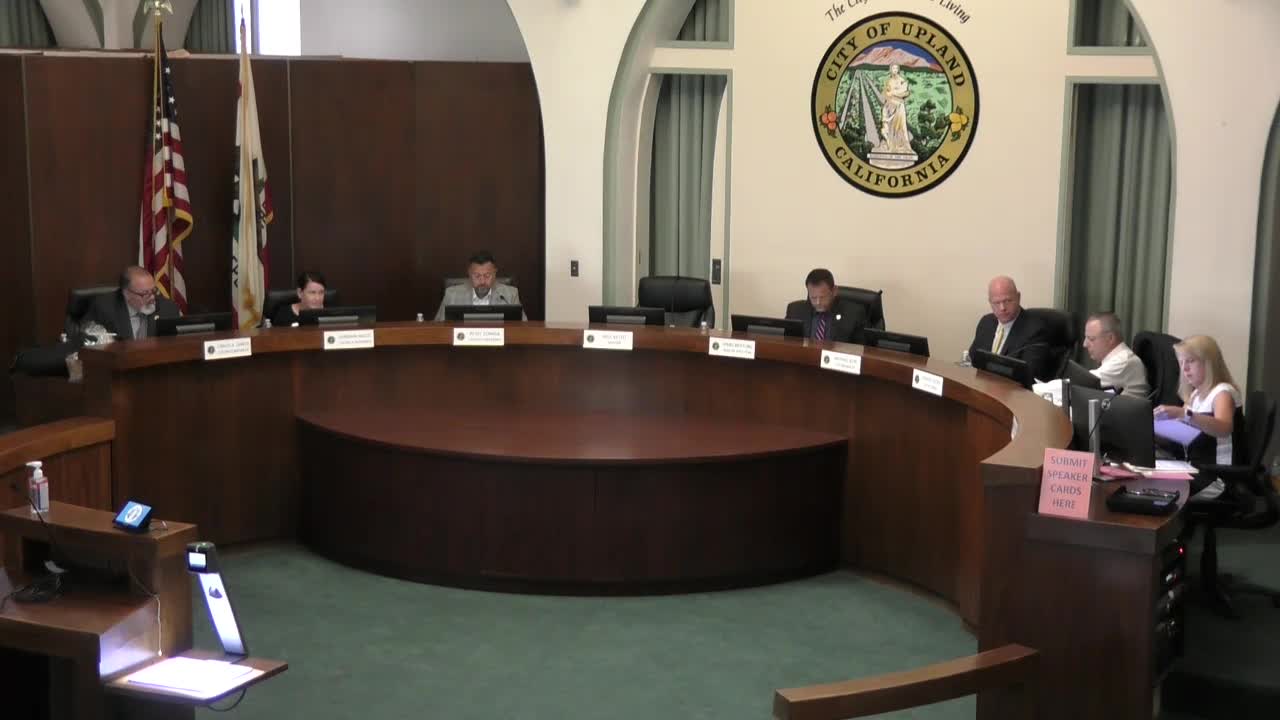
During a recent city council meeting, officials discussed the approval of the Weed Abatement Infraction Log and the abatement of public nuisances, a critical component of the city's annual weed abatement program. Development Services Director Robert Dahlquist, along with Housing Manager Diane Cotto and Weed Abatement Coordinator Julie Hernandez, presented the program's framework and its importance in maintaining community safety and compliance.
The city’s weed abatement inspections span approximately seven months each year, focusing on fuel reduction, defensible space, and evacuation routes. The council approved a resolution earlier this year that designates unmaintained weeds and vegetation as public nuisances, empowering staff to initiate inspections and encourage voluntary compliance through various outreach methods, including social media and community events.
For the 2024 calendar year, the city has implemented a structured notification process for property owners. Initially, two courtesy notices are sent out, allowing 15 days for compliance before further action is taken. If property owners fail to respond, they may incur administrative fees and face potential abatement actions, which could involve the city hiring contractors to address the issues at the property owner's expense.
During the public hearing segment, several residents voiced their concerns regarding the program. Nathan Stewart, a property owner, requested an extension to complete necessary landscaping work due to personal circumstances. Katie Parker, representing the Chino Basin Water Conservation District, emphasized the connection between weed abatement and water-efficient landscaping, suggesting a rebranding of the program to better reflect its focus on fire hazard reduction.
Other residents expressed frustration over the clarity of notices and the perceived lack of communication from city officials regarding compliance expectations. The council acknowledged these concerns and discussed the need for improved communication and education regarding fire hazards and landscaping maintenance.
The council ultimately decided to approve the weed abatement program while allowing for further discussions with residents who had made efforts to comply. They emphasized the importance of providing property owners with clear guidance and support to ensure compliance with the city's regulations. The meeting concluded with a commitment to enhance the program's user-friendliness and to engage with residents more effectively in the future.
The city’s weed abatement inspections span approximately seven months each year, focusing on fuel reduction, defensible space, and evacuation routes. The council approved a resolution earlier this year that designates unmaintained weeds and vegetation as public nuisances, empowering staff to initiate inspections and encourage voluntary compliance through various outreach methods, including social media and community events.
For the 2024 calendar year, the city has implemented a structured notification process for property owners. Initially, two courtesy notices are sent out, allowing 15 days for compliance before further action is taken. If property owners fail to respond, they may incur administrative fees and face potential abatement actions, which could involve the city hiring contractors to address the issues at the property owner's expense.
During the public hearing segment, several residents voiced their concerns regarding the program. Nathan Stewart, a property owner, requested an extension to complete necessary landscaping work due to personal circumstances. Katie Parker, representing the Chino Basin Water Conservation District, emphasized the connection between weed abatement and water-efficient landscaping, suggesting a rebranding of the program to better reflect its focus on fire hazard reduction.
Other residents expressed frustration over the clarity of notices and the perceived lack of communication from city officials regarding compliance expectations. The council acknowledged these concerns and discussed the need for improved communication and education regarding fire hazards and landscaping maintenance.
The council ultimately decided to approve the weed abatement program while allowing for further discussions with residents who had made efforts to comply. They emphasized the importance of providing property owners with clear guidance and support to ensure compliance with the city's regulations. The meeting concluded with a commitment to enhance the program's user-friendliness and to engage with residents more effectively in the future.
Don't Miss a Word: See the Full Meeting!
Go beyond summaries. Unlock every video, transcript, and key insight with a Founder Membership.
✓
Get instant access to full meeting videos
✓
Search and clip any phrase from complete transcripts
✓
Receive AI-powered summaries & custom alerts
✓
Enjoy lifetime, unrestricted access to government data
30-day money-back guarantee
