Court Programs Show Dramatic Impact on Recidivism Rates
July 26, 2024 | Eaton County, Michigan
This article was created by AI summarizing key points discussed. AI makes mistakes, so for full details and context, please refer to the video of the full meeting. Please report any errors so we can fix them. Report an error »
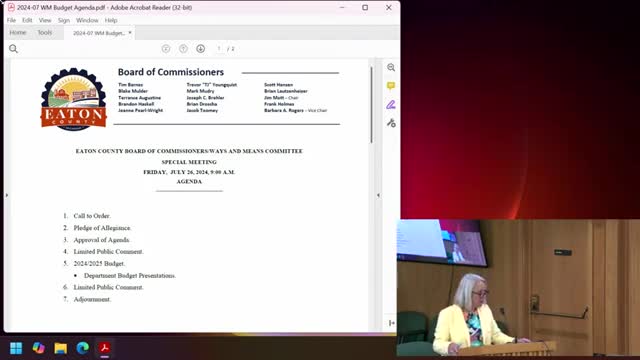
In a recent government meeting, officials emphasized the critical role of the judicial system in fostering public confidence and maintaining community well-being. Judge Cunningham highlighted the importance of integrity, impartiality, and timeliness in court operations, noting that the work of the courts impacts every citizen, whether directly involved or not.
The meeting featured discussions on the requirements set by the Michigan Supreme Court, which oversees all state courts and mandates the collection of performance data. This data is essential for assessing the effectiveness of various court programs, particularly specialty courts that focus on rehabilitation, such as drug courts and veteran treatment courts.
Cunningham shared compelling statistics demonstrating the success of these programs. For instance, individuals who graduated from the circuit court drug court program had a recidivism rate of zero for alcohol or drug-related convictions over three years, compared to a 29% rate for those who did not participate. Similarly, the sobriety court reported a 64% recidivism rate among non-graduates, underscoring the necessity of these diversion programs for community safety and health.
The collaborative nature of these programs was also emphasized, with contributions from various local agencies, including the sheriff's department and public defenders. Cunningham warned that any cuts to these services could significantly harm Eaton County, stressing the need for continued support and resources to maintain these vital programs.
Court Administrator Amy Edsel provided an overview of the court's structure, which includes seven departments and a total of 89 full-time positions, alongside part-time and on-call staff. The meeting concluded with a call for understanding and support from local officials to ensure the courts can continue to serve the community effectively.
The meeting featured discussions on the requirements set by the Michigan Supreme Court, which oversees all state courts and mandates the collection of performance data. This data is essential for assessing the effectiveness of various court programs, particularly specialty courts that focus on rehabilitation, such as drug courts and veteran treatment courts.
Cunningham shared compelling statistics demonstrating the success of these programs. For instance, individuals who graduated from the circuit court drug court program had a recidivism rate of zero for alcohol or drug-related convictions over three years, compared to a 29% rate for those who did not participate. Similarly, the sobriety court reported a 64% recidivism rate among non-graduates, underscoring the necessity of these diversion programs for community safety and health.
The collaborative nature of these programs was also emphasized, with contributions from various local agencies, including the sheriff's department and public defenders. Cunningham warned that any cuts to these services could significantly harm Eaton County, stressing the need for continued support and resources to maintain these vital programs.
Court Administrator Amy Edsel provided an overview of the court's structure, which includes seven departments and a total of 89 full-time positions, alongside part-time and on-call staff. The meeting concluded with a call for understanding and support from local officials to ensure the courts can continue to serve the community effectively.
Don't Miss a Word: See the Full Meeting!
Go beyond summaries. Unlock every video, transcript, and key insight with a Founder Membership.
✓
Get instant access to full meeting videos
✓
Search and clip any phrase from complete transcripts
✓
Receive AI-powered summaries & custom alerts
✓
Enjoy lifetime, unrestricted access to government data
30-day money-back guarantee
