Old Glory's journey from sea captain to national treasure
June 07, 2024 | Washington County Republican Women, Utah Lobbyist / NGO, Utah Legislative Branch, Utah
This article was created by AI summarizing key points discussed. AI makes mistakes, so for full details and context, please refer to the video of the full meeting. Please report any errors so we can fix them. Report an error »
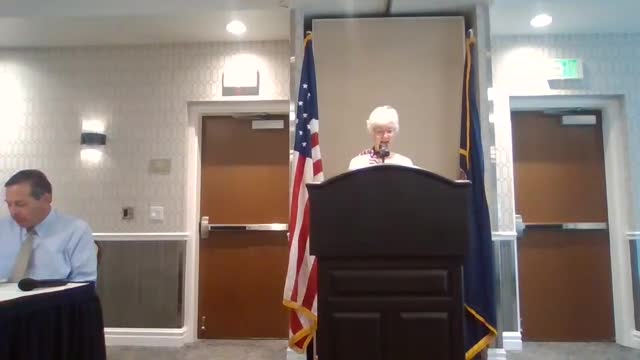
In a captivating recount of American history, the origins of the nickname \"Old Glory\" were highlighted during a recent discussion. The story centers around 19th-century sea captain William Driver from Salem, Massachusetts, who received a homemade flag with 24 stars from his mother to commemorate his appointment as a master mariner at the age of 21.
Driver's flag became a symbol of union loyalty during the Civil War, as he proudly displayed it aboard his ship while sailing across the globe. He described the flag as a \"staunch companion and protection,\" representing freedom and home in distant lands. His emotional connection to the flag was evident when he famously declared, \"my ship, my country, my flag, oh glory,\" upon raising it for the first time.
After relocating to Nashville in 1837, Driver continued to display his cherished flag, despite facing threats from local Confederate soldiers, including his own sons who were enlisted in the Confederate army. His unwavering loyalty to the Union was demonstrated when he boldly stated, \"if you want my flag, you'll have to take it over my dead body.\" To protect Old Glory from confiscation, neighbors cleverly concealed it by sewing it into a bed quilt.
The flag's legacy endured through tumultuous times, surviving both the Civil War and personal family conflicts. Following the war, Driver revealed the flag when Union forces captured Nashville, and it eventually found its way to the Smithsonian Institution in the early 1900s, where it is now displayed at the National Museum of American History in Washington, D.C.
Driver's story serves as a poignant reminder of the deep reverence many Americans hold for their flag, embodying a spirit of devotion and patriotism that continues to inspire. The meeting concluded with a call for attendees to stand and recite the Pledge of Allegiance, reinforcing the enduring significance of Old Glory in American culture.
Driver's flag became a symbol of union loyalty during the Civil War, as he proudly displayed it aboard his ship while sailing across the globe. He described the flag as a \"staunch companion and protection,\" representing freedom and home in distant lands. His emotional connection to the flag was evident when he famously declared, \"my ship, my country, my flag, oh glory,\" upon raising it for the first time.
After relocating to Nashville in 1837, Driver continued to display his cherished flag, despite facing threats from local Confederate soldiers, including his own sons who were enlisted in the Confederate army. His unwavering loyalty to the Union was demonstrated when he boldly stated, \"if you want my flag, you'll have to take it over my dead body.\" To protect Old Glory from confiscation, neighbors cleverly concealed it by sewing it into a bed quilt.
The flag's legacy endured through tumultuous times, surviving both the Civil War and personal family conflicts. Following the war, Driver revealed the flag when Union forces captured Nashville, and it eventually found its way to the Smithsonian Institution in the early 1900s, where it is now displayed at the National Museum of American History in Washington, D.C.
Driver's story serves as a poignant reminder of the deep reverence many Americans hold for their flag, embodying a spirit of devotion and patriotism that continues to inspire. The meeting concluded with a call for attendees to stand and recite the Pledge of Allegiance, reinforcing the enduring significance of Old Glory in American culture.
Don't Miss a Word: See the Full Meeting!
Go beyond summaries. Unlock every video, transcript, and key insight with a Founder Membership.
✓
Get instant access to full meeting videos
✓
Search and clip any phrase from complete transcripts
✓
Receive AI-powered summaries & custom alerts
✓
Enjoy lifetime, unrestricted access to government data
30-day money-back guarantee
