Tornado chasers push boundaries of storm forecasting technology
This article was created by AI summarizing key points discussed. AI makes mistakes, so for full details and context, please refer to the video of the full meeting. Please report any errors so we can fix them. Report an error »
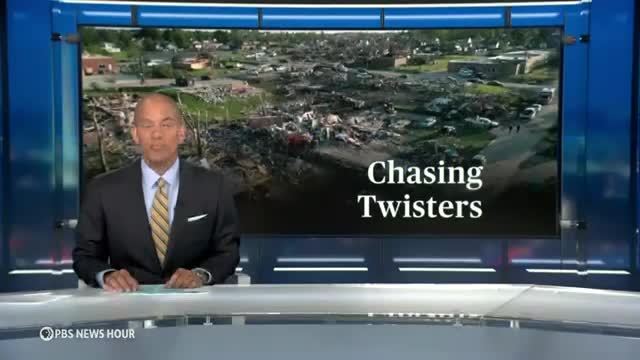
Millions of moviegoers are gearing up to see \"Twisters,\" the highly anticipated sequel to the 1996 blockbuster, this weekend. While the film promises thrilling escapism, it coincides with a real-life tornado season that has been unprecedented in its intensity.
During a recent report, journalist Miles O'Brien explored the world of tornado chasers and meteorologists, shedding light on the latest advancements in tornado prediction and storm chasing. This year has seen approximately 100 tornadoes touch down in Oklahoma alone, resulting in significant destruction and loss of life. Current weather services can provide about 15 minutes of warning for tornadoes, but advancements in cloud computing and machine learning are paving the way for improved forecasting capabilities.
Meteorologist Pam Heintzelman, director at the National Oceanic and Atmospheric Administration's National Severe Storms Laboratory, discussed the development of a \"warn on forecast\" system. This initiative aims to enhance the lead time and reliability of warnings for severe weather events, potentially extending warning times to an hour. This progress relies heavily on fieldwork to gather accurate storm data.
The report also highlighted the use of mobile Doppler radars and lidar technology, which have revolutionized storm research. These tools allow scientists to create detailed three-dimensional images of storms, significantly improving their understanding of tornado dynamics. Veteran meteorologist Eric Rasmussen emphasized the importance of getting close to tornadoes to gather critical data, a task made easier with the nimbleness of modern vehicles equipped with advanced sensors.
Despite the technological advancements, questions remain about wind speeds at the surface level, which researchers believe may be more chaotic than previously thought. Future innovations, such as Doppler drones, are being considered to further enhance storm analysis.
As the tornado season continues, the intersection of cinematic thrill and scientific inquiry underscores the ongoing battle against one of nature's most formidable forces.
During a recent report, journalist Miles O'Brien explored the world of tornado chasers and meteorologists, shedding light on the latest advancements in tornado prediction and storm chasing. This year has seen approximately 100 tornadoes touch down in Oklahoma alone, resulting in significant destruction and loss of life. Current weather services can provide about 15 minutes of warning for tornadoes, but advancements in cloud computing and machine learning are paving the way for improved forecasting capabilities.
Meteorologist Pam Heintzelman, director at the National Oceanic and Atmospheric Administration's National Severe Storms Laboratory, discussed the development of a \"warn on forecast\" system. This initiative aims to enhance the lead time and reliability of warnings for severe weather events, potentially extending warning times to an hour. This progress relies heavily on fieldwork to gather accurate storm data.
The report also highlighted the use of mobile Doppler radars and lidar technology, which have revolutionized storm research. These tools allow scientists to create detailed three-dimensional images of storms, significantly improving their understanding of tornado dynamics. Veteran meteorologist Eric Rasmussen emphasized the importance of getting close to tornadoes to gather critical data, a task made easier with the nimbleness of modern vehicles equipped with advanced sensors.
Despite the technological advancements, questions remain about wind speeds at the surface level, which researchers believe may be more chaotic than previously thought. Future innovations, such as Doppler drones, are being considered to further enhance storm analysis.
As the tornado season continues, the intersection of cinematic thrill and scientific inquiry underscores the ongoing battle against one of nature's most formidable forces.
Don't Miss a Word: See the Full Meeting!
Go beyond summaries. Unlock every video, transcript, and key insight with a Founder Membership.
✓
Get instant access to full meeting videos
✓
Search and clip any phrase from complete transcripts
✓
Receive AI-powered summaries & custom alerts
✓
Enjoy lifetime, unrestricted access to government data
30-day money-back guarantee
