Parties unite to tackle Green River environmental crisis
September 10, 2024 | King County, Washington
This article was created by AI summarizing key points discussed. AI makes mistakes, so for full details and context, please refer to the video of the full meeting. Please report any errors so we can fix them. Report an error »
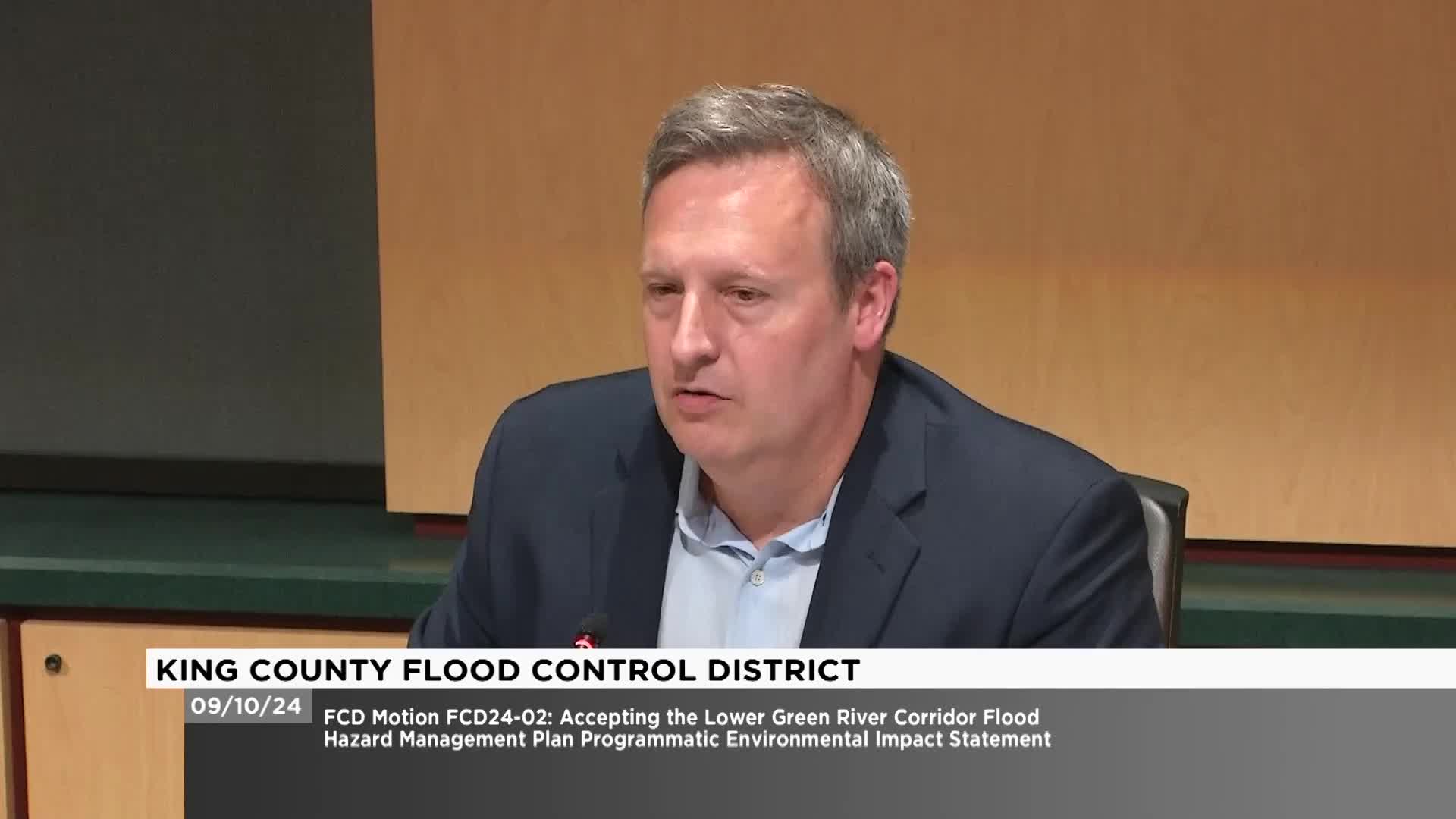
In a recent government meeting, officials discussed the long-standing challenges surrounding the Green River, emphasizing the need for a unified vision to address conflicting interests in flood safety, environmental protection, and community recreation. For over a decade, stakeholders have struggled to develop a comprehensive plan, hindered by competing priorities such as the preservation of threatened Chinook salmon and local public safety concerns.
The Muckleshoot Tribe played a pivotal role in reigniting discussions by issuing a notice of intent to sue in federal court due to the lack of an environmental impact statement. This action prompted a collaborative effort among various parties, including county executives, city representatives, environmental advocates, and community leaders, to form an executive committee aimed at fostering dialogue and cooperation.
The committee organized a trip to Denver to study successful river management strategies that integrated economic development with environmental restoration. This visit highlighted the potential for revitalizing areas along the river while enhancing habitat and recreational access.
As the meeting progressed, officials acknowledged the significant financial investments required to address pollution and improve fish passage, with nearly $1 billion allocated for these initiatives. The urgency of the situation was underscored by the need to restore the river's ecosystem, which is crucial for the survival of the iconic king salmon, a species listed as threatened under the Endangered Species Act.
Despite the complexities ahead, including project selection and design, the meeting concluded on a hopeful note. Participants expressed optimism about the progress made and the foundation of trust established among stakeholders, which they believe will facilitate the next phases of planning and implementation for the Lower Green River Corridor Flood Hazard Management Plan.
The Muckleshoot Tribe played a pivotal role in reigniting discussions by issuing a notice of intent to sue in federal court due to the lack of an environmental impact statement. This action prompted a collaborative effort among various parties, including county executives, city representatives, environmental advocates, and community leaders, to form an executive committee aimed at fostering dialogue and cooperation.
The committee organized a trip to Denver to study successful river management strategies that integrated economic development with environmental restoration. This visit highlighted the potential for revitalizing areas along the river while enhancing habitat and recreational access.
As the meeting progressed, officials acknowledged the significant financial investments required to address pollution and improve fish passage, with nearly $1 billion allocated for these initiatives. The urgency of the situation was underscored by the need to restore the river's ecosystem, which is crucial for the survival of the iconic king salmon, a species listed as threatened under the Endangered Species Act.
Despite the complexities ahead, including project selection and design, the meeting concluded on a hopeful note. Participants expressed optimism about the progress made and the foundation of trust established among stakeholders, which they believe will facilitate the next phases of planning and implementation for the Lower Green River Corridor Flood Hazard Management Plan.
View the Full Meeting & All Its Details
This article offers just a summary. Unlock complete video, transcripts, and insights as a Founder Member.
✓
Watch full, unedited meeting videos
✓
Search every word spoken in unlimited transcripts
✓
AI summaries & real-time alerts (all government levels)
✓
Permanent access to expanding government content
30-day money-back guarantee
