Lower Green River flood plan gains crucial approval
September 10, 2024 | King County, Washington
This article was created by AI summarizing key points discussed. AI makes mistakes, so for full details and context, please refer to the video of the full meeting. Please report any errors so we can fix them. Report an error »
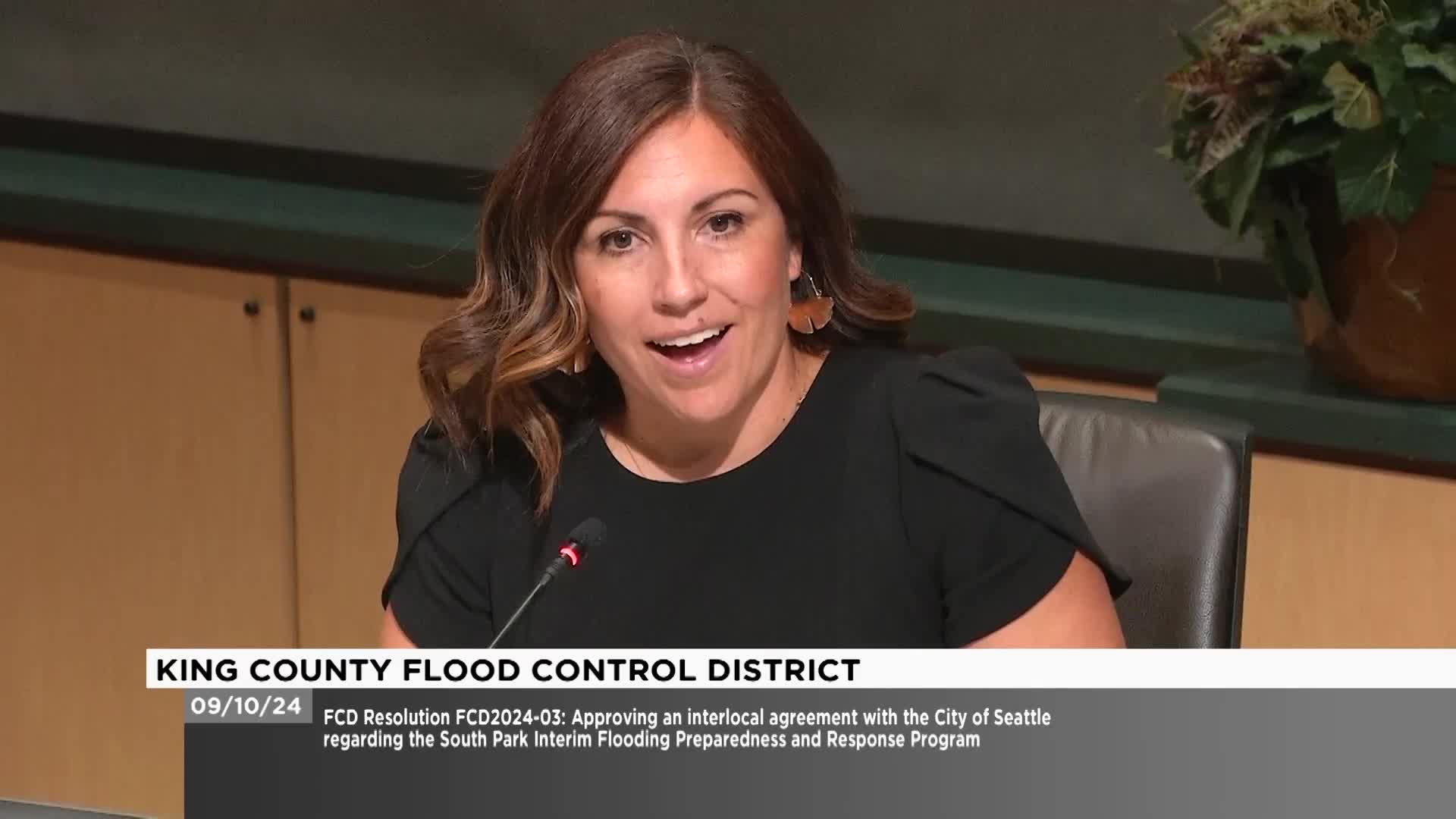
In a recent government meeting, officials discussed significant advancements in flood management and environmental planning for the Lower Green River Corridor. The meeting highlighted the adoption of the Lower Green River Corridor Flood Hazard Management Plan and its accompanying Programmatic Environmental Impact Statement (PEIS), marking a crucial step in addressing flooding issues in the region.
The discussion began with a reflection on the community's resilience and the disproportionate impact of climate change on local residents. Acknowledgment was given to the collaborative efforts between the Seattle Public Utilities and local government to ensure that unincorporated King County receives equitable flood management services. The successful push for an interlocal agreement was credited to various stakeholders, including Amina Hashemi from Seattle's local government.
The meeting proceeded with a vote on the proposed resolution, which passed unanimously with seven votes in favor, while two supervisors were excused. Following this, Michelle Clark, the executive director, provided an overview of the PEIS, emphasizing the extensive work that began in 2014. Clark noted the importance of community input in shaping the plan and highlighted the decision to refrain from recommending a preferred alternative, allowing policymakers to consider all scientific data and community feedback before making future decisions.
Jennifer Young, a senior consultant, presented detailed findings from the PEIS, which covers the floodplain from River Mile 11 to River Mile 32. The meeting underscored the commitment of local officials to enhance flood management strategies while considering environmental impacts, setting the stage for future initiatives aimed at improving community resilience against climate-related challenges.
The discussion began with a reflection on the community's resilience and the disproportionate impact of climate change on local residents. Acknowledgment was given to the collaborative efforts between the Seattle Public Utilities and local government to ensure that unincorporated King County receives equitable flood management services. The successful push for an interlocal agreement was credited to various stakeholders, including Amina Hashemi from Seattle's local government.
The meeting proceeded with a vote on the proposed resolution, which passed unanimously with seven votes in favor, while two supervisors were excused. Following this, Michelle Clark, the executive director, provided an overview of the PEIS, emphasizing the extensive work that began in 2014. Clark noted the importance of community input in shaping the plan and highlighted the decision to refrain from recommending a preferred alternative, allowing policymakers to consider all scientific data and community feedback before making future decisions.
Jennifer Young, a senior consultant, presented detailed findings from the PEIS, which covers the floodplain from River Mile 11 to River Mile 32. The meeting underscored the commitment of local officials to enhance flood management strategies while considering environmental impacts, setting the stage for future initiatives aimed at improving community resilience against climate-related challenges.
Don't Miss a Word: See the Full Meeting!
Go beyond summaries. Unlock every video, transcript, and key insight with a Founder Membership.
✓
Get instant access to full meeting videos
✓
Search and clip any phrase from complete transcripts
✓
Receive AI-powered summaries & custom alerts
✓
Enjoy lifetime, unrestricted access to government data
30-day money-back guarantee
