State faces unprecedented budget crisis as revenues plummet
September 10, 2024 | San Juan County, Washington
This article was created by AI summarizing key points discussed. AI makes mistakes, so for full details and context, please refer to the video of the full meeting. Please report any errors so we can fix them. Report an error »
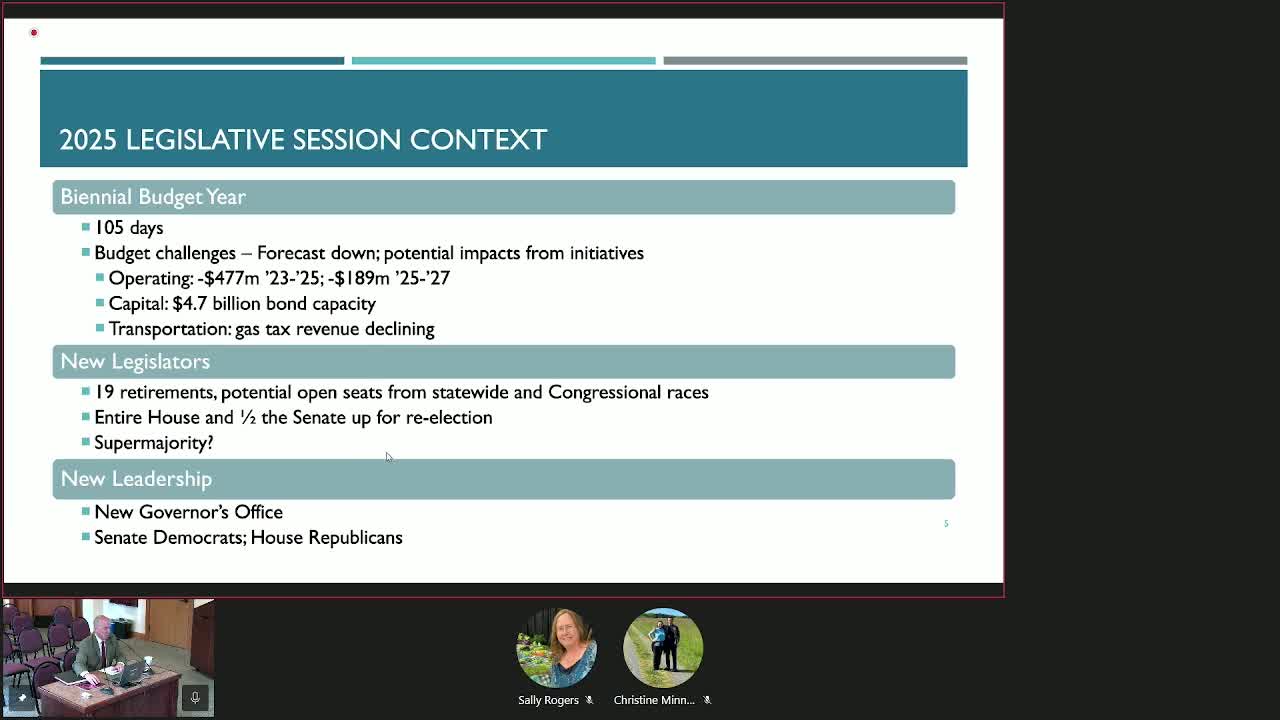
In a recent government meeting, officials addressed the significant budget challenges facing the state as it prepares for the upcoming biennial budget session, which will span 105 days. For the first time since the pandemic, the state is grappling with a projected revenue shortfall of approximately $477 million for the current biennium, with an additional anticipated decline of $200 million for the next budget cycle.
State agencies have been instructed by the governor's office not to submit requests for new funding, focusing instead on potential cuts and the preservation of essential services. Recent submissions from cabinet agencies have been made, but the legislature's priority will likely shift towards evaluating which programs can be sustained and which may need to be reduced.
The capital budget is expected to remain stable, with a bond capacity of around $4.7 billion. However, a decrease in the operating budget will also impact the capital budget, as bond payments are drawn from operating funds. The transportation budget is particularly concerning, with declining gas tax revenues leading to discussions about cutting existing projects rather than introducing new ones unless new revenue sources are identified.
Additionally, the meeting highlighted the potential financial implications of several legislative initiatives. The proposed repeal of the climate change carbon reduction initiative could create significant budget gaps across all sectors. Similarly, the repeal of capital gains taxes, which currently fund education, poses a threat to the operating budget. While the long-term care repeal may not directly create a budget hole, it raises questions about how to replace the services it currently supports.
As the state prepares for further revenue forecasts later this month and in November, officials are bracing for a challenging budget-writing process that will require careful consideration of priorities and funding allocations.
State agencies have been instructed by the governor's office not to submit requests for new funding, focusing instead on potential cuts and the preservation of essential services. Recent submissions from cabinet agencies have been made, but the legislature's priority will likely shift towards evaluating which programs can be sustained and which may need to be reduced.
The capital budget is expected to remain stable, with a bond capacity of around $4.7 billion. However, a decrease in the operating budget will also impact the capital budget, as bond payments are drawn from operating funds. The transportation budget is particularly concerning, with declining gas tax revenues leading to discussions about cutting existing projects rather than introducing new ones unless new revenue sources are identified.
Additionally, the meeting highlighted the potential financial implications of several legislative initiatives. The proposed repeal of the climate change carbon reduction initiative could create significant budget gaps across all sectors. Similarly, the repeal of capital gains taxes, which currently fund education, poses a threat to the operating budget. While the long-term care repeal may not directly create a budget hole, it raises questions about how to replace the services it currently supports.
As the state prepares for further revenue forecasts later this month and in November, officials are bracing for a challenging budget-writing process that will require careful consideration of priorities and funding allocations.
Don't Miss a Word: See the Full Meeting!
Go beyond summaries. Unlock every video, transcript, and key insight with a Founder Membership.
✓
Get instant access to full meeting videos
✓
Search and clip any phrase from complete transcripts
✓
Receive AI-powered summaries & custom alerts
✓
Enjoy lifetime, unrestricted access to government data
30-day money-back guarantee
