School Board Advances Key Resolutions Amid Controversy
September 10, 2024 | Keene School District, School Districts, New Hampshire
This article was created by AI summarizing key points discussed. AI makes mistakes, so for full details and context, please refer to the video of the full meeting. Please report any errors so we can fix them. Report an error »
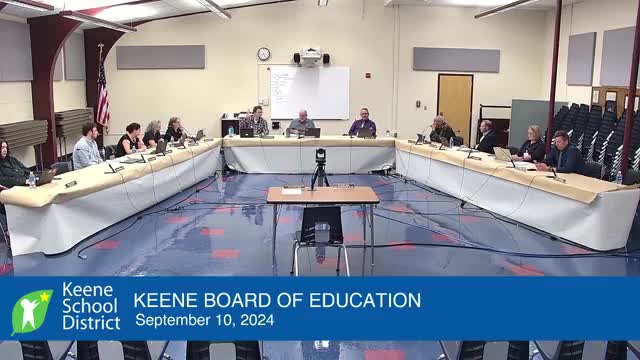
In a recent meeting of the New Hampshire School Board Association (NHSBA), members engaged in significant discussions regarding educational policies and resolutions impacting local school districts. The board voted 7 to 1 in favor of a resolution aimed at clarifying support for public education over private and parochial options, emphasizing the importance of maintaining a separation of church and state.
The board also addressed proposed revisions to state administrative rules, specifically rejecting a resolution concerning ED 306, citing that the state board had already adopted minimum standards, rendering the proposed changes moot. This decision reflects a broader sentiment among board members that lobbying against already established rules may not be productive.
Another key resolution, which passed with an 8 to 0 vote, advocates for legislation affirming the rights of all students to participate in educational activities free from discrimination based on gender identity. This resolution aligns with ongoing efforts to promote inclusivity within educational environments.
The board discussed a resolution concerning impact fees, which would require local planning boards to reassess their methodologies every five years to ensure they reflect current legislative changes and local school district needs. This resolution also received unanimous support.
However, a proposed resolution to fund the youth risk behavior survey for middle school students faced more contention. While the NHSBA recommended against it, citing concerns over potential unfunded mandates, board members expressed strong support for the survey, emphasizing its importance in addressing student behavior and safety. Ultimately, the board voted 8 to 0 in favor of advocating for the funding of the survey, highlighting a commitment to student welfare.
The meeting concluded with the decision to table two additional resolutions for further discussion in the next session, indicating ongoing deliberations on critical educational issues. The board then moved into a non-public session to address personnel matters, wrapping up a session marked by significant policy discussions and a clear focus on enhancing educational standards and student rights.
The board also addressed proposed revisions to state administrative rules, specifically rejecting a resolution concerning ED 306, citing that the state board had already adopted minimum standards, rendering the proposed changes moot. This decision reflects a broader sentiment among board members that lobbying against already established rules may not be productive.
Another key resolution, which passed with an 8 to 0 vote, advocates for legislation affirming the rights of all students to participate in educational activities free from discrimination based on gender identity. This resolution aligns with ongoing efforts to promote inclusivity within educational environments.
The board discussed a resolution concerning impact fees, which would require local planning boards to reassess their methodologies every five years to ensure they reflect current legislative changes and local school district needs. This resolution also received unanimous support.
However, a proposed resolution to fund the youth risk behavior survey for middle school students faced more contention. While the NHSBA recommended against it, citing concerns over potential unfunded mandates, board members expressed strong support for the survey, emphasizing its importance in addressing student behavior and safety. Ultimately, the board voted 8 to 0 in favor of advocating for the funding of the survey, highlighting a commitment to student welfare.
The meeting concluded with the decision to table two additional resolutions for further discussion in the next session, indicating ongoing deliberations on critical educational issues. The board then moved into a non-public session to address personnel matters, wrapping up a session marked by significant policy discussions and a clear focus on enhancing educational standards and student rights.
View the Full Meeting & All Its Details
This article offers just a summary. Unlock complete video, transcripts, and insights as a Founder Member.
✓
Watch full, unedited meeting videos
✓
Search every word spoken in unlimited transcripts
✓
AI summaries & real-time alerts (all government levels)
✓
Permanent access to expanding government content
30-day money-back guarantee
