Government Censorship Threatens Free Speech and Democracy
June 27, 2024 | Small Business: House Committee, Standing Committees - House & Senate, Congressional Hearings Compilation, Legislative, Federal
This article was created by AI summarizing key points discussed. AI makes mistakes, so for full details and context, please refer to the video of the full meeting. Please report any errors so we can fix them. Report an error »
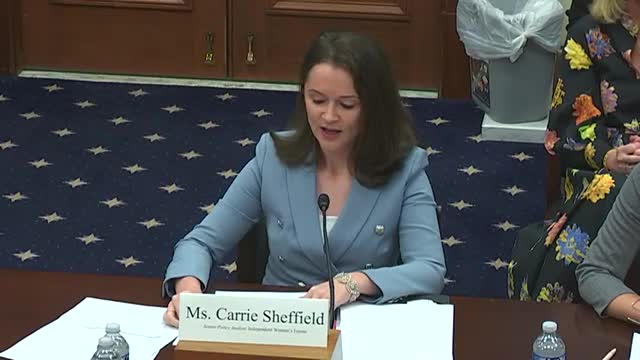
In a recent government committee meeting, discussions centered on the intersection of free speech, misinformation, and government influence, particularly regarding the role of businesses and research institutions in shaping public discourse. Law professor and civil rights advocate Dr. Franks emphasized the importance of protecting free expression, arguing that harassment and intimidation against misinformation researchers, often instigated by government officials, pose a significant threat to national security and democratic integrity.
Dr. Franks articulated that the First Amendment safeguards against government suppression of speech but does not shield individuals from criticism or competition. She asserted that efforts to challenge or discredit certain narratives, even if funded by the government, do not constitute censorship. Instead, she highlighted that the government has the right to promote specific messages, particularly those deemed beneficial to public interest, without being obligated to support opposing viewpoints.
The meeting also addressed the alarming trend of harassment faced by misinformation researchers, which has reportedly led to the potential shutdown of significant programs like the Stanford Internet Observatory. Dr. Franks described these actions as a form of censorship, where government officials utilize taxpayer resources to suppress dissenting voices, thereby undermining the integrity of democratic processes.
In response, committee members debated the implications of these findings, with some asserting that there is no evidence of government censorship affecting small businesses. However, others pointed to testimonies that contradicted this claim, suggesting that taxpayer dollars may be misused to silence political opposition.
As the committee prepares to reconvene for further questioning, the discussions underscore a growing concern about the balance between safeguarding free speech and addressing misinformation in an increasingly polarized political landscape.
Dr. Franks articulated that the First Amendment safeguards against government suppression of speech but does not shield individuals from criticism or competition. She asserted that efforts to challenge or discredit certain narratives, even if funded by the government, do not constitute censorship. Instead, she highlighted that the government has the right to promote specific messages, particularly those deemed beneficial to public interest, without being obligated to support opposing viewpoints.
The meeting also addressed the alarming trend of harassment faced by misinformation researchers, which has reportedly led to the potential shutdown of significant programs like the Stanford Internet Observatory. Dr. Franks described these actions as a form of censorship, where government officials utilize taxpayer resources to suppress dissenting voices, thereby undermining the integrity of democratic processes.
In response, committee members debated the implications of these findings, with some asserting that there is no evidence of government censorship affecting small businesses. However, others pointed to testimonies that contradicted this claim, suggesting that taxpayer dollars may be misused to silence political opposition.
As the committee prepares to reconvene for further questioning, the discussions underscore a growing concern about the balance between safeguarding free speech and addressing misinformation in an increasingly polarized political landscape.
View the Full Meeting & All Its Details
This article offers just a summary. Unlock complete video, transcripts, and insights as a Founder Member.
✓
Watch full, unedited meeting videos
✓
Search every word spoken in unlimited transcripts
✓
AI summaries & real-time alerts (all government levels)
✓
Permanent access to expanding government content
30-day money-back guarantee
