Data Driven Strategies Slash Veteran Homelessness Across America
June 27, 2024 | Veterans Affairs: House Committee, Standing Committees - House & Senate, Congressional Hearings Compilation, Legislative, Federal
This article was created by AI summarizing key points discussed. AI makes mistakes, so for full details and context, please refer to the video of the full meeting. Please report any errors so we can fix them. Report an error »
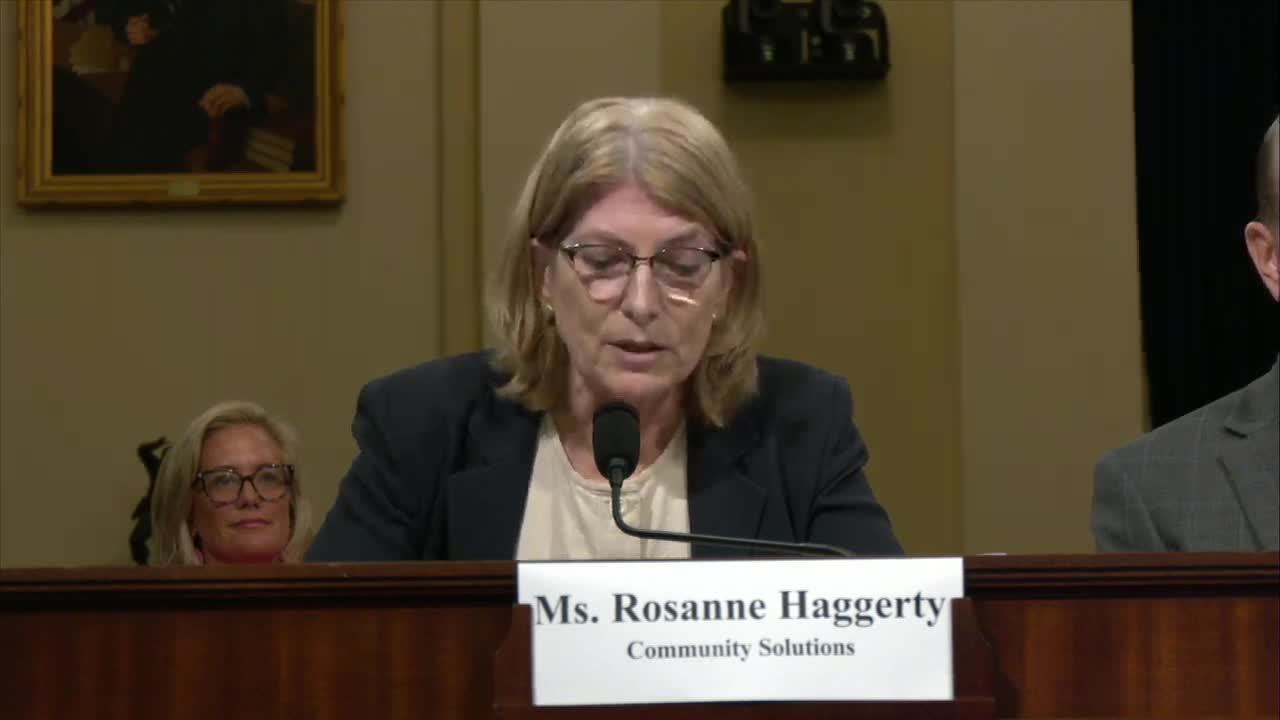
In a recent government meeting, officials highlighted the transformative impact of real-time data in addressing veteran homelessness across the United States. Currently, over 80 communities are engaged in efforts to reduce veteran homelessness, with 45 reporting measurable reductions. Notably, 12 communities have achieved the goal of making veteran homelessness \"rare and brief,\" a standard referred to as functional zero. Since 2015, more than 105,000 veterans have been successfully housed.
Key examples of success include Chattanooga, Tennessee, where a multi-sector team can rehouse veterans within days, and Gulf Coast, Mississippi, which boasts a rehousing time of just 11 days. Detroit has seen a 50% reduction in veteran homelessness by effectively leveraging data to coordinate services, while Metro Denver and the Twin Cities have achieved reductions of 30% and 24%, respectively. In Charlotte, North Carolina, community teams are working to make de-identified data publicly available to rally local support for ending veteran homelessness.
To further enhance these efforts, officials proposed several policy changes. These include adopting a \"by name\" data model to track individual veterans, shifting to real-time data standards for more accurate performance indicators, and improving data sharing between the Department of Veterans Affairs (VA) and community partners. The aim is to ensure that no veteran is left behind in the pursuit of stable housing.
Ray Carville, a representative from Veterans Inc., emphasized the need for improved technological support for case managers, who currently face overwhelming workloads due to duplicative data entry across multiple programs. He advocated for a client resource management system that would streamline communication between service providers and enhance outreach efforts.
Carville also suggested relocating the Transition Assistance Program (TAP) to the states where veterans return, allowing for better integration into community services. He proposed utilizing advanced data visualization tools to identify service gaps and trends in veteran homelessness, drawing on his experience with military network analysis tools.
The meeting underscored a collective commitment to harnessing data and innovative practices to combat veteran homelessness, with a vision that every community can effectively identify and assist individuals in need.
Key examples of success include Chattanooga, Tennessee, where a multi-sector team can rehouse veterans within days, and Gulf Coast, Mississippi, which boasts a rehousing time of just 11 days. Detroit has seen a 50% reduction in veteran homelessness by effectively leveraging data to coordinate services, while Metro Denver and the Twin Cities have achieved reductions of 30% and 24%, respectively. In Charlotte, North Carolina, community teams are working to make de-identified data publicly available to rally local support for ending veteran homelessness.
To further enhance these efforts, officials proposed several policy changes. These include adopting a \"by name\" data model to track individual veterans, shifting to real-time data standards for more accurate performance indicators, and improving data sharing between the Department of Veterans Affairs (VA) and community partners. The aim is to ensure that no veteran is left behind in the pursuit of stable housing.
Ray Carville, a representative from Veterans Inc., emphasized the need for improved technological support for case managers, who currently face overwhelming workloads due to duplicative data entry across multiple programs. He advocated for a client resource management system that would streamline communication between service providers and enhance outreach efforts.
Carville also suggested relocating the Transition Assistance Program (TAP) to the states where veterans return, allowing for better integration into community services. He proposed utilizing advanced data visualization tools to identify service gaps and trends in veteran homelessness, drawing on his experience with military network analysis tools.
The meeting underscored a collective commitment to harnessing data and innovative practices to combat veteran homelessness, with a vision that every community can effectively identify and assist individuals in need.
Don't Miss a Word: See the Full Meeting!
Go beyond summaries. Unlock every video, transcript, and key insight with a Founder Membership.
✓
Get instant access to full meeting videos
✓
Search and clip any phrase from complete transcripts
✓
Receive AI-powered summaries & custom alerts
✓
Enjoy lifetime, unrestricted access to government data
30-day money-back guarantee
