Council debates wildfire hazard map amid community safety concerns
August 14, 2024 | Sisters, Deschutes County, Oregon
This article was created by AI summarizing key points discussed. AI makes mistakes, so for full details and context, please refer to the video of the full meeting. Please report any errors so we can fix them. Report an error »
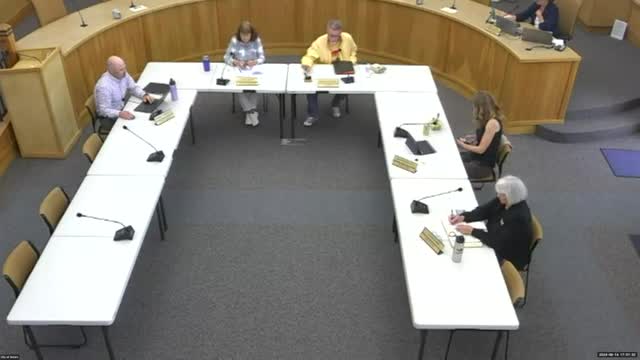
In a recent government meeting focused on wildfire resiliency, city officials discussed critical updates regarding the draft statewide wildfire hazard map and its implications for local communities. The meeting, attended by four council members, included presentations from experts Kevin Moriarty, the County Forester, and Krista Lisonbee, the Assistant Building Official.
Matthew Martin, the principal planner for the City of Sisters, opened the session by highlighting the importance of community input on the draft map, which categorizes wildfire risk into three levels: low, moderate, and high. This new mapping approach, developed by the Oregon Department of Forestry and Oregon State University, replaces a previous five-category system that faced significant community pushback.
Moriarty explained the methodology behind the new hazard map, noting that it focuses on burn probability and fire intensity, excluding structural proximity as a factor. This change has raised concerns among council members about the map's accuracy and its potential to create inequities in wildfire preparedness across the community. The council emphasized the need for a unified approach to wildfire risk, suggesting that all properties should be classified under a single high-risk designation to ensure consistent building codes and defensible space requirements.
The discussion also touched on the broader implications for property owners, particularly regarding insurance challenges. Council members expressed fears that the new classifications could lead to increased insurance costs or even loss of coverage for homeowners in lower-risk areas, creating a false sense of security that could undermine community safety.
As the public comment period for the draft map approaches its end on August 18, the council is considering submitting feedback that advocates for a more equitable approach to wildfire risk assessment. They are also exploring the possibility of adopting the Wildland Urban Interface (WUI) map as a more effective tool for determining building and defensible space standards.
The meeting underscored the urgency of addressing wildfire risks in the region, especially in light of recent devastating fires. Council members are determined to ensure that their community is adequately prepared and protected against future wildfire threats, advocating for legislative changes that would allow for more localized control over fire safety measures.
Matthew Martin, the principal planner for the City of Sisters, opened the session by highlighting the importance of community input on the draft map, which categorizes wildfire risk into three levels: low, moderate, and high. This new mapping approach, developed by the Oregon Department of Forestry and Oregon State University, replaces a previous five-category system that faced significant community pushback.
Moriarty explained the methodology behind the new hazard map, noting that it focuses on burn probability and fire intensity, excluding structural proximity as a factor. This change has raised concerns among council members about the map's accuracy and its potential to create inequities in wildfire preparedness across the community. The council emphasized the need for a unified approach to wildfire risk, suggesting that all properties should be classified under a single high-risk designation to ensure consistent building codes and defensible space requirements.
The discussion also touched on the broader implications for property owners, particularly regarding insurance challenges. Council members expressed fears that the new classifications could lead to increased insurance costs or even loss of coverage for homeowners in lower-risk areas, creating a false sense of security that could undermine community safety.
As the public comment period for the draft map approaches its end on August 18, the council is considering submitting feedback that advocates for a more equitable approach to wildfire risk assessment. They are also exploring the possibility of adopting the Wildland Urban Interface (WUI) map as a more effective tool for determining building and defensible space standards.
The meeting underscored the urgency of addressing wildfire risks in the region, especially in light of recent devastating fires. Council members are determined to ensure that their community is adequately prepared and protected against future wildfire threats, advocating for legislative changes that would allow for more localized control over fire safety measures.
View the Full Meeting & All Its Details
This article offers just a summary. Unlock complete video, transcripts, and insights as a Founder Member.
✓
Watch full, unedited meeting videos
✓
Search every word spoken in unlimited transcripts
✓
AI summaries & real-time alerts (all government levels)
✓
Permanent access to expanding government content
30-day money-back guarantee
