New Bill Aims to Expand School Choice for Families
September 11, 2024 | Ways and Means: House Committee, Standing Committees - House & Senate, Congressional Hearings Compilation, Legislative, Federal
This article was created by AI summarizing key points discussed. AI makes mistakes, so for full details and context, please refer to the video of the full meeting. Please report any errors so we can fix them. Report an error »
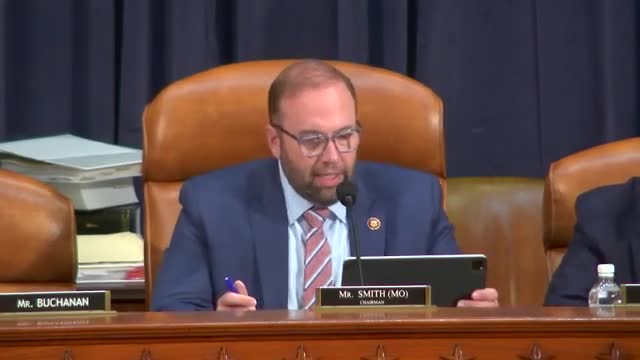
In a recent government meeting, lawmakers discussed the Educational Choice for Children Act of 2024, a proposed piece of legislation aimed at expanding educational opportunities for families and students. Introduced by Representative Smith, the act seeks to provide tax credits for individuals who contribute to nonprofit scholarship granting organizations (SGOs), which would then award scholarships to K-12 students for educational expenses.
Supporters of the bill, including several Republican representatives, emphasized the need for school choice, arguing that it empowers families, particularly those from low-income backgrounds, to select the best educational options for their children. They cited statistics indicating that over 365,000 students from households earning under $75,000 have benefited from similar state-level programs. The proposed legislation is designed to create a new pathway for funding scholarships without requiring additional federal funding or imposing new mandates on states.
However, the bill faced significant opposition from Democratic lawmakers, who argued that it undermines public education by diverting funds away from public schools. Critics highlighted concerns that the legislation could disproportionately benefit wealthier families, as it allows families earning up to 300% of the area median income to qualify for scholarships. They warned that this could lead to fewer resources for public schools, which serve the majority of students in the country.
The discussion also touched on the potential for \"double dipping,\" where individuals might receive both state and federal tax benefits for the same contributions. While proponents claimed that the bill prevents this, opponents pointed out loopholes that could allow for such practices.
As the committee moved forward with the markup of the bill, the debate underscored the deep divisions in Congress regarding educational funding and the role of public versus private education. The outcome of this legislation could have significant implications for the future of educational choice and public school funding across the nation.
Supporters of the bill, including several Republican representatives, emphasized the need for school choice, arguing that it empowers families, particularly those from low-income backgrounds, to select the best educational options for their children. They cited statistics indicating that over 365,000 students from households earning under $75,000 have benefited from similar state-level programs. The proposed legislation is designed to create a new pathway for funding scholarships without requiring additional federal funding or imposing new mandates on states.
However, the bill faced significant opposition from Democratic lawmakers, who argued that it undermines public education by diverting funds away from public schools. Critics highlighted concerns that the legislation could disproportionately benefit wealthier families, as it allows families earning up to 300% of the area median income to qualify for scholarships. They warned that this could lead to fewer resources for public schools, which serve the majority of students in the country.
The discussion also touched on the potential for \"double dipping,\" where individuals might receive both state and federal tax benefits for the same contributions. While proponents claimed that the bill prevents this, opponents pointed out loopholes that could allow for such practices.
As the committee moved forward with the markup of the bill, the debate underscored the deep divisions in Congress regarding educational funding and the role of public versus private education. The outcome of this legislation could have significant implications for the future of educational choice and public school funding across the nation.
View the Full Meeting & All Its Details
This article offers just a summary. Unlock complete video, transcripts, and insights as a Founder Member.
✓
Watch full, unedited meeting videos
✓
Search every word spoken in unlimited transcripts
✓
AI summaries & real-time alerts (all government levels)
✓
Permanent access to expanding government content
30-day money-back guarantee
