Controversy Erupts Over Traffic Access and Zoning Regulations
July 12, 2024 | Red Lodge, Carbon County, Montana
This article was created by AI summarizing key points discussed. AI makes mistakes, so for full details and context, please refer to the video of the full meeting. Please report any errors so we can fix them. Report an error »
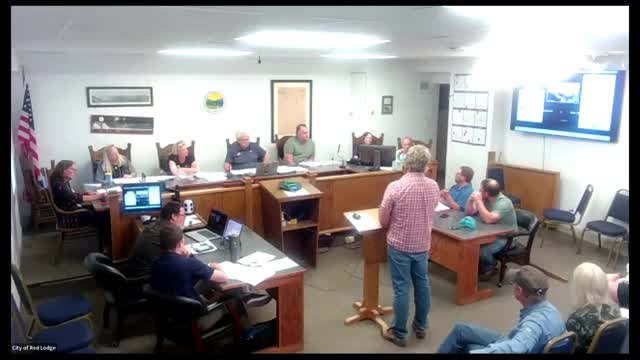
In a recent government meeting, significant discussions centered around traffic management and zoning regulations for a proposed development project. Concerns were raised regarding the proposed access point for the development, with some members arguing against shifting the access from Adams Street to Grant Street. Critics highlighted that Grant is a dead-end street with low traffic volume, suggesting that redirecting approximately 210 daily trips to Grant would create unnecessary congestion and complicate emergency services access.
The board deliberated on the necessity of maintaining multiple access points for emergency vehicles, emphasizing that fire trucks require straightforward access to navigate the area efficiently. A consensus emerged favoring an exit on Adams, while a secondary exit on Grant would remain, potentially gated to restrict regular traffic but allow for emergency access.
Zoning regulations were a focal point of the discussion, particularly the prohibition of drive-through facilities in residential areas. Board members acknowledged the need to adhere to these regulations while exploring ways to accommodate emergency access without violating zoning laws. The conversation also touched on the implications of conditional uses, with members debating whether to retain control over such decisions or risk losing input on future developments.
Additionally, the meeting addressed parking requirements for the development, with the proposal exceeding the minimum zoning requirement of two parking spaces per unit. Developers argued that additional parking was necessary to prevent overflow onto city streets, especially given the potential for families or multiple occupants per unit. However, some board members expressed skepticism about the need for so many spaces, suggesting a review of the justification for the proposed number.
Overall, the meeting highlighted the complexities of urban planning, balancing community needs, zoning regulations, and emergency service requirements as the board navigates the approval process for the development.
The board deliberated on the necessity of maintaining multiple access points for emergency vehicles, emphasizing that fire trucks require straightforward access to navigate the area efficiently. A consensus emerged favoring an exit on Adams, while a secondary exit on Grant would remain, potentially gated to restrict regular traffic but allow for emergency access.
Zoning regulations were a focal point of the discussion, particularly the prohibition of drive-through facilities in residential areas. Board members acknowledged the need to adhere to these regulations while exploring ways to accommodate emergency access without violating zoning laws. The conversation also touched on the implications of conditional uses, with members debating whether to retain control over such decisions or risk losing input on future developments.
Additionally, the meeting addressed parking requirements for the development, with the proposal exceeding the minimum zoning requirement of two parking spaces per unit. Developers argued that additional parking was necessary to prevent overflow onto city streets, especially given the potential for families or multiple occupants per unit. However, some board members expressed skepticism about the need for so many spaces, suggesting a review of the justification for the proposed number.
Overall, the meeting highlighted the complexities of urban planning, balancing community needs, zoning regulations, and emergency service requirements as the board navigates the approval process for the development.
View the Full Meeting & All Its Details
This article offers just a summary. Unlock complete video, transcripts, and insights as a Founder Member.
✓
Watch full, unedited meeting videos
✓
Search every word spoken in unlimited transcripts
✓
AI summaries & real-time alerts (all government levels)
✓
Permanent access to expanding government content
30-day money-back guarantee
