County leaders demand transparency on deflection plans
June 21, 2024 | Multnomah County, Oregon
This article was created by AI summarizing key points discussed. AI makes mistakes, so for full details and context, please refer to the video of the full meeting. Please report any errors so we can fix them. Report an error »
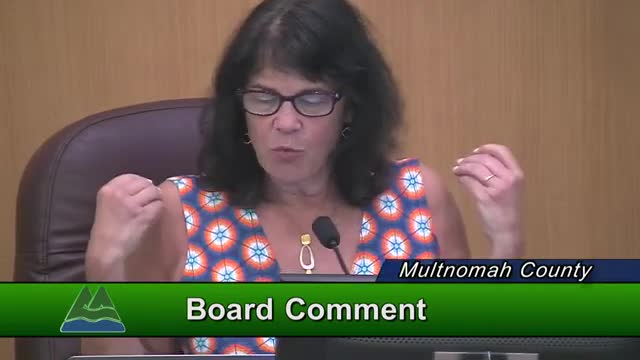
A recent government meeting highlighted critical discussions surrounding community resilience, homelessness, and public safety in Multnomah County. The meeting, attended by county commissioners, featured an invitation to a significant event scheduled for June 26th, where experts, including Chris Voss and John John, will present on a proposed financial assurance policy related to risk bonding. This event aims to provide insights into sustainability and emergency preparedness, emphasizing the importance of community resilience.
Commissioners also addressed the Intergovernmental Agreement (IGA) for the homeless response action plan, expressing concerns over its adoption due to perceived flaws and inconsistencies. One commissioner criticized the IGA as a \"CYA\" document, urging the city to ensure accountability and clarity regarding the roles of city and county officials before final approval.
A major topic of discussion was the upcoming implementation of deflection strategies in response to changes in ballot measure 110. Commissioners voiced frustration over a lack of transparency and involvement in the planning process, calling for a public work session to discuss the definition and implications of deflection services. They emphasized the need for clarity on the county's responsibilities and the expected outcomes for individuals affected by addiction and the broader community.
Additionally, the meeting referenced a concerning article in the Journal of Emergency Medical Systems, which criticized the county's handling of ambulance services. Commissioners advocated for urgent action, suggesting the implementation of a pilot program for emergency medical staffing to address the ongoing crisis.
As the meeting concluded, commissioners expressed a commitment to fostering open dialogue and collaboration, particularly regarding the county's response to addiction and public safety challenges. They underscored the importance of community engagement and accountability in shaping effective policies moving forward.
Commissioners also addressed the Intergovernmental Agreement (IGA) for the homeless response action plan, expressing concerns over its adoption due to perceived flaws and inconsistencies. One commissioner criticized the IGA as a \"CYA\" document, urging the city to ensure accountability and clarity regarding the roles of city and county officials before final approval.
A major topic of discussion was the upcoming implementation of deflection strategies in response to changes in ballot measure 110. Commissioners voiced frustration over a lack of transparency and involvement in the planning process, calling for a public work session to discuss the definition and implications of deflection services. They emphasized the need for clarity on the county's responsibilities and the expected outcomes for individuals affected by addiction and the broader community.
Additionally, the meeting referenced a concerning article in the Journal of Emergency Medical Systems, which criticized the county's handling of ambulance services. Commissioners advocated for urgent action, suggesting the implementation of a pilot program for emergency medical staffing to address the ongoing crisis.
As the meeting concluded, commissioners expressed a commitment to fostering open dialogue and collaboration, particularly regarding the county's response to addiction and public safety challenges. They underscored the importance of community engagement and accountability in shaping effective policies moving forward.
View the Full Meeting & All Its Details
This article offers just a summary. Unlock complete video, transcripts, and insights as a Founder Member.
✓
Watch full, unedited meeting videos
✓
Search every word spoken in unlimited transcripts
✓
AI summaries & real-time alerts (all government levels)
✓
Permanent access to expanding government content
30-day money-back guarantee
