Housing Debate Sparks Concerns Over Open Space and Affordability
July 17, 2024 | Millcreek City Planning Commission , Millcreek, Salt Lake County, Utah
This article was created by AI summarizing key points discussed. AI makes mistakes, so for full details and context, please refer to the video of the full meeting. Please report any errors so we can fix them. Report an error »
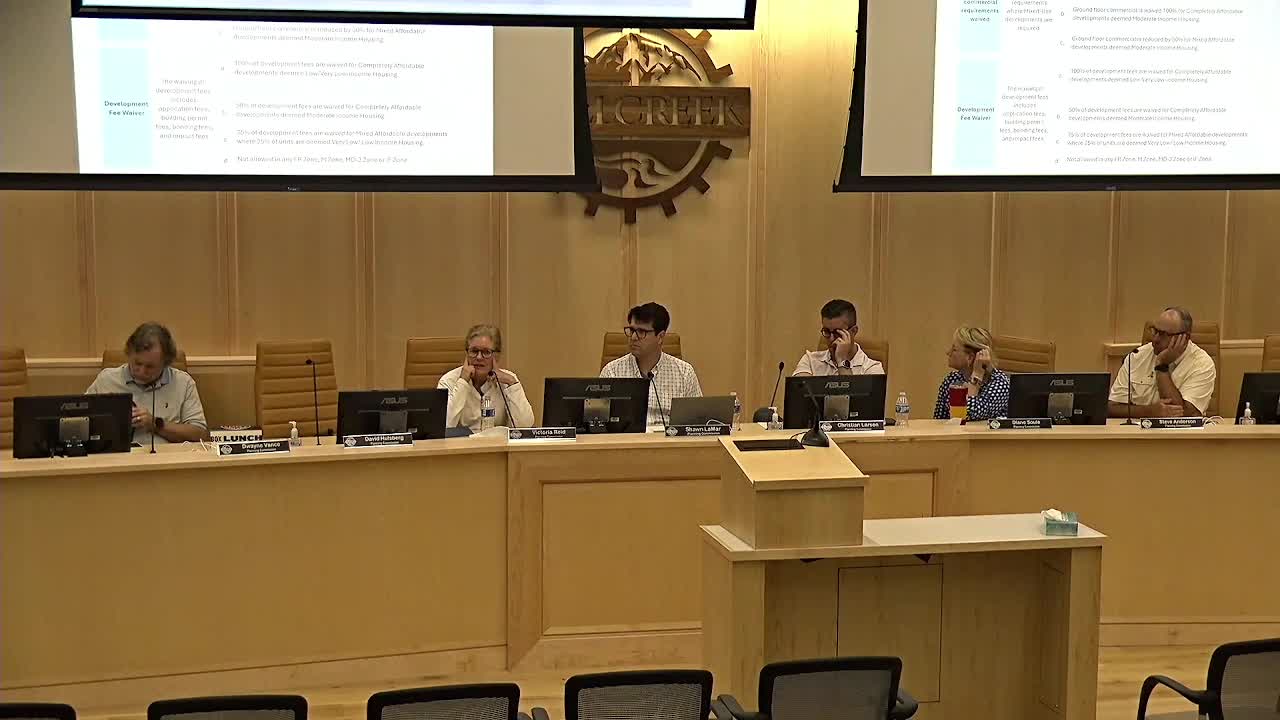
During a recent government meeting, officials engaged in a robust discussion regarding the future of affordable housing in the community, emphasizing the need for a balanced approach to development. The conversation highlighted concerns about the implications of constructing buildings that are exclusively low-income housing, with some members advocating for mixed-income developments to mitigate potential stigma and enhance community integration.
One key point raised was the necessity of maintaining adequate open space for residents, particularly those from low-income backgrounds who may lack access to transportation. Officials expressed that open spaces are vital for these communities, as they often face neglect in terms of maintenance and accessibility. The current requirement for a minimum of 40% open space in new developments was scrutinized, with suggestions made to reassess this figure to avoid hindering affordable housing projects due to excessive costs associated with park development.
The dialogue also touched on the potential for developers to receive incentives for including a mix of affordable housing options, rather than solely focusing on 100% low-income units. This approach aims to create a more diverse community and reduce the concentration of low-income housing in specific areas. Suggestions included allowing developers to achieve slightly increased building heights or density in exchange for incorporating a percentage of deeply affordable units.
Additionally, the meeting explored the idea of incentivizing land donations for affordable housing projects, particularly for innovative solutions like tiny home villages. However, there was dissent regarding the effectiveness of tiny homes as a viable solution, with some officials arguing that they may not be the most efficient use of land or resources.
Concerns were also raised about the waiving of development fees for affordable housing projects, with a call for a structured process to ensure accountability and quality in construction. The discussion concluded with a consensus on the need for a comprehensive strategy that balances the demand for affordable housing with the necessity of maintaining community standards and amenities.
Overall, the meeting underscored the complexities of addressing affordable housing needs while fostering inclusive and well-maintained neighborhoods.
One key point raised was the necessity of maintaining adequate open space for residents, particularly those from low-income backgrounds who may lack access to transportation. Officials expressed that open spaces are vital for these communities, as they often face neglect in terms of maintenance and accessibility. The current requirement for a minimum of 40% open space in new developments was scrutinized, with suggestions made to reassess this figure to avoid hindering affordable housing projects due to excessive costs associated with park development.
The dialogue also touched on the potential for developers to receive incentives for including a mix of affordable housing options, rather than solely focusing on 100% low-income units. This approach aims to create a more diverse community and reduce the concentration of low-income housing in specific areas. Suggestions included allowing developers to achieve slightly increased building heights or density in exchange for incorporating a percentage of deeply affordable units.
Additionally, the meeting explored the idea of incentivizing land donations for affordable housing projects, particularly for innovative solutions like tiny home villages. However, there was dissent regarding the effectiveness of tiny homes as a viable solution, with some officials arguing that they may not be the most efficient use of land or resources.
Concerns were also raised about the waiving of development fees for affordable housing projects, with a call for a structured process to ensure accountability and quality in construction. The discussion concluded with a consensus on the need for a comprehensive strategy that balances the demand for affordable housing with the necessity of maintaining community standards and amenities.
Overall, the meeting underscored the complexities of addressing affordable housing needs while fostering inclusive and well-maintained neighborhoods.
View the Full Meeting & All Its Details
This article offers just a summary. Unlock complete video, transcripts, and insights as a Founder Member.
✓
Watch full, unedited meeting videos
✓
Search every word spoken in unlimited transcripts
✓
AI summaries & real-time alerts (all government levels)
✓
Permanent access to expanding government content
30-day money-back guarantee
