Water Crisis Deepens as Radium Contamination Threatens Health
August 26, 2024 | Apple Valley Town Council, Apple Valley, Washington County, Utah
This article was created by AI summarizing key points discussed. AI makes mistakes, so for full details and context, please refer to the video of the full meeting. Please report any errors so we can fix them. Report an error »
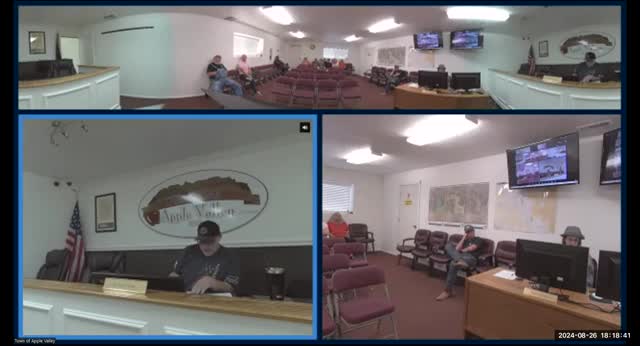
In a recent government meeting, officials discussed the pressing issue of water contamination in Apple Valley, particularly focusing on radium, a naturally occurring radioactive element linked to serious health risks, including cancer and kidney damage. The meeting highlighted that while radium levels in the water exceed state safety standards, other contaminants such as manganese, turbidity, uranium, iron, and arsenic are also present.
Radium, which can infiltrate groundwater from soil and rock, poses significant challenges for water treatment. Officials noted that a simple sand filtration system, often suggested as a solution, would not suffice. Implementing such a system would classify the water supply as treated, triggering a new set of regulatory requirements from the Division of Drinking Water. This complexity underscores the need for a more comprehensive approach to water treatment.
Three potential treatment options were evaluated: a reverse osmosis system, a green sand filtration system, and a chemical coagulation and clarification process. The green sand filtration system, while a viable option, comes with a hefty price tag of approximately $22 million, not including additional costs for necessary facilities and hazardous waste management. The annual operating costs for such a system are estimated at $700,000, which far exceeds the current budget of $500,000 allocated for water services.
Officials expressed concern over the financial implications of these treatment options, particularly the potential need to raise water rates significantly to cover both installation and ongoing operational costs. The discussion revealed a consensus that the pipeline solution, which taps into a cleaner water source located about five miles away, is the most feasible option given the circumstances.
The meeting concluded with a call for further exploration of funding opportunities, as state support remains uncertain. The complexities of radium removal and the associated costs highlight the urgent need for a sustainable and effective solution to ensure safe drinking water for the community.
Radium, which can infiltrate groundwater from soil and rock, poses significant challenges for water treatment. Officials noted that a simple sand filtration system, often suggested as a solution, would not suffice. Implementing such a system would classify the water supply as treated, triggering a new set of regulatory requirements from the Division of Drinking Water. This complexity underscores the need for a more comprehensive approach to water treatment.
Three potential treatment options were evaluated: a reverse osmosis system, a green sand filtration system, and a chemical coagulation and clarification process. The green sand filtration system, while a viable option, comes with a hefty price tag of approximately $22 million, not including additional costs for necessary facilities and hazardous waste management. The annual operating costs for such a system are estimated at $700,000, which far exceeds the current budget of $500,000 allocated for water services.
Officials expressed concern over the financial implications of these treatment options, particularly the potential need to raise water rates significantly to cover both installation and ongoing operational costs. The discussion revealed a consensus that the pipeline solution, which taps into a cleaner water source located about five miles away, is the most feasible option given the circumstances.
The meeting concluded with a call for further exploration of funding opportunities, as state support remains uncertain. The complexities of radium removal and the associated costs highlight the urgent need for a sustainable and effective solution to ensure safe drinking water for the community.
Don't Miss a Word: See the Full Meeting!
Go beyond summaries. Unlock every video, transcript, and key insight with a Founder Membership.
✓
Get instant access to full meeting videos
✓
Search and clip any phrase from complete transcripts
✓
Receive AI-powered summaries & custom alerts
✓
Enjoy lifetime, unrestricted access to government data
30-day money-back guarantee
