Council debates bold strategies to tackle vacant properties
June 14, 2024 | Wilmington City, New Castle County, Delaware
This article was created by AI summarizing key points discussed. AI makes mistakes, so for full details and context, please refer to the video of the full meeting. Please report any errors so we can fix them. Report an error »
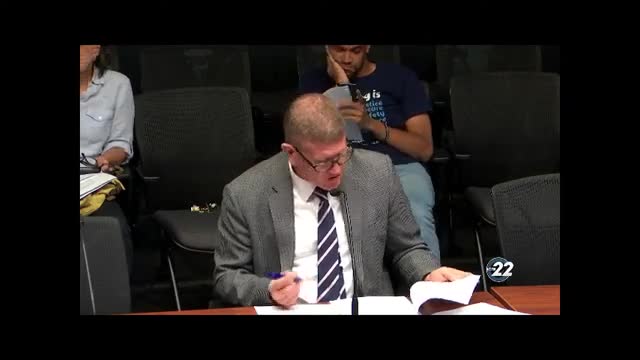
During a recent government meeting, officials discussed the ongoing challenges posed by vacant properties in the city, focusing on proposed legislation aimed at addressing these issues through increased fees and regulations. The legislation seeks to classify commercial properties as vacant if they are not substantially used, targeting those that are intermittently occupied or maintained merely as placeholders.
One key point raised was the impact of these fees on property owners, particularly regarding additional costs such as water bills, which the current legislation does not address. Officials acknowledged that while the law focuses on vacancy, it does not account for other financial obligations that owners may face.
Concerns were voiced about the effectiveness of increasing fees as a solution to the vacant property problem. Critics argued that fines have historically failed to incentivize property owners to rehabilitate their properties, citing a decrease in the number of vacant properties over the past years despite existing penalties. They emphasized the need for a more holistic approach that includes investment and support for property owners rather than punitive measures.
Public comments highlighted the disparity in resources available for revitalization efforts in different neighborhoods. Advocates called for the city to leverage funds from existing vacant property registration fees to support rehabilitation programs, rather than imposing higher fines. They argued that investment in community development, such as grants and incentives, has proven more effective in revitalizing neighborhoods than fines.
The meeting concluded with a call for further discussion on how to balance the need for accountability among property owners with the necessity of providing support and resources to encourage the rehabilitation of vacant properties. The officials recognized the complexity of the issue and the importance of addressing the underlying causes of vacancy, including tangled titles and the challenges faced by families trying to maintain legacy homes.
One key point raised was the impact of these fees on property owners, particularly regarding additional costs such as water bills, which the current legislation does not address. Officials acknowledged that while the law focuses on vacancy, it does not account for other financial obligations that owners may face.
Concerns were voiced about the effectiveness of increasing fees as a solution to the vacant property problem. Critics argued that fines have historically failed to incentivize property owners to rehabilitate their properties, citing a decrease in the number of vacant properties over the past years despite existing penalties. They emphasized the need for a more holistic approach that includes investment and support for property owners rather than punitive measures.
Public comments highlighted the disparity in resources available for revitalization efforts in different neighborhoods. Advocates called for the city to leverage funds from existing vacant property registration fees to support rehabilitation programs, rather than imposing higher fines. They argued that investment in community development, such as grants and incentives, has proven more effective in revitalizing neighborhoods than fines.
The meeting concluded with a call for further discussion on how to balance the need for accountability among property owners with the necessity of providing support and resources to encourage the rehabilitation of vacant properties. The officials recognized the complexity of the issue and the importance of addressing the underlying causes of vacancy, including tangled titles and the challenges faced by families trying to maintain legacy homes.
Don't Miss a Word: See the Full Meeting!
Go beyond summaries. Unlock every video, transcript, and key insight with a Founder Membership.
✓
Get instant access to full meeting videos
✓
Search and clip any phrase from complete transcripts
✓
Receive AI-powered summaries & custom alerts
✓
Enjoy lifetime, unrestricted access to government data
30-day money-back guarantee
