Water contamination crisis sparks urgent action plan
July 24, 2024 | Bow Town, Merrimack County , New Hampshire
This article was created by AI summarizing key points discussed. AI makes mistakes, so for full details and context, please refer to the video of the full meeting. Please report any errors so we can fix them. Report an error »
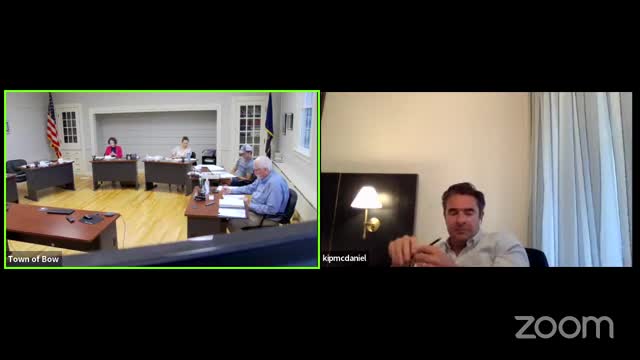
In a recent government meeting, members of the Drinking Water Protection Committee, including Tom O'Donovan and Cindy Clemons, addressed the ongoing issue of salt contamination in the municipal water system. The discussion highlighted a significant concern that arose two years ago when a local power plant sought to connect to the town's water supply due to deteriorating water quality. However, tests revealed that the town's water quality was similarly compromised, underscoring the severity of the contamination problem.
The municipal water system, which serves approximately 100 residents through 30 service connections, has been grappling with sodium and chloride contamination since its establishment in 2012. Despite meeting regulatory standards set by the New Hampshire Department of Environmental Services (DES), the levels of sodium and chloride have been rising, with recent averages reaching 440 micrograms per liter, up from 400 micrograms in 2014. This increase raises concerns, particularly for residents on sodium-restricted diets.
The committee emphasized the need for ongoing monitoring of water quality, recommending that the operator conduct monthly tests for salt contamination. They noted that seasonal variations in contamination levels could indicate whether the groundwater system is overwhelmed by salt, a situation previously observed in other towns like Meramec, which faced severe groundwater salt issues.
To combat the contamination, the committee proposed several strategies, including collaboration with the New Hampshire Department of Transportation (DOT) to mitigate salt application on local roads, particularly Route 3A, identified as a primary source of chloride contamination. They also suggested exploring state and federal funding for protective measures and reviewing local ordinances to reduce salt usage in commercial and residential areas.
The committee acknowledged that addressing the salt contamination issue would require a long-term commitment and potentially significant investment, but they expressed determination to work collaboratively with town officials and stakeholders to find effective solutions. The meeting concluded with a call for continued vigilance and proactive measures to safeguard the town's drinking water supply.
The municipal water system, which serves approximately 100 residents through 30 service connections, has been grappling with sodium and chloride contamination since its establishment in 2012. Despite meeting regulatory standards set by the New Hampshire Department of Environmental Services (DES), the levels of sodium and chloride have been rising, with recent averages reaching 440 micrograms per liter, up from 400 micrograms in 2014. This increase raises concerns, particularly for residents on sodium-restricted diets.
The committee emphasized the need for ongoing monitoring of water quality, recommending that the operator conduct monthly tests for salt contamination. They noted that seasonal variations in contamination levels could indicate whether the groundwater system is overwhelmed by salt, a situation previously observed in other towns like Meramec, which faced severe groundwater salt issues.
To combat the contamination, the committee proposed several strategies, including collaboration with the New Hampshire Department of Transportation (DOT) to mitigate salt application on local roads, particularly Route 3A, identified as a primary source of chloride contamination. They also suggested exploring state and federal funding for protective measures and reviewing local ordinances to reduce salt usage in commercial and residential areas.
The committee acknowledged that addressing the salt contamination issue would require a long-term commitment and potentially significant investment, but they expressed determination to work collaboratively with town officials and stakeholders to find effective solutions. The meeting concluded with a call for continued vigilance and proactive measures to safeguard the town's drinking water supply.
Don't Miss a Word: See the Full Meeting!
Go beyond summaries. Unlock every video, transcript, and key insight with a Founder Membership.
✓
Get instant access to full meeting videos
✓
Search and clip any phrase from complete transcripts
✓
Receive AI-powered summaries & custom alerts
✓
Enjoy lifetime, unrestricted access to government data
30-day money-back guarantee
