Tennessee battles invasive carp with bold removal strategies
April 03, 2024 | Agriculture & Natural Resources, House of Representatives, Committees, Legislative, Tennessee
This article was created by AI summarizing key points discussed. AI makes mistakes, so for full details and context, please refer to the video of the full meeting. Please report any errors so we can fix them. Report an error »
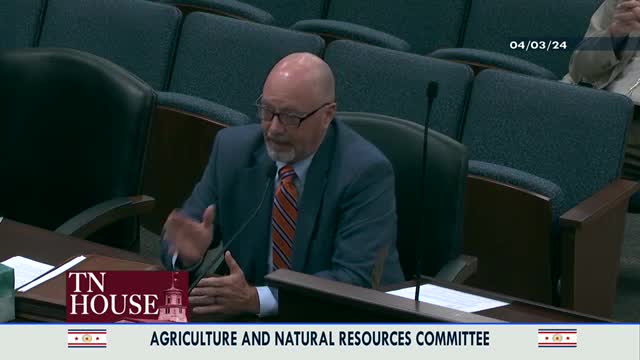
In a recent government meeting, officials discussed the ongoing challenges posed by invasive Asian carp in Tennessee's waterways, highlighting both the ecological threats and the strategies being employed to manage the situation. The meeting featured insights from Cole Hardy, the aquatic nuisance species coordinator for the Tennessee Wildlife Resources Agency (TWA), who provided an update on the invasive carp populations, particularly focusing on silver carp.
Hardy explained that silver carp, known for their jumping behavior in response to disturbances, pose significant risks to boaters and native fish species by competing for resources. Current populations are concentrated in the Mississippi and Ohio Rivers, with notable presence in Kentucky and Barkley reservoirs. However, Hardy noted that there has been no successful reproduction of these fish in Tennessee's waters since 2015, suggesting that local populations are primarily sustained by migration from other regions.
The TWA is actively monitoring these invasive species through various methods, including annual assessments and public reporting of sightings. Hardy emphasized the importance of collaboration with partners across the Mississippi River Basin to implement effective control measures. The agency has adjusted regulations to facilitate the removal of carp, allowing for longer gill nets and larger mesh sizes to target these fish more effectively.
A key component of the management strategy is the Tennessee Carp Harvest Incentive Program, which incentivizes commercial fishers to remove carp from specific reservoirs. Since its launch in 2018, the program has successfully removed over 30.5 million pounds of invasive carp, with more than 8 million pounds removed in the current year alone.
Despite these efforts, Hardy acknowledged that removal alone is insufficient. The TWA is also exploring deterrent technologies, such as the bio-acoustic fish fence at Barkley Lock, which has shown to reduce upstream passage of carp by approximately 50%. However, Hardy cautioned that implementing effective deterrents remains a complex challenge.
The meeting underscored the multifaceted nature of the invasive carp issue, with officials expressing a commitment to ongoing monitoring, removal, and deterrence strategies to protect Tennessee's aquatic ecosystems.
Hardy explained that silver carp, known for their jumping behavior in response to disturbances, pose significant risks to boaters and native fish species by competing for resources. Current populations are concentrated in the Mississippi and Ohio Rivers, with notable presence in Kentucky and Barkley reservoirs. However, Hardy noted that there has been no successful reproduction of these fish in Tennessee's waters since 2015, suggesting that local populations are primarily sustained by migration from other regions.
The TWA is actively monitoring these invasive species through various methods, including annual assessments and public reporting of sightings. Hardy emphasized the importance of collaboration with partners across the Mississippi River Basin to implement effective control measures. The agency has adjusted regulations to facilitate the removal of carp, allowing for longer gill nets and larger mesh sizes to target these fish more effectively.
A key component of the management strategy is the Tennessee Carp Harvest Incentive Program, which incentivizes commercial fishers to remove carp from specific reservoirs. Since its launch in 2018, the program has successfully removed over 30.5 million pounds of invasive carp, with more than 8 million pounds removed in the current year alone.
Despite these efforts, Hardy acknowledged that removal alone is insufficient. The TWA is also exploring deterrent technologies, such as the bio-acoustic fish fence at Barkley Lock, which has shown to reduce upstream passage of carp by approximately 50%. However, Hardy cautioned that implementing effective deterrents remains a complex challenge.
The meeting underscored the multifaceted nature of the invasive carp issue, with officials expressing a commitment to ongoing monitoring, removal, and deterrence strategies to protect Tennessee's aquatic ecosystems.
View the Full Meeting & All Its Details
This article offers just a summary. Unlock complete video, transcripts, and insights as a Founder Member.
✓
Watch full, unedited meeting videos
✓
Search every word spoken in unlimited transcripts
✓
AI summaries & real-time alerts (all government levels)
✓
Permanent access to expanding government content
30-day money-back guarantee
