Tennessee wetlands bill sparks fierce environmental debate
March 13, 2024 | Agriculture & Natural Resources, House of Representatives, Committees, Legislative, Tennessee
This article was created by AI summarizing key points discussed. AI makes mistakes, so for full details and context, please refer to the video of the full meeting. Please report any errors so we can fix them. Report an error »
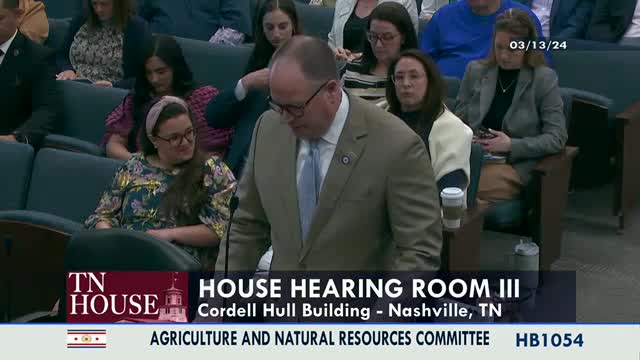
In a recent government meeting, significant discussions centered around proposed changes to wetland regulations in Tennessee, particularly in light of the Supreme Court's Sackett decision. The meeting highlighted concerns regarding the current regulatory framework, which treats all wetlands uniformly, regardless of their ecological value.
The proposed legislation aims to categorize wetlands into three distinct quality levels: low, moderate, and high. Under this new framework, activities in low-quality wetlands would not require permits, while moderate-quality wetlands would be exempt from permitting for activities covering less than one acre. This amendment was a response to previous concerns about the proposed five-acre threshold, which was deemed too expansive.
Supporters of the bill argue that it streamlines the regulatory process, allowing for more efficient management of wetland resources. However, critics, including local residents and environmental advocates, expressed alarm over the potential environmental consequences. They argue that removing the Department of Environment and Conservation (TDEC) from the wetland classification process could lead to mismanagement and degradation of vital ecosystems.
Macy Fluharty, a Davidson County resident, voiced her concerns during the meeting, emphasizing the importance of wetlands in preventing flooding, supporting wildlife, and maintaining water quality. She urged lawmakers to reconsider the bill, advocating for a thorough summer study to assess its implications before further action is taken.
Commissioner Salyers acknowledged the complexity of wetland management and the need for careful consideration of regional differences in Tennessee's diverse ecosystems. He noted that while the bill aims to empower state-level decision-making, it is crucial to ensure that local knowledge and environmental protections are not compromised.
As the committee prepares to move forward, the discussions reflect a broader tension between regulatory efficiency and environmental stewardship, with stakeholders on both sides advocating for their vision of Tennessee's ecological future.
The proposed legislation aims to categorize wetlands into three distinct quality levels: low, moderate, and high. Under this new framework, activities in low-quality wetlands would not require permits, while moderate-quality wetlands would be exempt from permitting for activities covering less than one acre. This amendment was a response to previous concerns about the proposed five-acre threshold, which was deemed too expansive.
Supporters of the bill argue that it streamlines the regulatory process, allowing for more efficient management of wetland resources. However, critics, including local residents and environmental advocates, expressed alarm over the potential environmental consequences. They argue that removing the Department of Environment and Conservation (TDEC) from the wetland classification process could lead to mismanagement and degradation of vital ecosystems.
Macy Fluharty, a Davidson County resident, voiced her concerns during the meeting, emphasizing the importance of wetlands in preventing flooding, supporting wildlife, and maintaining water quality. She urged lawmakers to reconsider the bill, advocating for a thorough summer study to assess its implications before further action is taken.
Commissioner Salyers acknowledged the complexity of wetland management and the need for careful consideration of regional differences in Tennessee's diverse ecosystems. He noted that while the bill aims to empower state-level decision-making, it is crucial to ensure that local knowledge and environmental protections are not compromised.
As the committee prepares to move forward, the discussions reflect a broader tension between regulatory efficiency and environmental stewardship, with stakeholders on both sides advocating for their vision of Tennessee's ecological future.
Don't Miss a Word: See the Full Meeting!
Go beyond summaries. Unlock every video, transcript, and key insight with a Founder Membership.
✓
Get instant access to full meeting videos
✓
Search and clip any phrase from complete transcripts
✓
Receive AI-powered summaries & custom alerts
✓
Enjoy lifetime, unrestricted access to government data
30-day money-back guarantee
