Restorative justice model promises safer communities and healing
August 09, 2024 | California State Assembly, House, Legislative, California
This article was created by AI summarizing key points discussed. AI makes mistakes, so for full details and context, please refer to the video of the full meeting. Please report any errors so we can fix them. Report an error »
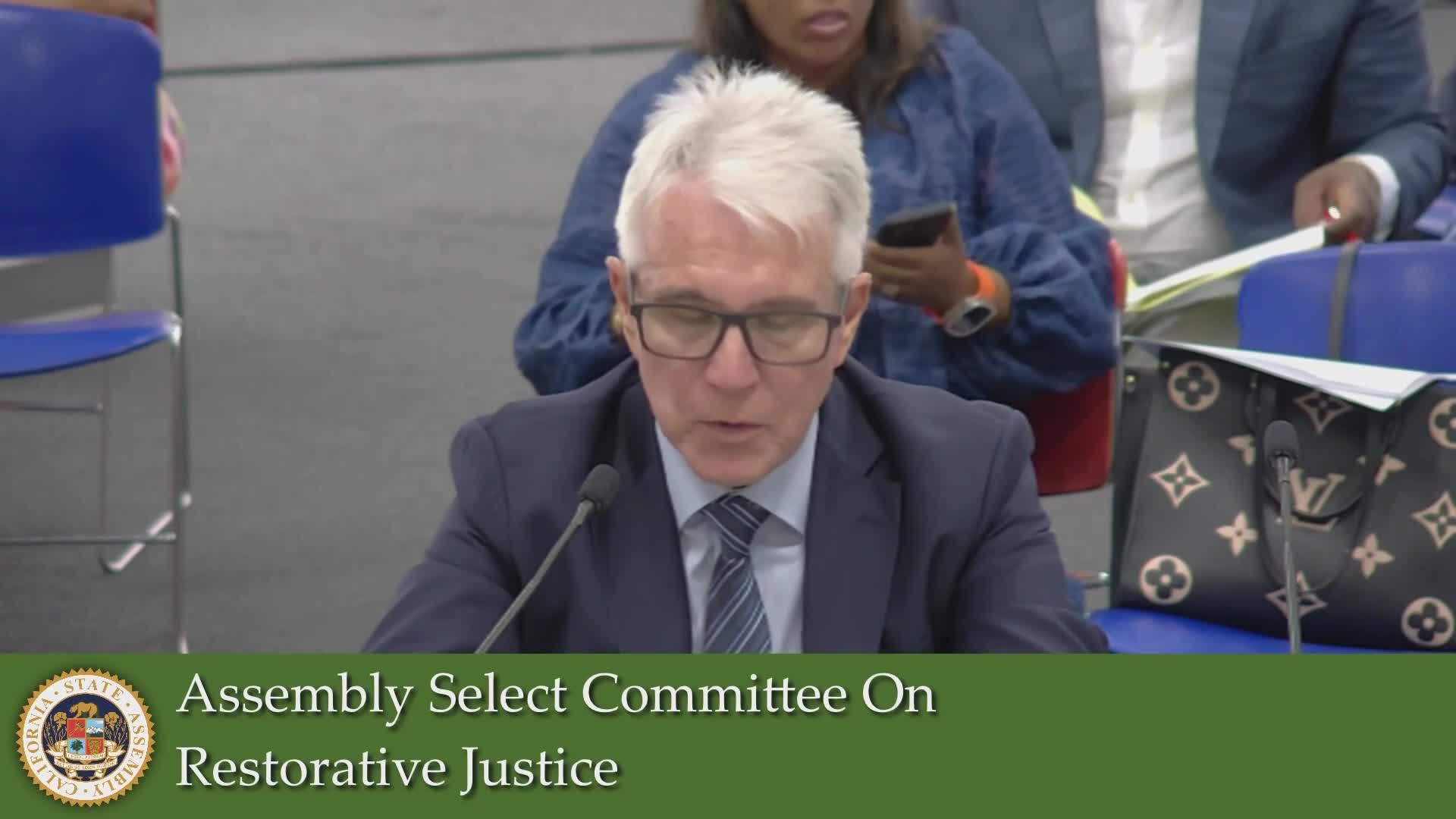
In a recent government meeting, discussions centered on the transformative potential of restorative justice, particularly in Los Angeles. Advocates emphasized that this approach prioritizes victims, community healing, and public safety, challenging the common perception that restorative justice is solely focused on offenders.
The speaker outlined three critical areas of impact: victims, community, and safety. They argued that restorative justice allows victims to voice their pain and receive acknowledgment from offenders, fostering a dialogue aimed at repairing harm—something often absent in traditional legal proceedings. This process not only benefits victims but also offers offenders and their families a chance for redemption, reducing the long-term stigma associated with criminal records.
Data presented highlighted the effectiveness of restorative justice programs. The Department of Youth Services in Los Angeles County reported a remarkable 95% success rate for participants in restorative justice initiatives, compared to a 50-60% success rate for traditional prosecutions, which often lead to recidivism. The speaker shared their experience from San Francisco, where a restorative justice model for juveniles resulted in a recidivism rate of less than 10%, significantly lower than the 45% typical under conventional systems.
The meeting also touched on collaborative efforts with various organizations, including Sentinel Youth Center and Homeboy Industries, to implement restorative justice practices for different age groups. The speaker underscored the importance of law enforcement and prosecutors as partners in this process, advocating for a legislative shift that mandates restorative justice for certain offenses before considering traditional legal routes.
Moreover, the economic advantages of restorative justice were highlighted, as it is significantly less costly than traditional arrest and incarceration methods. The overarching message was clear: restorative justice not only enhances victim support and community safety but also presents a more economically viable alternative to the conventional justice system. The speaker called for legislative measures to prioritize restorative justice, suggesting that it should be the first line of response for specific offenses.
The speaker outlined three critical areas of impact: victims, community, and safety. They argued that restorative justice allows victims to voice their pain and receive acknowledgment from offenders, fostering a dialogue aimed at repairing harm—something often absent in traditional legal proceedings. This process not only benefits victims but also offers offenders and their families a chance for redemption, reducing the long-term stigma associated with criminal records.
Data presented highlighted the effectiveness of restorative justice programs. The Department of Youth Services in Los Angeles County reported a remarkable 95% success rate for participants in restorative justice initiatives, compared to a 50-60% success rate for traditional prosecutions, which often lead to recidivism. The speaker shared their experience from San Francisco, where a restorative justice model for juveniles resulted in a recidivism rate of less than 10%, significantly lower than the 45% typical under conventional systems.
The meeting also touched on collaborative efforts with various organizations, including Sentinel Youth Center and Homeboy Industries, to implement restorative justice practices for different age groups. The speaker underscored the importance of law enforcement and prosecutors as partners in this process, advocating for a legislative shift that mandates restorative justice for certain offenses before considering traditional legal routes.
Moreover, the economic advantages of restorative justice were highlighted, as it is significantly less costly than traditional arrest and incarceration methods. The overarching message was clear: restorative justice not only enhances victim support and community safety but also presents a more economically viable alternative to the conventional justice system. The speaker called for legislative measures to prioritize restorative justice, suggesting that it should be the first line of response for specific offenses.
Don't Miss a Word: See the Full Meeting!
Go beyond summaries. Unlock every video, transcript, and key insight with a Founder Membership.
✓
Get instant access to full meeting videos
✓
Search and clip any phrase from complete transcripts
✓
Receive AI-powered summaries & custom alerts
✓
Enjoy lifetime, unrestricted access to government data
30-day money-back guarantee
