Ohio lawmakers push for tougher human trafficking penalties
June 05, 2024 | Criminal Justice, House of Representatives, Committees, Legislative, Ohio
This article was created by AI summarizing key points discussed. AI makes mistakes, so for full details and context, please refer to the video of the full meeting. Please report any errors so we can fix them. Report an error »
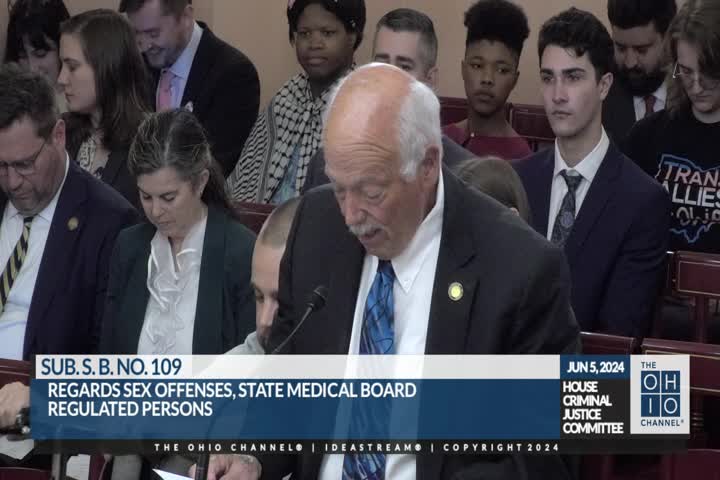
In a recent government meeting, significant legislative advancements were discussed, focusing on two key bills aimed at enhancing public safety and accountability in Ohio.
Senate Bill 109, a response to the handling of the Richard Strauss abuse case, seeks to increase accountability among licensed medical professionals. The bill, which passed unanimously out of committee, introduces several measures to protect the public, including revising the criminal code to classify licensed medical professionals as liable offenders for sexual battery. It mandates that medical boards be notified of any indictments or convictions related to sexual misconduct and requires healthcare facilities to report investigations of licensees within 30 days. Additionally, the bill proposes the inclusion of a consumer member in the medical board's investigatory process and allows for automatic suspensions of licenses for individuals with disciplinary actions in other states. The overarching goal of Senate Bill 109 is to ensure that medical professionals are held to the same standards as other professions, thereby facilitating the timely removal of those who pose a risk to patients.
The meeting also addressed House Bill 377, known as the Human Trafficking Prevention Act, which aims to combat the rising issue of human trafficking in Ohio. With the state ranking fourth in the nation for human trafficking cases, the bill proposes harsher penalties for traffickers, particularly those targeting minors and individuals with developmental disabilities. It raises the minimum sentence for kidnapping minors with sexual motivations to 25 years to life and lowers the standard of culpability for facilitators of trafficking, making it easier to prosecute those who assist in these crimes. The bill is a response to alarming statistics and recent trafficking incidents in Ohio, emphasizing the need for legislative action to protect vulnerable populations and enhance community safety.
Both bills reflect a concerted effort by Ohio lawmakers to address critical issues affecting public safety and to ensure that justice is served for victims of abuse and trafficking. The discussions highlighted the urgency of these legislative measures in light of the state's ongoing challenges with accountability in the medical field and the pervasive threat of human trafficking.
Senate Bill 109, a response to the handling of the Richard Strauss abuse case, seeks to increase accountability among licensed medical professionals. The bill, which passed unanimously out of committee, introduces several measures to protect the public, including revising the criminal code to classify licensed medical professionals as liable offenders for sexual battery. It mandates that medical boards be notified of any indictments or convictions related to sexual misconduct and requires healthcare facilities to report investigations of licensees within 30 days. Additionally, the bill proposes the inclusion of a consumer member in the medical board's investigatory process and allows for automatic suspensions of licenses for individuals with disciplinary actions in other states. The overarching goal of Senate Bill 109 is to ensure that medical professionals are held to the same standards as other professions, thereby facilitating the timely removal of those who pose a risk to patients.
The meeting also addressed House Bill 377, known as the Human Trafficking Prevention Act, which aims to combat the rising issue of human trafficking in Ohio. With the state ranking fourth in the nation for human trafficking cases, the bill proposes harsher penalties for traffickers, particularly those targeting minors and individuals with developmental disabilities. It raises the minimum sentence for kidnapping minors with sexual motivations to 25 years to life and lowers the standard of culpability for facilitators of trafficking, making it easier to prosecute those who assist in these crimes. The bill is a response to alarming statistics and recent trafficking incidents in Ohio, emphasizing the need for legislative action to protect vulnerable populations and enhance community safety.
Both bills reflect a concerted effort by Ohio lawmakers to address critical issues affecting public safety and to ensure that justice is served for victims of abuse and trafficking. The discussions highlighted the urgency of these legislative measures in light of the state's ongoing challenges with accountability in the medical field and the pervasive threat of human trafficking.
Don't Miss a Word: See the Full Meeting!
Go beyond summaries. Unlock every video, transcript, and key insight with a Founder Membership.
✓
Get instant access to full meeting videos
✓
Search and clip any phrase from complete transcripts
✓
Receive AI-powered summaries & custom alerts
✓
Enjoy lifetime, unrestricted access to government data
30-day money-back guarantee
