AI Deepfakes Threaten Financial Stability and Consumer Trust
July 23, 2024 | Financial Services: House Committee, Standing Committees - House & Senate, Congressional Hearings Compilation, Legislative, Federal
This article was created by AI summarizing key points discussed. AI makes mistakes, so for full details and context, please refer to the video of the full meeting. Please report any errors so we can fix them. Report an error »
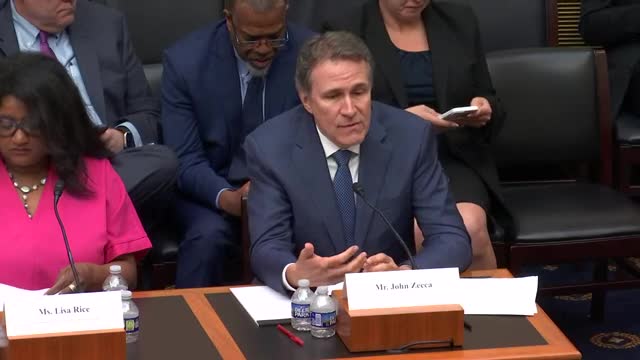
In a recent government meeting, discussions centered on the implications of artificial intelligence (AI) and emerging technologies on market stability, fair housing enforcement, and financial services. Key participants highlighted the need for regulatory frameworks to address potential gaps created by rapid technological advancements, particularly concerning deepfakes and their impact on consumer trust and financial security.
A panelist emphasized the importance of identifying regulatory gaps as AI technology evolves, noting that while existing measures like circuit breakers have been effective in stabilizing markets, new challenges arise with the use of deepfakes. These AI-generated audio and visual contents pose risks not only to financial institutions but also to consumer safety, potentially leading to fraud and market confusion.
The conversation also turned to the implications of proposed funding cuts by House Republicans, which could hinder federal fair housing enforcement. A representative pointed out that removing discriminatory barriers in housing and lending markets could enhance profitability and productivity, benefiting both businesses and consumers. The Business Roundtable, representing major corporations, has advocated for strong fair housing rules to ensure equitable access to housing opportunities.
Furthermore, the meeting addressed the integration of AI in financial messaging systems, particularly with the upcoming transition to the ISO 20022 standard. Experts noted that this shift could improve payment efficiency and security, allowing for better fraud detection and protection of vulnerable populations, such as the elderly.
As the discussion progressed, concerns were raised about AI's potential to exacerbate market concentration and discrimination, particularly in underserved communities. Participants underscored the necessity for balanced regulatory approaches that foster innovation while safeguarding against the risks associated with AI technologies.
Overall, the meeting highlighted the urgent need for comprehensive regulatory strategies to navigate the complexities introduced by AI, ensuring that advancements benefit all sectors of society while maintaining market integrity.
A panelist emphasized the importance of identifying regulatory gaps as AI technology evolves, noting that while existing measures like circuit breakers have been effective in stabilizing markets, new challenges arise with the use of deepfakes. These AI-generated audio and visual contents pose risks not only to financial institutions but also to consumer safety, potentially leading to fraud and market confusion.
The conversation also turned to the implications of proposed funding cuts by House Republicans, which could hinder federal fair housing enforcement. A representative pointed out that removing discriminatory barriers in housing and lending markets could enhance profitability and productivity, benefiting both businesses and consumers. The Business Roundtable, representing major corporations, has advocated for strong fair housing rules to ensure equitable access to housing opportunities.
Furthermore, the meeting addressed the integration of AI in financial messaging systems, particularly with the upcoming transition to the ISO 20022 standard. Experts noted that this shift could improve payment efficiency and security, allowing for better fraud detection and protection of vulnerable populations, such as the elderly.
As the discussion progressed, concerns were raised about AI's potential to exacerbate market concentration and discrimination, particularly in underserved communities. Participants underscored the necessity for balanced regulatory approaches that foster innovation while safeguarding against the risks associated with AI technologies.
Overall, the meeting highlighted the urgent need for comprehensive regulatory strategies to navigate the complexities introduced by AI, ensuring that advancements benefit all sectors of society while maintaining market integrity.
Don't Miss a Word: See the Full Meeting!
Go beyond summaries. Unlock every video, transcript, and key insight with a Founder Membership.
✓
Get instant access to full meeting videos
✓
Search and clip any phrase from complete transcripts
✓
Receive AI-powered summaries & custom alerts
✓
Enjoy lifetime, unrestricted access to government data
30-day money-back guarantee
