Advocates clash over controversial school chaplain program
September 11, 2024 | Osceola, School Districts, Florida
This article was created by AI summarizing key points discussed. AI makes mistakes, so for full details and context, please refer to the video of the full meeting. Please report any errors so we can fix them. Report an error »
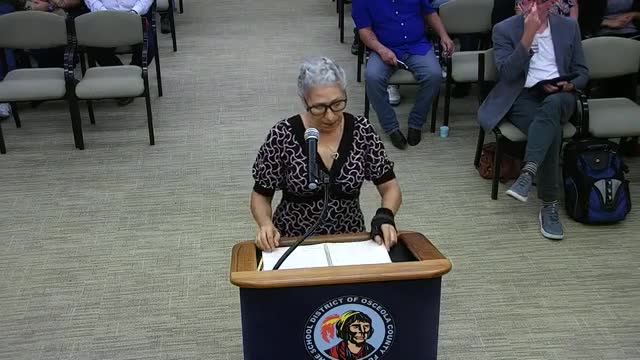
In a recent Osceola County School Board meeting, discussions surrounding the proposed implementation of a chaplaincy program in local schools sparked significant debate among community members. Proponents of the program argue that it could provide essential support for students facing mental health challenges, citing the increasing rates of anxiety and depression among youth. Supporters emphasized that the program would be voluntary and in accordance with Florida's parents' bill of rights, allowing parents to opt in for their children to receive counseling from chaplains of various faiths.
Ariel Sanabria, a lead pastor, highlighted the urgent need for additional support systems for students, stating that many young people today face struggles that previous generations did not. He urged the board to find common ground and collaborate with religious leaders to address these issues, emphasizing that the program could be a \"win-win\" for everyone involved.
However, opposition to the chaplaincy program was equally vocal. Critics raised concerns about the potential for religious bias and the exclusion of non-religious students. David Chivers, a humanist celebrant, argued that the proposed program could create a two-tier system favoring those with religious affiliations, which could violate constitutional protections for all students. He urged the board to consider the implications of favoring one group over another in a public school setting.
Other opponents, including former clergy and educators, expressed skepticism about the qualifications of chaplains to provide adequate mental health support. They called for professional standards and training requirements to ensure that any counseling provided to students is safe and effective. Concerns were also raised about the potential legal liabilities associated with the program, suggesting that it could lead to costly lawsuits for the school district.
The meeting highlighted a deep divide within the community regarding the role of religion in public education. While supporters of the chaplaincy program see it as a necessary resource for struggling students, opponents argue that it undermines the secular nature of public schools and could lead to further division among students of differing beliefs. As the board considers the proposal, the discussions reflect broader societal debates about the intersection of faith, education, and government.
Ariel Sanabria, a lead pastor, highlighted the urgent need for additional support systems for students, stating that many young people today face struggles that previous generations did not. He urged the board to find common ground and collaborate with religious leaders to address these issues, emphasizing that the program could be a \"win-win\" for everyone involved.
However, opposition to the chaplaincy program was equally vocal. Critics raised concerns about the potential for religious bias and the exclusion of non-religious students. David Chivers, a humanist celebrant, argued that the proposed program could create a two-tier system favoring those with religious affiliations, which could violate constitutional protections for all students. He urged the board to consider the implications of favoring one group over another in a public school setting.
Other opponents, including former clergy and educators, expressed skepticism about the qualifications of chaplains to provide adequate mental health support. They called for professional standards and training requirements to ensure that any counseling provided to students is safe and effective. Concerns were also raised about the potential legal liabilities associated with the program, suggesting that it could lead to costly lawsuits for the school district.
The meeting highlighted a deep divide within the community regarding the role of religion in public education. While supporters of the chaplaincy program see it as a necessary resource for struggling students, opponents argue that it undermines the secular nature of public schools and could lead to further division among students of differing beliefs. As the board considers the proposal, the discussions reflect broader societal debates about the intersection of faith, education, and government.
Don't Miss a Word: See the Full Meeting!
Go beyond summaries. Unlock every video, transcript, and key insight with a Founder Membership.
✓
Get instant access to full meeting videos
✓
Search and clip any phrase from complete transcripts
✓
Receive AI-powered summaries & custom alerts
✓
Enjoy lifetime, unrestricted access to government data
30-day money-back guarantee
