City races against deadline to inventory lead pipes
September 12, 2024 | Jacksonville, Onslow County, North Carolina
This article was created by AI summarizing key points discussed. AI makes mistakes, so for full details and context, please refer to the video of the full meeting. Please report any errors so we can fix them. Report an error »
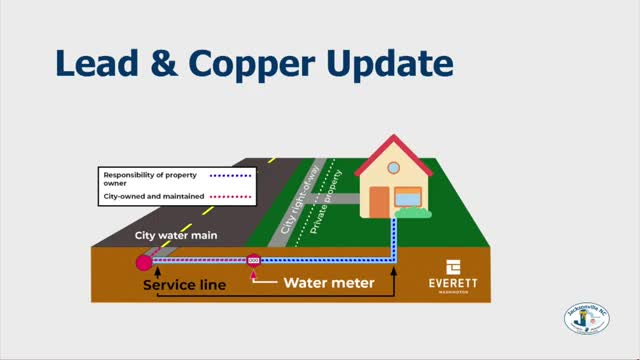
In a recent government meeting, officials discussed the urgent need to complete an inventory of water connections by the approaching deadline of October 16th. With nearly 20,000 connections to assess, the focus is primarily on approximately 10,000 establishments built before 1987, when the Safe Drinking Water Act was revised to prohibit lead pipes. So far, 4,000 of these connections have been inspected, with no lead detected, exceeding initial expectations given the available workforce and resources.
The officials emphasized the importance of notifying homeowners about any unknown lead connections by November 15th. This notification will also include information regarding galvanized pipes, which can leach lead into the water supply. The urgency of the project is underscored by the potential health risks associated with lead exposure.
Homeowners have expressed concerns about disruptions caused by the inspections, particularly during the summer months when lawns are well-maintained. Crews have adapted their methods to minimize damage, carefully cutting and replacing patches of grass during the inspection process.
Discussions also touched on the responsibilities of homeowners versus the city regarding potential replacements of lead pipes. While the specifics remain undetermined, officials indicated that the financial implications of full replacements are being considered, especially given the project's scale and the costs involved.
The meeting highlighted the collaboration between local authorities and state agencies, which are tasked with enforcing federal regulations under the Safe Drinking Water Act. Officials noted that while predictive modeling could be employed to assess potential lead presence, they prefer to conduct thorough visual inspections wherever possible to ensure accuracy and safety.
As the deadline approaches, officials remain optimistic about completing the inventory and addressing any lead-related issues effectively, prioritizing public health and safety in their efforts.
The officials emphasized the importance of notifying homeowners about any unknown lead connections by November 15th. This notification will also include information regarding galvanized pipes, which can leach lead into the water supply. The urgency of the project is underscored by the potential health risks associated with lead exposure.
Homeowners have expressed concerns about disruptions caused by the inspections, particularly during the summer months when lawns are well-maintained. Crews have adapted their methods to minimize damage, carefully cutting and replacing patches of grass during the inspection process.
Discussions also touched on the responsibilities of homeowners versus the city regarding potential replacements of lead pipes. While the specifics remain undetermined, officials indicated that the financial implications of full replacements are being considered, especially given the project's scale and the costs involved.
The meeting highlighted the collaboration between local authorities and state agencies, which are tasked with enforcing federal regulations under the Safe Drinking Water Act. Officials noted that while predictive modeling could be employed to assess potential lead presence, they prefer to conduct thorough visual inspections wherever possible to ensure accuracy and safety.
As the deadline approaches, officials remain optimistic about completing the inventory and addressing any lead-related issues effectively, prioritizing public health and safety in their efforts.
View the Full Meeting & All Its Details
This article offers just a summary. Unlock complete video, transcripts, and insights as a Founder Member.
✓
Watch full, unedited meeting videos
✓
Search every word spoken in unlimited transcripts
✓
AI summaries & real-time alerts (all government levels)
✓
Permanent access to expanding government content
30-day money-back guarantee
