Controversy Erupts Over Tree Protection and Setback Variance
September 13, 2024 | City of St. Augustine Beach, St. Johns County , Florida
This article was created by AI summarizing key points discussed. AI makes mistakes, so for full details and context, please refer to the video of the full meeting. Please report any errors so we can fix them. Report an error »
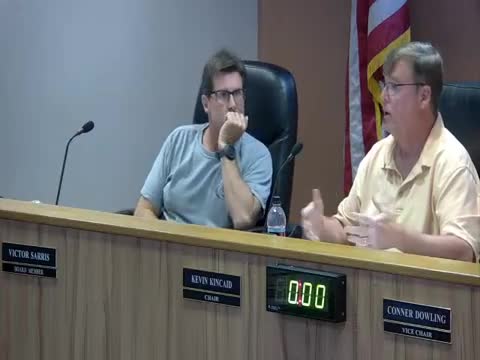
In a recent government meeting, discussions centered around a proposed variance related to building setbacks and tree preservation, highlighting the complexities of local regulations and community concerns. The primary focus was on whether a flexible setback could be applied to a property with significant trees, as the building official's interpretation limited this option to undeveloped lots.
Several board members expressed their commitment to preserving trees while emphasizing the importance of adhering to the variance process, which allows for public input and neighbor notifications. Concerns were raised about setting a precedent that could lead to future applicants bypassing the established variance requirements by citing tree preservation as a reason for setback adjustments.
Scott Robinson, representing the property owner, argued that the existing regulations did not explicitly restrict flexible setbacks to undeveloped parcels and suggested that the board could impose conditions to ensure neighbor involvement in the decision-making process. He emphasized that the application met all requirements and that denying it could undermine the intent of the code designed to protect significant trees.
Board members voiced their apprehensions about the implications of granting the request without a clear design plan, which would illustrate the necessity of the proposed setback. They highlighted the potential for creating a slippery slope where future applicants might leverage tree preservation claims to circumvent standard procedures.
Ultimately, the board leaned towards the idea that the variance process should be followed, ensuring that all affected neighbors are notified and have the opportunity to voice their opinions. The discussions underscored the delicate balance between development, community input, and environmental conservation, with a consensus emerging that further clarification of the city code may be necessary to prevent future ambiguities.
Several board members expressed their commitment to preserving trees while emphasizing the importance of adhering to the variance process, which allows for public input and neighbor notifications. Concerns were raised about setting a precedent that could lead to future applicants bypassing the established variance requirements by citing tree preservation as a reason for setback adjustments.
Scott Robinson, representing the property owner, argued that the existing regulations did not explicitly restrict flexible setbacks to undeveloped parcels and suggested that the board could impose conditions to ensure neighbor involvement in the decision-making process. He emphasized that the application met all requirements and that denying it could undermine the intent of the code designed to protect significant trees.
Board members voiced their apprehensions about the implications of granting the request without a clear design plan, which would illustrate the necessity of the proposed setback. They highlighted the potential for creating a slippery slope where future applicants might leverage tree preservation claims to circumvent standard procedures.
Ultimately, the board leaned towards the idea that the variance process should be followed, ensuring that all affected neighbors are notified and have the opportunity to voice their opinions. The discussions underscored the delicate balance between development, community input, and environmental conservation, with a consensus emerging that further clarification of the city code may be necessary to prevent future ambiguities.
View the Full Meeting & All Its Details
This article offers just a summary. Unlock complete video, transcripts, and insights as a Founder Member.
✓
Watch full, unedited meeting videos
✓
Search every word spoken in unlimited transcripts
✓
AI summaries & real-time alerts (all government levels)
✓
Permanent access to expanding government content
30-day money-back guarantee
