Council faces backlash over controversial homeless housing project
September 13, 2024 | Las Cruces, Doña Ana County, New Mexico
This article was created by AI summarizing key points discussed. AI makes mistakes, so for full details and context, please refer to the video of the full meeting. Please report any errors so we can fix them. Report an error »
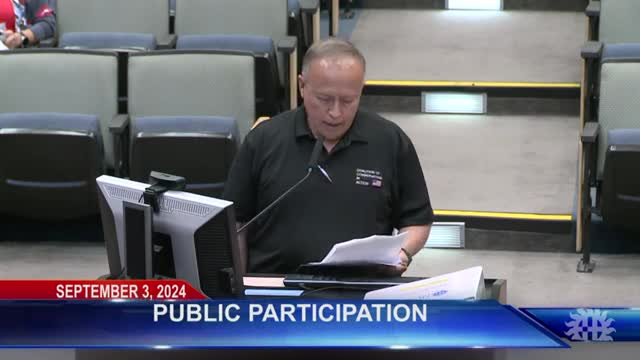
During a recent city council meeting, community members voiced strong concerns regarding the handling of local health and housing initiatives, particularly focusing on the treatment of vulnerable populations.
Sarah Smith criticized the council's past negligence in addressing the needs of poor Hispanic cancer patients, accusing them of a \"callous disregard for human suffering.\" She highlighted the council's failure to act on allegations surrounding the discontinuation of oncology and chemotherapy services in 2015, calling for accountability and transparency.
Smith also expressed her apprehension about the proposed Amador Crossing homeless housing project, which is set to allocate $10 to $15 million for 50 units, translating to a cost of $200,000 to $300,000 per unit. She argued that the plan, which includes only 14 units dedicated to sober living, is insufficient and risks enabling ongoing drug addiction rather than promoting rehabilitation. Citing issues at the Desert Hope homeless housing project, she warned that housing individuals struggling with addiction alongside those seeking sobriety could lead to chaos and hinder recovery efforts.
Smith referenced statistics from the San Antonio Haven For Hope, stating that the \"housing first\" approach only works for 15% of individuals, while the majority require additional support before stable housing can be effective. She urged the council to consider a model that emphasizes sober living, job readiness training, and supportive services, citing the success of the Boulder Bridge House program in Colorado, which boasts a 74% success rate in helping participants achieve employment and independence.
The meeting underscored the urgent need for the council to reassess its strategies in addressing homelessness and addiction, with community members advocating for a more compassionate and effective approach to rehabilitation.
Sarah Smith criticized the council's past negligence in addressing the needs of poor Hispanic cancer patients, accusing them of a \"callous disregard for human suffering.\" She highlighted the council's failure to act on allegations surrounding the discontinuation of oncology and chemotherapy services in 2015, calling for accountability and transparency.
Smith also expressed her apprehension about the proposed Amador Crossing homeless housing project, which is set to allocate $10 to $15 million for 50 units, translating to a cost of $200,000 to $300,000 per unit. She argued that the plan, which includes only 14 units dedicated to sober living, is insufficient and risks enabling ongoing drug addiction rather than promoting rehabilitation. Citing issues at the Desert Hope homeless housing project, she warned that housing individuals struggling with addiction alongside those seeking sobriety could lead to chaos and hinder recovery efforts.
Smith referenced statistics from the San Antonio Haven For Hope, stating that the \"housing first\" approach only works for 15% of individuals, while the majority require additional support before stable housing can be effective. She urged the council to consider a model that emphasizes sober living, job readiness training, and supportive services, citing the success of the Boulder Bridge House program in Colorado, which boasts a 74% success rate in helping participants achieve employment and independence.
The meeting underscored the urgent need for the council to reassess its strategies in addressing homelessness and addiction, with community members advocating for a more compassionate and effective approach to rehabilitation.
Don't Miss a Word: See the Full Meeting!
Go beyond summaries. Unlock every video, transcript, and key insight with a Founder Membership.
✓
Get instant access to full meeting videos
✓
Search and clip any phrase from complete transcripts
✓
Receive AI-powered summaries & custom alerts
✓
Enjoy lifetime, unrestricted access to government data
30-day money-back guarantee
