Floodplain Debate Intensifies Over New Bridge Project
September 13, 2024 | Stormwater Services Meetings, Nashville, Davidson County, Tennessee
This article was created by AI summarizing key points discussed. AI makes mistakes, so for full details and context, please refer to the video of the full meeting. Please report any errors so we can fix them. Report an error »
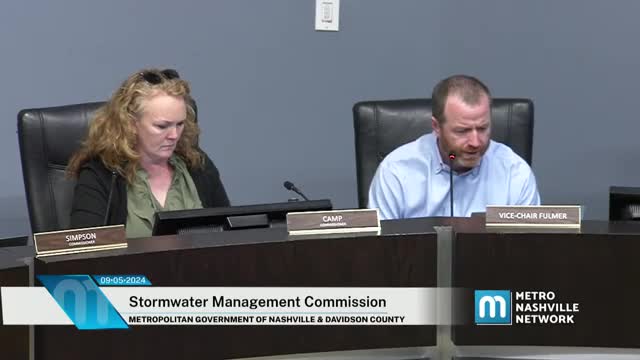
In a recent government meeting, officials discussed the implications of a proposed bridge project on local flood management and water surface elevations. The conversation centered around a hydraulic report submitted by Nash, which indicated a potential rise of 0.03 feet associated with the new bridge. This figure, equivalent to about a third of an inch, was deemed negligible by some participants, who noted that it is less than the width of a pencil line on FEMA's flood profile maps.
Commissioner Simpson raised concerns regarding the Federal Emergency Management Agency's (FEMA) acceptance of the proposed model, which is currently under review. Officials emphasized the importance of adhering to the effective model until FEMA approves the new one, as the effective model serves as the legal benchmark for flood management.
The discussion highlighted the complexity of flood modeling, with various models being referenced, including existing conditions, proposed changes, and corrected effective models. Laura Jones, representing Regan Smith and Cypress Brooks, clarified that while the proposed project may lead to a decrease in water surface elevation compared to the existing FEMA model, the current effective mapping indicates a slight rise.
Officials acknowledged that any variance in floodway regulations would be contingent on the approval of the new model by FEMA. They reiterated that without this approval, decisions must be based on the existing effective model, which remains legally binding.
As the meeting concluded, the need for clear communication and documentation regarding the project's impact on flood elevations was underscored, with officials agreeing to submit additional information to clarify the potential effects of the bridge on local flood management.
Commissioner Simpson raised concerns regarding the Federal Emergency Management Agency's (FEMA) acceptance of the proposed model, which is currently under review. Officials emphasized the importance of adhering to the effective model until FEMA approves the new one, as the effective model serves as the legal benchmark for flood management.
The discussion highlighted the complexity of flood modeling, with various models being referenced, including existing conditions, proposed changes, and corrected effective models. Laura Jones, representing Regan Smith and Cypress Brooks, clarified that while the proposed project may lead to a decrease in water surface elevation compared to the existing FEMA model, the current effective mapping indicates a slight rise.
Officials acknowledged that any variance in floodway regulations would be contingent on the approval of the new model by FEMA. They reiterated that without this approval, decisions must be based on the existing effective model, which remains legally binding.
As the meeting concluded, the need for clear communication and documentation regarding the project's impact on flood elevations was underscored, with officials agreeing to submit additional information to clarify the potential effects of the bridge on local flood management.
View the Full Meeting & All Its Details
This article offers just a summary. Unlock complete video, transcripts, and insights as a Founder Member.
✓
Watch full, unedited meeting videos
✓
Search every word spoken in unlimited transcripts
✓
AI summaries & real-time alerts (all government levels)
✓
Permanent access to expanding government content
30-day money-back guarantee
