Waterway plans spark debate over flood risk management
September 13, 2024 | Stormwater Services Meetings, Nashville, Davidson County, Tennessee
This article was created by AI summarizing key points discussed. AI makes mistakes, so for full details and context, please refer to the video of the full meeting. Please report any errors so we can fix them. Report an error »
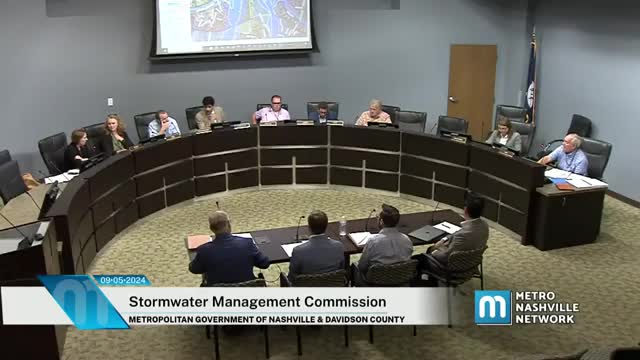
In a recent government meeting, discussions centered around the proposed roadway plans and their implications for flood management in the area. The applicant presented details regarding the elevation of Colley Davis, which is set to remain flat without curbing, allowing water to drain freely. The elevation is established at 5,563.5 feet, designed to contain water from a 500-year storm event.
The applicant clarified that the roadway does not qualify as a levee under FEMA regulations, and acknowledged that the current mapping indicates water flow on all sides due to a cross culvert at Interstate 40. Changes to the mapping are underway, following consultations with Metro Water Services, as the existing model lacked necessary details, including the pedestrian bridge.
A significant point of contention arose regarding the potential impact of the proposed variance requests on flood levels. The applicant asserted that the requested variances would not increase flood levels during base flood discharge, a claim that was met with skepticism from some commission members. A memo from a professional engineer dated January 23, 2023, suggested that the variances could indeed lead to increased flood levels, prompting further inquiry into the evidence supporting the applicant's position.
The applicant indicated ongoing communication with Metro Water and the development of a Conditional Letter of Map Revision (CLOMR) for FEMA, although this documentation was not available for review during the meeting. Additionally, the applicant confirmed that no uncompensated fill would be placed in the 100-year floodplain, addressing concerns about potential floodplain alterations.
As the meeting concluded, the need for comprehensive documentation and clarity on the proposed changes remained a priority for the commission, highlighting the complexities of flood management and infrastructure development in the region.
The applicant clarified that the roadway does not qualify as a levee under FEMA regulations, and acknowledged that the current mapping indicates water flow on all sides due to a cross culvert at Interstate 40. Changes to the mapping are underway, following consultations with Metro Water Services, as the existing model lacked necessary details, including the pedestrian bridge.
A significant point of contention arose regarding the potential impact of the proposed variance requests on flood levels. The applicant asserted that the requested variances would not increase flood levels during base flood discharge, a claim that was met with skepticism from some commission members. A memo from a professional engineer dated January 23, 2023, suggested that the variances could indeed lead to increased flood levels, prompting further inquiry into the evidence supporting the applicant's position.
The applicant indicated ongoing communication with Metro Water and the development of a Conditional Letter of Map Revision (CLOMR) for FEMA, although this documentation was not available for review during the meeting. Additionally, the applicant confirmed that no uncompensated fill would be placed in the 100-year floodplain, addressing concerns about potential floodplain alterations.
As the meeting concluded, the need for comprehensive documentation and clarity on the proposed changes remained a priority for the commission, highlighting the complexities of flood management and infrastructure development in the region.
Don't Miss a Word: See the Full Meeting!
Go beyond summaries. Unlock every video, transcript, and key insight with a Founder Membership.
✓
Get instant access to full meeting videos
✓
Search and clip any phrase from complete transcripts
✓
Receive AI-powered summaries & custom alerts
✓
Enjoy lifetime, unrestricted access to government data
30-day money-back guarantee
