Dairy Farm Innovates with Manure to Gas Technology
October 09, 2024 | Utah County Commission, Utah County Commission and Boards, Utah County, Utah
This article was created by AI summarizing key points discussed. AI makes mistakes, so for full details and context, please refer to the video of the full meeting. Please report any errors so we can fix them. Report an error »
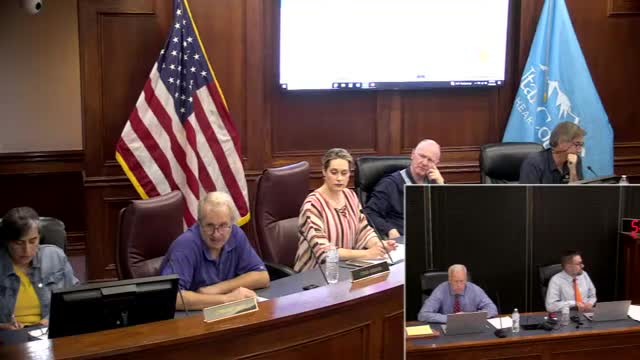
In a recent government meeting, representatives from Bateman's Meseta Farms presented an innovative project aimed at transforming dairy waste into renewable energy. Steve Bateman, the farm's representative, outlined their plan to utilize anaerobic digesters to convert manure into natural gas, a move that aligns with growing trends in sustainable agriculture.
The project, which is set to take place on the farm's 4,500 acres, involves placing manure in concrete tanks for 21 days to facilitate anaerobic digestion. The resulting gas will be cleaned and injected into a pipeline, providing a dual benefit of waste management and energy production. Brian Fliss, co-founder of LF Bioenergy, the company collaborating on the project, emphasized that the initiative would not only enhance the farm's sustainability but also contribute to the local energy supply.
The meeting also addressed logistical concerns regarding the necessary pipeline infrastructure. While the final design is still in development, Fliss indicated that the pipeline would primarily run on the farm's property, minimizing disruption to neighboring landowners. The project is expected to generate approximately 900 MMBTUs of energy daily, making it one of the largest of its kind in the region.
Participants in the meeting expressed optimism about the project, highlighting its potential to serve as a model for other dairy operations in Utah and beyond. The initiative reflects a broader shift in the agricultural sector towards utilizing waste as a resource, with similar projects already underway in states like Wisconsin and New York.
As the meeting concluded, stakeholders reiterated their commitment to sustainable practices that not only benefit their operations but also contribute positively to the community and environment.
The project, which is set to take place on the farm's 4,500 acres, involves placing manure in concrete tanks for 21 days to facilitate anaerobic digestion. The resulting gas will be cleaned and injected into a pipeline, providing a dual benefit of waste management and energy production. Brian Fliss, co-founder of LF Bioenergy, the company collaborating on the project, emphasized that the initiative would not only enhance the farm's sustainability but also contribute to the local energy supply.
The meeting also addressed logistical concerns regarding the necessary pipeline infrastructure. While the final design is still in development, Fliss indicated that the pipeline would primarily run on the farm's property, minimizing disruption to neighboring landowners. The project is expected to generate approximately 900 MMBTUs of energy daily, making it one of the largest of its kind in the region.
Participants in the meeting expressed optimism about the project, highlighting its potential to serve as a model for other dairy operations in Utah and beyond. The initiative reflects a broader shift in the agricultural sector towards utilizing waste as a resource, with similar projects already underway in states like Wisconsin and New York.
As the meeting concluded, stakeholders reiterated their commitment to sustainable practices that not only benefit their operations but also contribute positively to the community and environment.
View the Full Meeting & All Its Details
This article offers just a summary. Unlock complete video, transcripts, and insights as a Founder Member.
✓
Watch full, unedited meeting videos
✓
Search every word spoken in unlimited transcripts
✓
AI summaries & real-time alerts (all government levels)
✓
Permanent access to expanding government content
30-day money-back guarantee
