US Citizens Demand Ceasefire Amidst Lebanon Crisis
October 09, 2024 | Peoria, Peoria County, Illinois
This article was created by AI summarizing key points discussed. AI makes mistakes, so for full details and context, please refer to the video of the full meeting. Please report any errors so we can fix them. Report an error »
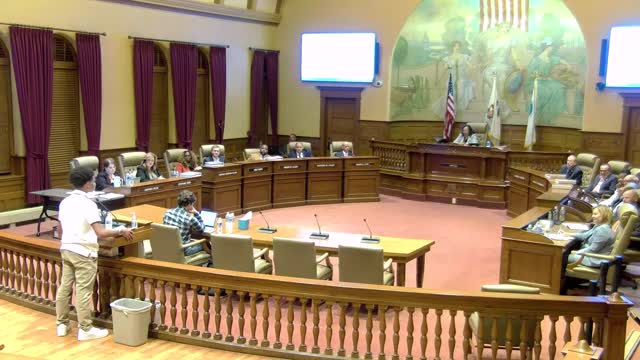
During a recent government meeting, discussions highlighted the ongoing humanitarian crisis in Lebanon amid escalating violence attributed to Israeli military actions. Dr. Hen Eckar, a speaker at the meeting, expressed deep concern over the U.S. government's financial priorities, noting that while FEMA requested $9 billion to assist American citizens affected by disasters, the U.S. had allocated $8.7 billion to Israel shortly thereafter. This juxtaposition raised questions about the prioritization of foreign aid over domestic needs.
Dr. Eckar detailed the devastating impact of recent bombings in Lebanon, citing reports of 3,000 injuries and 37 fatalities, including children, from Israeli airstrikes. He described the horrific conditions faced by medical professionals in Beirut, where eye surgeons were overwhelmed by the number of patients requiring severe injuries treatment, including the loss of limbs and eyesight. He condemned the lack of U.S. condemnation of these actions, labeling them as \"absolute terrorism\" and drawing attention to the displacement of 1.2 million Lebanese citizens due to the conflict.
Another speaker, Hermes Abi Akar, shared a personal narrative of survival from the 1982 Israeli invasion of Beirut, emphasizing the cyclical nature of violence in the region. He reflected on the historical context of the conflict, noting that the Lebanese people have long been victims of geopolitical struggles, often caught in the crossfire of larger conflicts involving Palestinian groups.
Both speakers called for a ceasefire and urged U.S. citizens to recognize the humanitarian crisis unfolding in Lebanon, stressing the importance of understanding the broader implications of U.S. foreign policy in the region. The meeting underscored a growing concern among community members regarding the U.S. government's role in international conflicts and its impact on domestic welfare.
Dr. Eckar detailed the devastating impact of recent bombings in Lebanon, citing reports of 3,000 injuries and 37 fatalities, including children, from Israeli airstrikes. He described the horrific conditions faced by medical professionals in Beirut, where eye surgeons were overwhelmed by the number of patients requiring severe injuries treatment, including the loss of limbs and eyesight. He condemned the lack of U.S. condemnation of these actions, labeling them as \"absolute terrorism\" and drawing attention to the displacement of 1.2 million Lebanese citizens due to the conflict.
Another speaker, Hermes Abi Akar, shared a personal narrative of survival from the 1982 Israeli invasion of Beirut, emphasizing the cyclical nature of violence in the region. He reflected on the historical context of the conflict, noting that the Lebanese people have long been victims of geopolitical struggles, often caught in the crossfire of larger conflicts involving Palestinian groups.
Both speakers called for a ceasefire and urged U.S. citizens to recognize the humanitarian crisis unfolding in Lebanon, stressing the importance of understanding the broader implications of U.S. foreign policy in the region. The meeting underscored a growing concern among community members regarding the U.S. government's role in international conflicts and its impact on domestic welfare.
View the Full Meeting & All Its Details
This article offers just a summary. Unlock complete video, transcripts, and insights as a Founder Member.
✓
Watch full, unedited meeting videos
✓
Search every word spoken in unlimited transcripts
✓
AI summaries & real-time alerts (all government levels)
✓
Permanent access to expanding government content
30-day money-back guarantee
