County faces budget crisis as structural deficit deepens
October 09, 2024 | Allegheny County, Pennsylvania
This article was created by AI summarizing key points discussed. AI makes mistakes, so for full details and context, please refer to the video of the full meeting. Please report any errors so we can fix them. Report an error »
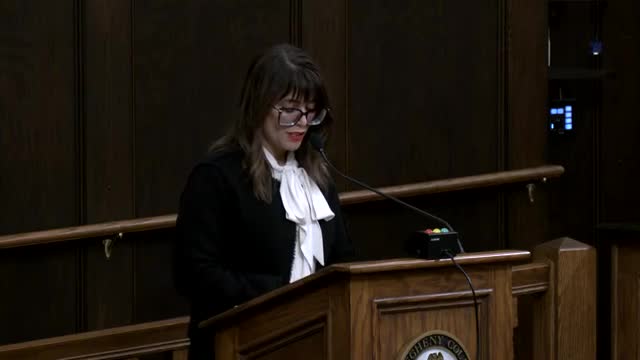
During a recent government meeting, officials addressed the pressing issue of Allegany County's structural deficit, which has persisted since 2021. County Comptroller O'Connor's report revealed that the county has consistently spent more on operating costs than it has generated in revenue over the past four budget cycles. This financial imbalance has necessitated the drawdown of reserves, a temporary measure that is not sustainable in the long term.
The meeting highlighted several key challenges contributing to the county's fiscal difficulties. State funding for essential services, such as rental assistance, has remained stagnant despite rising homelessness. Additionally, the cessation of federal COVID relief funds, which provided nearly $600 million to the county, has left a significant gap in the budget. The county's reliance on these funds to cover operational deficits has raised concerns about future financial stability.
Another factor impacting revenue is the decline in property valuations, which have not only leveled off but decreased in recent years. This shift has resulted in unexpected refunds to commercial property owners, further straining the county's finances. Rising costs due to inflation and increased demand for services, particularly in senior care and public safety, have compounded these challenges.
Despite these hurdles, officials expressed optimism about the county's economic outlook. The anticipated interest rate cuts by the Federal Reserve and a resurgence in tourism are expected to stimulate economic activity. Investments in infrastructure and development are also projected to enhance revenue streams.
To address the budgetary shortfall, the county is proposing a property tax increase for the first time since 2012, amounting to a 2.2 mil increase, which translates to approximately $15 more per month for the median household. This decision comes as the county seeks to maintain its bond ratings and ensure fiscal responsibility while delivering essential services to residents.
Officials emphasized the need for careful budget management, urging departments to identify areas for cost-cutting and prioritize essential expenditures. The proposed budget reflects a 3% increase in spending, aligned with inflation, as the county navigates these challenging economic conditions.
The meeting highlighted several key challenges contributing to the county's fiscal difficulties. State funding for essential services, such as rental assistance, has remained stagnant despite rising homelessness. Additionally, the cessation of federal COVID relief funds, which provided nearly $600 million to the county, has left a significant gap in the budget. The county's reliance on these funds to cover operational deficits has raised concerns about future financial stability.
Another factor impacting revenue is the decline in property valuations, which have not only leveled off but decreased in recent years. This shift has resulted in unexpected refunds to commercial property owners, further straining the county's finances. Rising costs due to inflation and increased demand for services, particularly in senior care and public safety, have compounded these challenges.
Despite these hurdles, officials expressed optimism about the county's economic outlook. The anticipated interest rate cuts by the Federal Reserve and a resurgence in tourism are expected to stimulate economic activity. Investments in infrastructure and development are also projected to enhance revenue streams.
To address the budgetary shortfall, the county is proposing a property tax increase for the first time since 2012, amounting to a 2.2 mil increase, which translates to approximately $15 more per month for the median household. This decision comes as the county seeks to maintain its bond ratings and ensure fiscal responsibility while delivering essential services to residents.
Officials emphasized the need for careful budget management, urging departments to identify areas for cost-cutting and prioritize essential expenditures. The proposed budget reflects a 3% increase in spending, aligned with inflation, as the county navigates these challenging economic conditions.
View the Full Meeting & All Its Details
This article offers just a summary. Unlock complete video, transcripts, and insights as a Founder Member.
✓
Watch full, unedited meeting videos
✓
Search every word spoken in unlimited transcripts
✓
AI summaries & real-time alerts (all government levels)
✓
Permanent access to expanding government content
30-day money-back guarantee
