Police Body Camera Policy Under Scrutiny Amid Controversy
September 24, 2024 | Ann Arbor City, Washtenaw County, Michigan
This article was created by AI summarizing key points discussed. AI makes mistakes, so for full details and context, please refer to the video of the full meeting. Please report any errors so we can fix them. Report an error »
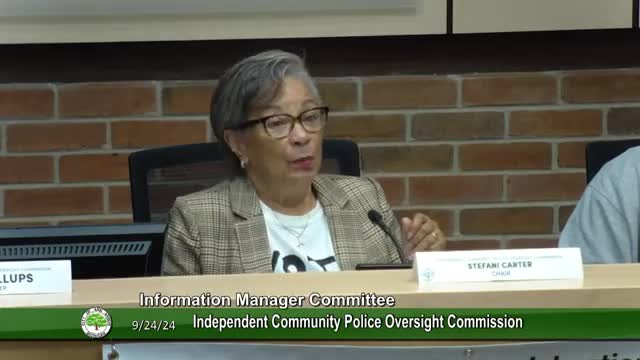
During a recent government meeting, discussions centered on the policies governing the use of body-worn cameras (BWCs) by police officers, particularly in situations where officers are on standby and not actively engaging with the public. Commissioner Milgram was tasked with reviewing the current policy to clarify when BWCs should be activated.
The existing policy mandates that police employees activate their BWCs in full record mode during all calls for service and enforcement-related encounters. However, confusion arose regarding the definition of \"standby\" and whether it falls under the requirement for BWC activation. The policy does not explicitly mention \"standby,\" leading to questions about its interpretation and the need for clearer guidelines.
Commissioners expressed the necessity for the policy to specify any exceptions to the BWC activation mandate and to define terms such as \"calls for service\" and \"enforcement-related encounters.\" The discussion highlighted the importance of transparency and accountability in police interactions, especially in light of recent events involving campus protests and mutual aid agreements with the University of Michigan.
The meeting also touched on the broader implications of police policies and their interactions with other agencies, emphasizing the need for formal agreements that outline the nature of services provided during joint operations. As the commission moves forward, there is a clear intent to refine the policies governing BWC usage to ensure clarity and compliance among officers.
The existing policy mandates that police employees activate their BWCs in full record mode during all calls for service and enforcement-related encounters. However, confusion arose regarding the definition of \"standby\" and whether it falls under the requirement for BWC activation. The policy does not explicitly mention \"standby,\" leading to questions about its interpretation and the need for clearer guidelines.
Commissioners expressed the necessity for the policy to specify any exceptions to the BWC activation mandate and to define terms such as \"calls for service\" and \"enforcement-related encounters.\" The discussion highlighted the importance of transparency and accountability in police interactions, especially in light of recent events involving campus protests and mutual aid agreements with the University of Michigan.
The meeting also touched on the broader implications of police policies and their interactions with other agencies, emphasizing the need for formal agreements that outline the nature of services provided during joint operations. As the commission moves forward, there is a clear intent to refine the policies governing BWC usage to ensure clarity and compliance among officers.
Don't Miss a Word: See the Full Meeting!
Go beyond summaries. Unlock every video, transcript, and key insight with a Founder Membership.
✓
Get instant access to full meeting videos
✓
Search and clip any phrase from complete transcripts
✓
Receive AI-powered summaries & custom alerts
✓
Enjoy lifetime, unrestricted access to government data
30-day money-back guarantee
