Body camera policy under scrutiny amid transparency concerns
September 24, 2024 | Ann Arbor City, Washtenaw County, Michigan
This article was created by AI summarizing key points discussed. AI makes mistakes, so for full details and context, please refer to the video of the full meeting. Please report any errors so we can fix them. Report an error »
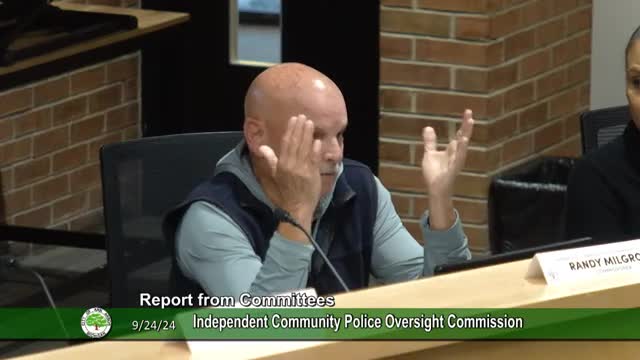
During a recent government meeting, discussions centered on the policies governing the use of body-worn cameras (BWCs) by police officers, highlighting potential gaps in clarity and implementation. The conversation was initiated by a commissioner who raised concerns after a personal encounter with an officer at a University of Michigan football game. The officer explained that while her BWC was activated, it was not recording at that moment, and could be turned on at her discretion.
The commissioner expressed skepticism regarding the discretion officers have in activating their cameras, particularly in situations where the public might perceive that an officer is turning off the camera to avoid recording certain interactions. This concern was echoed by other attendees, who noted that the current policy might not adequately address when officers are required to record interactions, especially during calls for service or enforcement-related activities.
A police chief responded by acknowledging that there are legitimate reasons for officers to deactivate their cameras, such as privacy concerns during medical discussions or restroom breaks. However, he admitted that the policy could benefit from clearer language to delineate acceptable circumstances for turning off the cameras. He emphasized the importance of transparency and the need for the community to understand the rationale behind these policies.
The chief also explained the technical aspect of the BWC system, noting that it buffers 30 seconds of footage prior to activation, allowing for critical context to be captured in high-stakes situations. This feature aims to enhance accountability and provide a clearer picture of events leading up to an officer's engagement.
As the meeting progressed, attendees discussed the need for a more precise definition of terms like \"calls for service\" and \"enforcement-related encounters\" within the policy framework. The chief committed to reviewing the existing policies and promised to communicate any updates or changes to the commissioners, ensuring that the community remains informed about the operational standards governing police interactions.
Overall, the meeting underscored a collective desire for improved clarity in BWC policies, aiming to balance officer discretion with public accountability and transparency.
The commissioner expressed skepticism regarding the discretion officers have in activating their cameras, particularly in situations where the public might perceive that an officer is turning off the camera to avoid recording certain interactions. This concern was echoed by other attendees, who noted that the current policy might not adequately address when officers are required to record interactions, especially during calls for service or enforcement-related activities.
A police chief responded by acknowledging that there are legitimate reasons for officers to deactivate their cameras, such as privacy concerns during medical discussions or restroom breaks. However, he admitted that the policy could benefit from clearer language to delineate acceptable circumstances for turning off the cameras. He emphasized the importance of transparency and the need for the community to understand the rationale behind these policies.
The chief also explained the technical aspect of the BWC system, noting that it buffers 30 seconds of footage prior to activation, allowing for critical context to be captured in high-stakes situations. This feature aims to enhance accountability and provide a clearer picture of events leading up to an officer's engagement.
As the meeting progressed, attendees discussed the need for a more precise definition of terms like \"calls for service\" and \"enforcement-related encounters\" within the policy framework. The chief committed to reviewing the existing policies and promised to communicate any updates or changes to the commissioners, ensuring that the community remains informed about the operational standards governing police interactions.
Overall, the meeting underscored a collective desire for improved clarity in BWC policies, aiming to balance officer discretion with public accountability and transparency.
View the Full Meeting & All Its Details
This article offers just a summary. Unlock complete video, transcripts, and insights as a Founder Member.
✓
Watch full, unedited meeting videos
✓
Search every word spoken in unlimited transcripts
✓
AI summaries & real-time alerts (all government levels)
✓
Permanent access to expanding government content
30-day money-back guarantee
