Ann Arbor plans bold housing expansion and environmental protection
September 24, 2024 | Ann Arbor City, Washtenaw County, Michigan
This article was created by AI summarizing key points discussed. AI makes mistakes, so for full details and context, please refer to the video of the full meeting. Please report any errors so we can fix them. Report an error »
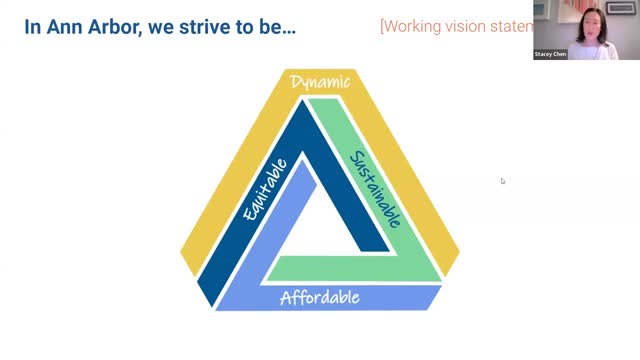
In a recent government meeting, officials discussed the future land use and development strategies for Ann Arbor, emphasizing the importance of balancing growth with environmental sustainability. The conversation centered around two primary questions: what natural features need protection and what factors are driving change in the community.
City planners highlighted Ann Arbor's success in safeguarding natural features, noting that a significant portion of these areas is already under public ownership, particularly within parks and open spaces. However, they acknowledged that the remaining privately held natural features are limited and fragmented, suggesting potential opportunities for collaboration with local parks to enhance connectivity and conservation efforts.
A key focus of the meeting was the city's goal to accommodate approximately 40,000 new households over the next 25 years, which could translate to an increase of around 80,000 residents. This ambitious plan aims to address housing shortages while ensuring that necessary infrastructure and services are in place to support this growth. Officials pointed out that certain areas, such as Washtenaw, currently lack walkability and essential infrastructure, which must be addressed to create complete neighborhoods.
The discussion also touched on the role of zoning and regulations in facilitating affordable housing development, with city officials recognizing that while many aspects of the development process are beyond their control, they can influence key components that impact housing availability.
As the meeting concluded, officials expressed a commitment to further analyze potential growth areas and the infrastructure needed to support them, setting the stage for future discussions on how to effectively manage Ann Arbor's growth while preserving its natural environment.
City planners highlighted Ann Arbor's success in safeguarding natural features, noting that a significant portion of these areas is already under public ownership, particularly within parks and open spaces. However, they acknowledged that the remaining privately held natural features are limited and fragmented, suggesting potential opportunities for collaboration with local parks to enhance connectivity and conservation efforts.
A key focus of the meeting was the city's goal to accommodate approximately 40,000 new households over the next 25 years, which could translate to an increase of around 80,000 residents. This ambitious plan aims to address housing shortages while ensuring that necessary infrastructure and services are in place to support this growth. Officials pointed out that certain areas, such as Washtenaw, currently lack walkability and essential infrastructure, which must be addressed to create complete neighborhoods.
The discussion also touched on the role of zoning and regulations in facilitating affordable housing development, with city officials recognizing that while many aspects of the development process are beyond their control, they can influence key components that impact housing availability.
As the meeting concluded, officials expressed a commitment to further analyze potential growth areas and the infrastructure needed to support them, setting the stage for future discussions on how to effectively manage Ann Arbor's growth while preserving its natural environment.
View the Full Meeting & All Its Details
This article offers just a summary. Unlock complete video, transcripts, and insights as a Founder Member.
✓
Watch full, unedited meeting videos
✓
Search every word spoken in unlimited transcripts
✓
AI summaries & real-time alerts (all government levels)
✓
Permanent access to expanding government content
30-day money-back guarantee
